



January 9, the second, extended deadline for a new WNBA CBA, is just over three weeks away.
Another extension would further compress all the business—an expansion draft, free agency and the college draft—that the WNBA must accomplish before the 2026 season can tip off.
So, is it time for the WNBPA to consider compromising?
The latest reporting suggests that WNBPA, at the very least, doesn’t think so.
While the most recent known proposal from the WNBA would allocate 15 percent of league and team revenues
for sharing with the players, with that percentage decreasing over time, the WNBPA’s most recent proposal is seeking a 30 percent share of league and team revenues, according to The Athletic.
Furthermore, the two sides have “distinctly different approaches to calculating player compensation,” per The Athletic, which explains:
In the union’s proposal, the salary cap would be determined by taking the players’ share of the previous season’s total revenue, subtracting the cost of various player benefits, and dividing that number by the number of teams, sources said. Some of those benefits include medical insurance costs, local transportation costs and housing.
The players also are looking to secure “mandatory league and team audits to ensure accurate accounting and transparency.”
Based on The Athletic’s sourcing, the first year of the new CBA would provision 29 percent of the gross revenue from the previous season to the players, a total that includes a “one-time adjustment” that accounts for the new media rights deal—an 11-year, $2.2 billion deal—that begins next season. After that, players’ share of total league and team revenues would increase by one percent each year, rising to 34 percent of the previous season’s gross revenue in the final year of the agreement.
The Athletic further reports that this latest proposal was a revised version of a prior proposal “in which players would have received 33 percent of total revenue for each year of the agreement.”
So maybe, the WNBPA’s most recent “gradual one percent year-over-year ramp-up” proposal can be considered a compromise? Or at least an attempt to reach a middle ground?
Caitlin Clark calls for CBA compromise
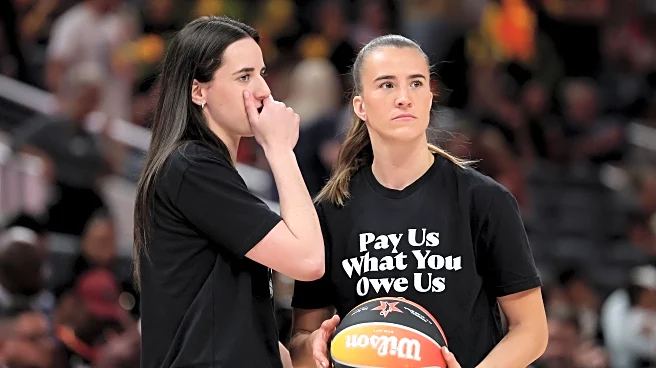
Speaking about CBA negotiations at the USA Basketball Women’s National Team training camp held at Duke University over the weekend, Caitlin Clark first injected the idea of “compromise” into the CBA discourse.
Clark, who shared that she relies on Indiana Fever union representatives Aliyah Boston and Lexie Hull, as well as the Fever’s Brianna Turner, the WNBPA treasurer, to remain up-to-date on CBA negotiations, asserted:
It’s important that we find a way to play this next season. Our fans and even everybody that has played in this league that has come before us deserve that as well.
Obviously, I can’t speak to every number; it’s pretty complicated, but I think there are different things that we can find ways to say, “No, we certainly deserve that, and we’re not going to compromise on that.” And then other things that we can probably compromise on.
She additionally said:
This is the biggest moment the WNBA has ever seen, and it’s not something that can be messed up, and we’re going to fight for everything that we deserve. At the same time, we need to play basketball. That’s what our fans crave, and that’s what all of you crave as well, is you want the product on the floor. At the end of the day, that’s how you make the money.
WNBA stars remain uncompromising about CBA negotiations
The tone Clark struck departed from that of WNBPA representatives and other players, as a tinge of animosity, exhaustion and exasperation best describes most players’ public characterizations of their dealings with the league.
WNBPA vice president Napheesa Collier, famously, dropped the hammer and declared that the WNBA has “the worst leadership in the world.” Union president Nneka Ogwumike has expressed that players “don’t feel valued” by the league, suggesting there has not been “any cultivation of a culture of trust” on the part of league leadership. Kelsey Plum, the WNBPA’s first vice president, has emphasized the “level of frustration” felt by players due the league’s resistance to negotiating a fair revenue sharing structure.
Speaking at Team USA’s media availability, Plum reiterated this sentiment, saying the lack of progress has been “a little bit disheartening” while again underscoring the “frustration” players feel because of “how far away we are.”
The other planks of the WNBPA’s proposal suggest that, while possibly willing to compromise to an extent, players, as Paige Bueckers put it, remain “pretty firm on what we believe and what we stand for.” Here’s how the players want to see some key questions answered:
How many games will be scheduled under the next WNBA CBA?
As previously reported, players understand that a growing league with an increasing number of teams and higher player salaries will come with more games. Players, however, are not willing to be exploited and exhausted.
The WNBPA has proposed a 48-game season until the league expands to 18 teams; at that point, the season would feature 50 games per team. The league is arguing for a more rapid increase in the number of games, seeking more than 48 games as soon as the 2027 season, along with their continued, confusing desire for a potential mid-March start date for training camps.
What various roster and contract rules will be implemented or changed in the next WNBA CBA?
Players are also aiming to guarantee larger rosters, with their proposal requiring teams to carry a full, 12-player roster throughout the season; currently, teams can choose to roster only 11 players.
Additionally, The Athletic reports that the union is proposing up to two developmental player roster spots per team. These developmental players could participate in up 10 games, receiving a prorated minimum salary for those games. Otherwise, developmental players would be paid a stipend. After being on the active roster for 10 games, these players would need to sign a rest-of-season contract to be eligible to play in additional games. The union also seeks to secure full benefits for developmental players.
Along with establishing fairly-compensated opportunities for developmental players, the players union is seeking to create means for players on rookie-scale contracts to earn increased compensation for high performance. The WNBPA additionally remains committed to eliminating the core designation, a mechanism of the current CBA that works to undercut the “free” agency of unrestricted free agents.
What other benefits will be included in the next WNBA CBA?
As has been reported, the WNBA and WNBPA have exchanged ideas about parental leave for non-birthing parents, mental health care and retirement benefits.
The players, unsurprisingly, are seeking more generous options than those offered by the league. For example, while the league sees one week of paid leave as sufficient for non-birthing parents, players are pushing for four weeks, per The Athletic.
The players also believe they should be allotted up to a $500-per-month reimbursement for out-of-network mental health services; the league has resisted reimbursing mental health care from non-league-approved providers. For retired players who played at least four seasons in the WNBA and lack health insurance, the WNBPA is asking the league to reimburse up to $1,500 for annual physical exams. The league has countered by proposing several health-screening programs for retired players that would be held in concert with key league events.
Players are further requesting adequate, mandatory staffing for all teams beyond basketball personnel. That includes the required employment of two full-time security officers, in addition to a designated number of physical therapists, athletic trainers and team physicians.
The WNBPA also has thus far resisted the league’s desire to immediately require players to wear performance-tracking technology during games. Players are seeking a more gradual implementation, with players having the choice to wear such devices in 2026 and 2027 before they are mandated in 2028.
WNBA players are united in their fight for a fair CBA
Despite Clark not expressing the defiance that has characterized the public declarations of other WNBA stars, players remain united in their fight. Plum stated, “What I’m proud of is that we play with a group of women and that are united, and we’re standing on something.”
Bueckers, speaking at Unrivaled media day, shared a similar perspective, saying:
Unity is the best way to display strength, so for us to be together, all be on the same page, ask questions, get to understand what we are standing for…. for a lot of very strong women to be in one area and display that unity, it’s really important. We want to take full advantage.
Angel Reese, when she spoke during Team USA media availability, likewise emphasized the players’ alignment, noting:
I think the players and WNBPA have done a great job making sure we’re all together. We’re riding together on everything. I’m preparing for a season like everybody else is, but we have to come to a negotiation. It’s really important for us to come to a common ground that we can all agree on, it’s all fair and everybody benefits from it.
Plum and Reese also both underscored the players’ long-term mindset, indicating that they are not simply fighting for an immediate win for players but also for a sustainable league structure that benefits future WNBA players. As Plum said:
It’s really important to show that it’s not just about us, but it’s about the future, and it’s really about women in general and just really fighting for what needs to be done. Stand on that, stay strong, and chip away and hopefully get to something that we can be really proud of.