
The Yankees received their “Bronx Bombers” moniker long before any of the sluggers of the modern era were born, but the nickname lives on for a reason. For decades after Murderer’s Row terrorized the league, the Bombers have almost always fielded lineups dotted with power hitter, and in recent years, they’ve often been criticized for how much emphasis they’ve placed on the long ball and how often they strike out.
Though he wasn’t with the franchise for long, few Yankees have embodied the idea of the hard-swinging
(and often missing) slugger more than Mark Reynolds.
Mark Andrew Reynolds
Born: August 3, 1983 (Pikeville, KY)
Yankees Tenure: 2013
Mark Reynolds moved with his family to Virginia Beach, Virginia, after being born in Kentucky, and in 1994 he played for the Virginia Blasters Amateur Athletic Union (AAU) baseball program and was also a four-year letterman in baseball, basketball, and golf at First Colonial High School. He graduated in 2001 and went on to attend the University of Virginia, where he also played baseball. He attended the school for three seasons, playing shortstop for one and shifting to third base for his sophomore and junior Cavalier campaigns. His results on the left side of the infield and in the batter’s box led him to being drafted by the Arizona Diamondbacks in the 16th round of the 2004 MLB Draft.
The 2005 season saw Reynolds stick in South Bend in Low-A, where he played in 118 games, slashed .254/.319/.454, had 19 home runs and 76 RBI’s while striking out 107 times in 434 at-bats. After that season, he saw another promotion in 2006, first to High-A Lancaster, where he finished with an OPS over 1.000 and a .670 slugging percentage, thanks to 43 of his 92 hits being for extra bases and 23 of them being homers. That earned him a promotion to Double-A with the Tennessee Smokies in Knoxville, where he impressed in 30 games, finishing the season with an .870 OPS.
Reynolds began his season in 2007 in Double-A, this time with the Mobile BayBears, the new affiliate of the Diamondbacks. He hit .306 in 37 games, and as a result of an injury to major leaguer Chad Tracy, the all-or-nothing slugger was called up for his first MLB action. He debuted against the Colorado Rockies on May 16, 2007, and not only did he look like he would fit in, but he also exceeded expectations. He drove in 14 runs in his first 15 MLB games and ended up playing 111 games total that year. He finished third among National League rookies in strikeouts (129), but he also finished fourth in runs (62), tied for fourth in triples (4), and tied for sixth in homers (17), showcasing his excellent offensive potential at just 23.
Unfortunately for Reynolds, he didn’t receive any votes to qualify for the National League Rookie of the Year. Still, after multiple home runs in big spots during the playoffs, it was official that the slugger was on the scene.
From 2008 to 2010, Reynolds was the slugging starting third baseman for the Diamondbacks. But the power came at a cost. While he hit 44 home runs in 2009 and finished the year with a 127 OPS+ and 20th in MVP voting, he also led all of MLB in strikeouts. In fact, in all three of those seasons, he led the league in strikeouts. His lowest strikeout percentage was in 2008 (33.3%), and his highest was in 2010 (35.4%). His 204 strikeouts in 2008 were a major league record…until he broke that in 2009 with 223. He also struggled defensively, especially in 2008, making the most errors and having the worst fielding percentage of all MLB third basemen.
Overall, Reynolds’ playstyle at this point could be defined by two things: towering home runs, and whiffs. So, the focus was on deciding what mattered more. The Diamondbacks believed that his home runs (and better fielding at first base) were good enough to give him a three-year extension before the 2010 season. However, he finished the year with a .198 batting average in 145 games, making him the first full-time position player in MLB history to finish the season with a lower batting average (.198) than strikeout total (211).
On December 6, 2010, the Diamondbacks’ new general manager, Kevin Towers, wanted to decrease strikeouts and help his bullpen, so Reynolds was moved to the Baltimore Orioles, who were in dire need of a third baseman. The same problems ailed him in 2011: His fielding was poor, and he led the American League in strikeouts with 196. But he hit 37 home runs and drove in 86 runners with an OPS+ of 116, so he was a significant contributor to the Orioles’ offense. And in 2012, his second season with Baltimore, he still managed to produce and (relative to his last few seasons) cut down on strikeouts in 135 games, even though he became the fastest position player to reach 1,000 strikeouts in major-league history, doing this in only 747 career games. But after his three-year contract was over and the Orioles didn’t take Reynolds’s 2013 option, he was non-tendered and made a free agent for the first time.
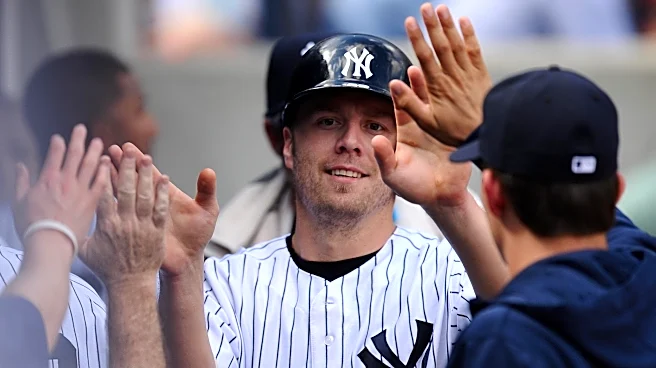
Reynolds agreed to a one-year deal with Cleveland that offseason. Still, he was swiftly designated for assignment due to sporting a .680 OPS (including a .380 slugging percentage, well below what Cleveland had signed him for), and that was when the Yankees swooped in a desperate attempt to inject some right-handed power into a limp lineup. In Reynolds’ first at-bat against the Boston Red Sox, he smoked a home run, the first of six he would hit in a Yankees uniform.
Playing both third and first base (and starting at second for the first time in his career due to injuries to Robinson Canó and Eduardo Núñez), Reynolds actually somewhat revitalized his bat with the Yankees. He slashed .236/.300/.455, a solid jump in batting average but a major jump in slugging percentage. He also didn’t strike out nearly as much, with his 25.8% K-rate being the second-lowest of his career as a starter. However, he also didn’t walk nearly as much as he had in prior seasons either, with his walk rate dropping from 11.2 with Cleveland to 6.7 in New York.
The Yankees didn’t bring back Reynolds for 2014 (despite Alex Rodriguez receiving a 162-game suspension for PED usage) only offering him a minor league contract while his camp camped that they could still receive a major league deal. Still, he ended up signing a minor league contract anyway, and it was with the Milwaukee Brewers. The Brewers also gave him an invite to major league camp, giving him bonuses in his contract if he made the Opening Day lineup, which he did. Ater playing 130 games, he finished with a career-low (for seasons where he played 100+ games) 87 OPS+ with to a .196 batting average and .287 OBP.
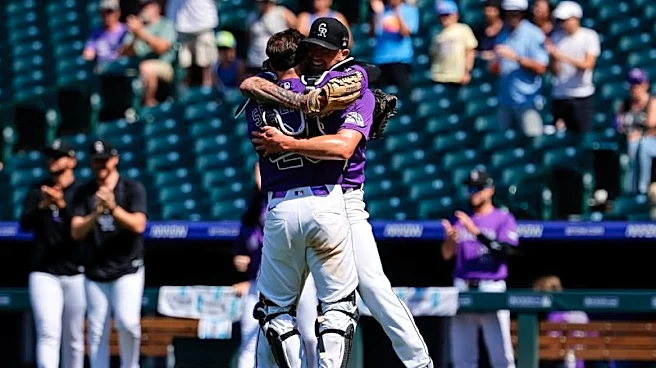
Reynolds bounced to another team in the NL Central — the St. Louis Cardinals — for the 2015 season, where he played 140 games despite agreeing to be a bench player, and still finished as a below-average hitter. And following 2015, it was time for Reynolds to hit the free agent carousel again. He signed a one-year contract with the Colorado Rockies for the 2016 season and finished with a 101 OPS+ at 32 years old. But it was 2017, after signing a minor league deal with Colorado, that he really shined for the last time in his career. He recorded his first 30-home run season since 2011 with Baltimore, and his highest OPS since his 2009 campaign in Arizona.
The bottom fell out finally from there, Reynolds falling beneath replacement level in his last two years, 2018 with the Nationals, and 2019 with Rockies, where his OPS plummeted to .601. After 2019, Reynolds announced his retirement.
While he did have his flaws as a player and he wasn’t with the Yankees for very long, the kind of player he was promised either great success or great failure with every swing. He was the king of three true outcomes, and his style of play represented perhaps an extreme version of the kind of offense the Yankees have very often trotted out over the course of their history. His career may not be the most decorated, but for fans of the 2010s baseball era, it’s impossible to deny that he did, in some way, make an impact. Happy birthday, Mark!
See more of the “Yankees Birthday of the Day” series here.