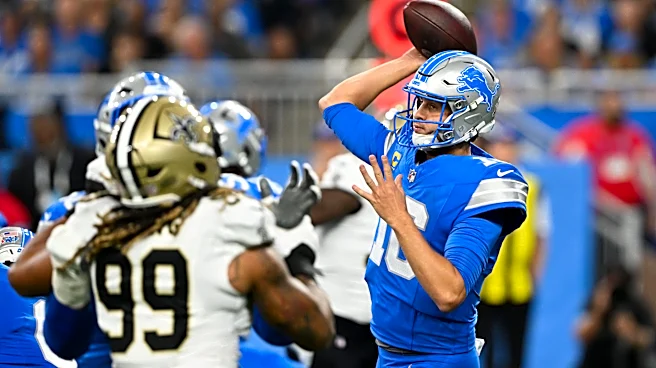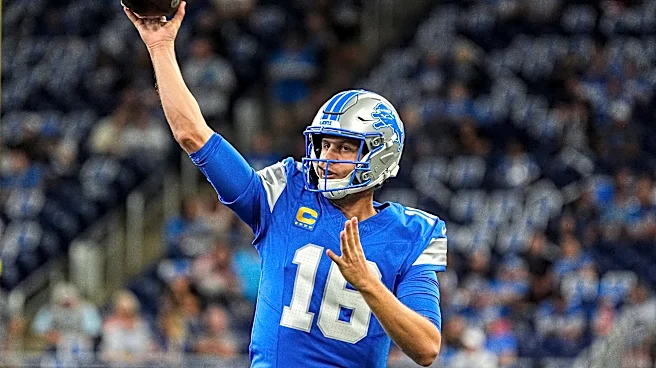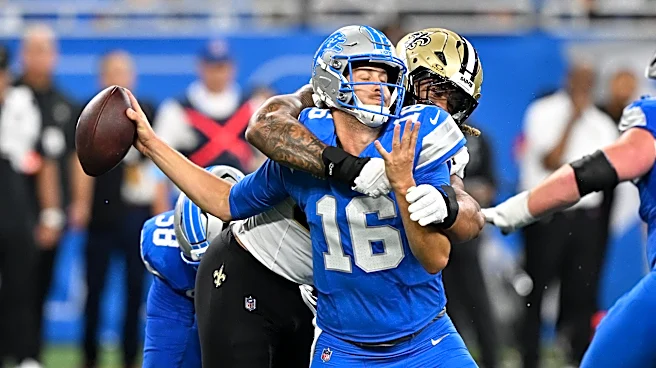


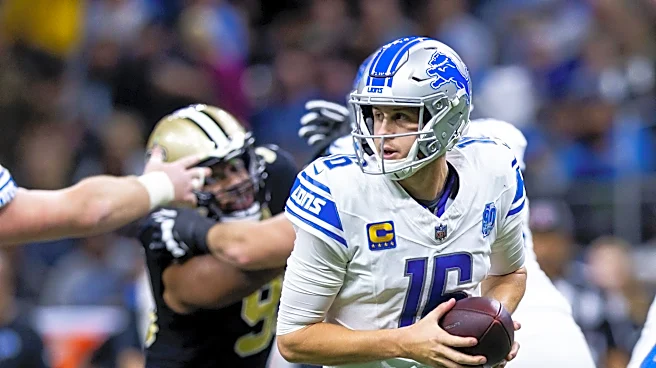

In the second quarter of the Detroit Lions’ win over the New Orleans Saints, they appeared to catch a significant break. Quarterback Jared Goff was sacked by Chase Young, jarring the ball loose, and the Saints recovered it in the end zone to potentially tie up the game at 7.
However, officials stopped the play before the extra point and opted to review the play. Goff’s arm was clearly moving forward when he released the ball, but the football traveled backward. Did it still count as a lateral, or was it an incomplete
pass?
Take a look yourself:
Officials determined that it was an incomplete pass, offering the Lions new life. Though they punted the ball away on that possession, they would hold the Saints scoreless until they built up a 21-point lead.
Vice president of instant replay Mark Butterworth explained the call in the post-game pool report:
“If the defender contacts the passer prior to the passer starting his throwing motion, then it can be ruled as a backward pass. Because Goff already started his throwing motion and then the defender contacted him, it is therefore a forward pass.”
He explained further:
“If the defender contacts the passer prior to the passer starting his throwing motion, then it can be ruled as a backward pass. Because Goff already started his throwing motion and then the defender contacted him, it is therefore a forward pass.”
And he’s right. What is defined as a forward pass is laid out pretty clearly in the rulebook. Here is the relevant part, as laid out in the official NFL rulebook—Rule 3, Section 21, Article 3, item 1:
Item 1. Contact by Team B Player. If contact by an opponent materially affects a passer after the passer begins his throwing motion, it is a forward pass if he passes the ball, regardless of where the ball strikes the ground, a player, an official, or anything else.
Goff joked after the game that he thought it was a good call, but then he immediately admitted he didn’t know of the rule.
It’s certainly an odd ruling, but it appears to be by the book.