

The Cincinnati Bengals are set to take on the 2026 NFL Draft and are currently armed with the No. 10 overall pick. Unfortunately, with their lack of franchise success, it’s not an unfamiliar scenario to be picking high in a respective draft class.
However, whether it’s in a No. 1 overall pick, ones in very late rounds, and everything in between, Cincinnati has had a lot of success with finding draft gems. Like so many things surrounding one of the most popular events in the NFL, the criteria surrounding a list
such as this one can be quite subjective.
From Hall of Famers to franchise quarterbacks to mid-round steals, these picks didn’t just produce—they helped define eras of Bengals football.
Here’s a look at the 10 best draft picks in team history, factoring in production, accolades, value (the major emphasis here), and overall impact on the franchise. It’s not only about being a top pick per se, but finding immense value in later rounds and accounting for a lack of recognition from subpar Bengals teams, too. Another facet to consider is a quality player who had solid years with the Bengals, but also went on to have even more stardom elsewhere.
The Top-10
No. 10: Ja’Marr Chase, Drafted: No. 5 overall, 2021
Already one of the most explosive receivers in the league, Chase has shattered records early in his career and formed a historic connection with Joe Burrow. Despite the lack of Championships to their name, the Bengals have a great track record of selecting great receivers throughout all rounds in the draft. In a year or two, Chase could very well be within the top-5 or higher on this list, should he maintain his incredible rate of production.
No. 9: Corey Dillon, Drafted: 2nd round, 1997
One of the most productive running backs in team history, Dillon consistently put up elite numbers despite playing on struggling teams. His toughness and reliability made him a rare bright spot in a difficult era, while being overlooked by contemporaries whom he statistically overshadowed.
While he may have personal qualms with only being No. 8 on this list (we love you, CD!), he definitely deserves Pro Football Hall of Fame recognition with his numbers and cohorts already in Canton. He is currently within the top-20-ish in all of the major rushing statistical categories in league history.
No. 8: Lemar Parrish: 7th Round, 1970
If Isaac Curtis was “Jerry Rice before Jerry Rice” (more on that later), then Parrish was Devin Hester or Deion Sanders before they hit the NFL scene. Parrish was a multi-dimensional threat, making eight total Pro Bowls (six with Cincinnati, two with Washington), and had to be accounted for at all times.
While Ken Riley was steady as his corner-mate, Parrish was the risk-taker, often leading to gigantic dividends. Even though he played defense and special teams, Parrish had a nose for the end zone with 12 total touchdowns on those units. He was enshrined in the Bengals’ Ring of Honor in 2025—not bad for a 7th Round pick in 1970.
No. 7: Geno Atkins, Drafted: 4th round, 2010
Atkins represents everything you want in a mid-round pick: development, dominance, and durability. Undersized by traditional standards, he became one of the most disruptive interior defenders in the league. An eight-time Pro Bowler, Atkins anchored a defense that powered multiple playoff appearances in the 2010s. Atkins, along with Fletcher Cox and Aaron Donald, revolutionized the interior defensive line position in the recent era of football.
No. 6: Ken Riley, Drafted: 6th round, 1969
Value, value, value. “The Rattler” was not only a Rhodes Scholar candidate, but was originally a quarterback at Florida A&M University. In that same 1969 Draft, Cincinnati selected quarterback Greg Cook, and Paul Brown decided to move Riley to cornerback.
What ensued was a Hall of Fame career, with Riley sitting as the No. 5 NFL leader in interceptions (65). A true draft steal, Riley enjoyed a long, highly productive career highlighted by exceptional ball skills and consistency. His legacy has only grown with time, and his enshrinement in Canton was long overdue (he’s also in the Bengals’ Ring of Honor). RIP to a Bengals legend.
No. 5: Chad Johnson, Drafted: 2nd round, 2001
Johnson wasn’t just productive—he was transformational. As the face of the Bengals’ mid-2000s resurgence, he combined elite route running with charisma that brought national attention back to Cincinnati. A six-time Pro Bowler, he led the league in receiving yards twice and was the heartbeat of an offense that helped snap the franchise’s long playoff drought. His impact went beyond stats—he made the Bengals relevant again.
No. 4: Willie Anderson, Drafted: No. 10 overall, 1996
While the Bengals struggled as a team during much of his tenure, Anderson was a model of consistency and dominance. One of the best right tackles of his era, he earned multiple All-Pro honors and routinely shut down elite pass rushers. His longevity and excellence during a difficult stretch for the franchise only underscore his value as a draft pick. He was a pillar in an otherwise unstable time, and should be another Canton no-brainer.
No. 3, Ken Anderson, Drafted: 3rd round, 1971
Anderson is one of the best value picks not just in Bengals history, but in NFL history. A third-round selection who became an MVP and the engine behind the team’s early success, he thrived in Bill Walsh’s system before it became famous elsewhere.
His 1981 MVP season culminated in a Super Bowl appearance, and his efficiency and accuracy were ahead of his time. Simply put, he legitimized the Bengals as a competitive franchise, and he should be another Bengals player who should be in the Hall of Fame. Put Ken in Canton!
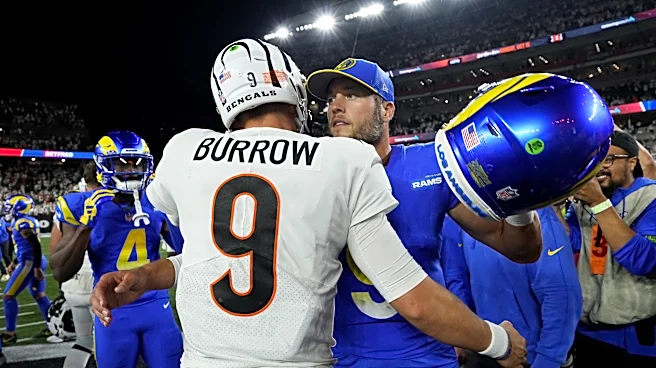
No. 2: Joe Burrow, Drafted: No. 1 overall, 2020
Few players in franchise history have changed the trajectory of the team as quickly as Burrow. Arriving after a dismal 2019 season, he immediately injected credibility, toughness, and swagger into the organization. Within two seasons, he had the Bengals in Super Bowl LVI and consistently competing deep into January.
His leadership and elite play have made Cincinnati a destination and a contender—something that simply wasn’t the case before he arrived. Injuries aside, Burrow has made the Bengals “cool” again, with even the most casual of fans know about Burrow and the Bengals.
No. 1: Anthony Munoz, Drafted: No. 3 overall, 1980
There’s no real debate here. Muñoz isn’t just the greatest draft pick in Bengals history—he’s arguably the greatest offensive lineman the NFL has ever seen. A cornerstone of the franchise for over a decade, he dominated opposing pass rushers and paved the way for two Super Bowl runs.
His résumé speaks for itself: 11 Pro Bowls, nine First-Team All-Pro selections, and a gold jacket. When you talk about “can’t-miss” picks, Muñoz is the gold standard.
Honorable Mentions (in no particular order)
A.J. Green, Drafted: 2011, No. 4 overall:
Green delivered exactly what you hope for from a top-five pick—and then some. From the moment he stepped on the field, he was one of the league’s most reliable and explosive receivers. With seven straight Pro Bowl selections to start his career, Green helped usher in a new era of sustained competitiveness.
Green’s impact is especially notable, given the tumultuous nature of the Bengals at that time, even if he got overlooked because of the team’s lack of playoff success and injuries later in his career. His connection with Andy Dalton defined one of the most successful regular-season stretches in team history, and he should also have Canton consideration, even with the logjam at the position in his playing era.
While he should have Hall of Fame consideration despite the late-career injuries, his impact on rebounding the Bengals under Marvin Lewis’ final years can’t be discounted. With all of the other Bengals players that have either been forgotten because of years passing and/or the expectations that come with a No. 4 overall pick, he barely misses out on the list.
Boomer Esiason, Drafted: 2nd round, 1984
Esiason brought both production and leadership at tremendous value. A second-round pick who went on to win the 1988 NFL MVP, he led the Bengals to a Super Bowl appearance and was one of the league’s premier quarterbacks at his peak. His left-handed delivery and downfield aggressiveness powered one of the most explosive and innovative offenses of the era.
When someone reflects back on the Bengals’ heyday of the 1980s, many remember Boomer’s flowing blonde locks and insane sale of the play-action fake. Like with Chad Johnson, Boomer brought the small-market Bengals into the NFL limelight. It seems criminal to leave No. 7 off the top-10, but with many other recent picks ascending to superstardom, he’s in this category, even with his Ring of Honor status.
Max Montoya, Drafted: 7th Round, 1979
As a Southern California native myself (where Montoya is from originally), I heavily weighed putting Montoya in the top-10—not just for geographical purposes, but because of his career achievements given where he was drafted. With Munoz’s eventual arrival, the SoCal duo ended up spearheading arguably the most dominant offensive line of the 1980s.
Montoya was nominated to four Pro Bowls and was a Second-Team All-Pro in 1989. Not only was he part of the Bengals’ 40th and 50th Anniversary Teams, but he played at a high level for 16 (!) seasons in the NFL. If there’s any justice, he’ll make the Ring of Honor soon.
Sam Hubbard, Drafted: 3rd Round, 2008
In what would become Marvin Lewis’ last year as the Bengals’ head coach, they sought out defensive line help in the Draft. Hubbard, the local guy was tabbed as one of two third-round picks by the team that year.
Not only did he have one of the most iconic plays in team history with his “Fumble in the Jungle” return for a touchdown against the Ravens in the 2022 Wild Card Game, but he was one of their most productive edge defenders ever.
Bob Trumpy, Drafted: 12th Round, 1968
Many teams in today’s NFL are looking for that “flex” option at tight end, wherein a mismatch can be created by size, but the blocking asked of traditional tight ends is lower on the totem pole. Trumpy revolutionized the tight end position in the late 1960s and 1970s, providing a huge (6’6”) option for his quarterbacks, while running deep routes not seen by NFL teams from tight ends of that era (credit Paul Brown).
The current NFL draft only goes seven rounds over three days, but imagine 12 rounds? Trumpy was selected by the Bengals in their inaugural season and had an immediate impact. He was a two-time Pro Bowl nominee and made teams rethink how to use the tight end position for years to come. RIP, Bob.
Tim Krumrie, Drafted: 10th round, 1983
Krumrie epitomizes toughness and value. A 10th-round pick who became a defensive leader, he was a key piece of the Bengals’ Super Bowl team in the 1988 season. His willingness to play through injury—most famously a broken leg in the Super Bowl—cemented his legacy. Late-round hits like Krumrie are rare, and his impact makes him one of the best value picks the franchise has ever made. He is on the team’s Ring of Honor.
T.J. Houshmandzadeh, Drafted: 7th Round, 2001
The Bengals took a flyer on Chad Johnson’s receiving college teammate, thinking they had a developmental guy in the wings. While he battled early injuries, “Housh” became a major part of the Bengals’ lethal passing attack under Carson Palmer in the mid-2000s.
He made a Pro Bowl in 2007, and ranks No. 6 all-time in receptions in Bengals history. To boot, Houshmandzadeh is No. 10 in Bengals’ career receiving yardage and No. 8 in receiving touchdowns.
Isaac Curtis, Drafted: 1st round, 1973
Curtis was one of the original stars of the franchise and one of the league’s most feared deep threats in the 1970s. His speed and big-play ability helped shape the Bengals’ early identity and contributed to multiple playoff appearances. He remains one of the most impactful receivers in team history and a foundational piece of its early success and is also on the team’s Ring of Honor.
When we spoke with Ken Anderson on our Orange and Black Insider podcast, No. 14 coined him “Jerry Rice, before there was Jerry Rice”. If you stack up Curtis’ career numbers to those of Hall of Fame wide receivers such as Drew Pearson, they match up pretty well.
Andrew Whitworth, Drafted: 2nd round, 2006
A long-time leader and anchor on the offensive line, Whitworth’s versatility and longevity made him invaluable. His impact extended well beyond his on-field play, but he may be more well-known to the masses for his five seasons with the Los Angeles Rams (and Super Bowl LVI win over the Bengals) than his 11 years with Cincinnati.
Carlos Dunlap, Drafted: 2nd Round, 2010
While things ended on a sour note between Dunlap and the Bengals, his impact on the franchise can’t be denied. He ranks second in team history with 82.5 sacks (since that stat became officially counted), and earned two Pro Bowl nominations (2015-2016).
Carl Pickens, Drafted: 2nd Round, 1992
In the wake of the stardom that Johnson, Green, and Chase have given the Bengals, Pickens stands a bit in the background, even though he was one of the most productive Bengals wide receivers in team history. Initially starting out as a punt returner for the Bengals, Pickens was one of the most dominant wide receivers in the NFL from 1994-1996.
He racked up 40 receiving touchdowns in that three-year span, creating a great connection with quarterback Jeff Blake. He was nominated to two Pro Bowls (two Second-Team All-Pro nods, too) in his career, as well as being the 1992 Offensive Rookie of the Year. The “Lost Decade” has seen his franchise value diminish.
Rudi Johnson, Drafted: 4th Round, 2001
He wasn’t overly fast or probably wouldn’t score well in today’s RAS metrics, but Johnson was a very productive running back for the Bengals. He is the team leader in career rushing touchdowns, and many will remember his dismantling of the 2003 undefeated Chiefs at the then-Paul Brown Stadium. RIP, Rudi.
Other Considerations: Andy Dalton, Takeo Spikes, Carl Pickens, Brian Simmons, Reggie Williams, Joe Mixon, Carson Palmer, Michael Johnson, Bob Johnson, Tee Higgins, David Fulcher, Chase Brown.