
1,192 wins – if you had told me as a kid in the ‘90s that the Dallas Mavericks would stand second in regular-season wins from 2000 to 2025…I would not have believed it possible.
The first embedded video
in this post, on its face, feels like a celebration. It shows 1,192 regular-season wins across the NBA from 2000 through 2025, leaving the Mavs behind only the San Antonio Spurs. Not second in a cherry-picked stretch. Second over a full quarter-century. That’s real. That’s substance. That’s a franchise that, for most of this century, has shown up, competed, and mattered.
Those wins bought a lot of good things. Sellouts at the AAC. Merchandise flying off shelves. A fan base that rarely had to check out by January. Three trips to the Finals. A championship in 2011 that still feels like a civic inheritance. For 25 years, Mavericks basketball has mostly lived in the space between relevant and dangerous, and that’s not something to dismiss or diminish.
But that same consistency has also done something quieter to the fan base. It’s trained expectations. It’s taught people—not unreasonably—that the Mavericks don’t really do wilderness. That when one era ends, another begins. That you can retool, shuffle pieces, squint at the roster, and convince yourself the next version is already on the way. Historically, that belief hasn’t been wrong all that often.
The question now isn’t whether the Mavericks can retool again. It’s whether the conditions that made retooling possible for 25 years still exist.
Because this time, retooling requires something the franchise no longer has in abundance: assets. And whether those can be replenished—by moving veterans currently on the roster and using the returns wisely—is no longer an assumption. It’s an open question. One with real consequences, and far less margin for error than this franchise has ever had to confront since the turn of the century.
That expectation of perpetual relevance is why so much of the current conversation feels slightly untethered from the math. It’s why phrases like “let’s see what this looks like healthy” land as reasonable instead of evasive. It’s why ambiguity from the front office reads as optionality instead of necessity. For most of this century, waiting really did work. The Mavericks could afford patience because they controlled their future. Draft picks existed as safety nets. There was always another lever to pull. Largely, because between Dirk and Luka, there was always a star to build around and, if need be, fall back on.
Yes, Cooper Flagg just dropped 42 on a Utah team with the defensive prowess of a pasta colander, and he is showing that his second-year leap may keep this team out of a longer patch of irrelevance. This sounds like a positive until you sit with how harshly extended mediocrity can be for any franchise—ask the Bulls, Pelicans, or Kings.
The Luka era was built on urgency. Future assets were burned in pursuit of contention around a generational star. Whether those moves were good or bad in isolation almost doesn’t matter anymore; the ledger is what it is. The picks are gone. The swaps are spoken for. After 2026, the Mavericks enter a stretch where they largely don’t control their own first-round destiny until 2031. That reality doesn’t bend to optimism, and it doesn’t care how competitive the roster looks on paper in January.
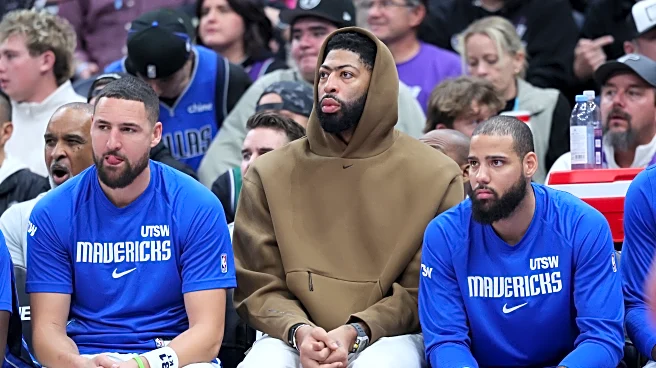
Which brings us to the trade deadline, and to Anthony Davis.
Publicly, the messaging has been careful, even contradictory at times. Maybe they’ll trade him. Maybe they won’t. Maybe the offer has to be right. Maybe they’re comfortable keeping him. That’s not confusion—it’s posture. You don’t announce desperation when you’re trying to manufacture a market. You project strength, even if internally the path forward is already narrowing.
The Mavericks are betting on scarcity. On other stars staying put. On contenders talking themselves into one more swing. On Davis staying healthy long enough for supply and demand to tilt in their favor. If Giannis doesn’t move. If Lauri Markkanen stays in Utah. If the field thins. Then, suddenly, Dallas has the most impactful big man available when fear starts driving decisions instead of patience.
It’s a rational gamble. It’s also a fragile one.
Because every missed game chips away at that leverage. Every week that passes compresses the timeline. And all of it is happening while the organization itself is operating without a settled long-term decision-maker. Matt Riccardi. Michael Finley. Cuban reinserted into the room. Jason Kidd letting his opinion be known. Patrick Dumont listening to every voice after learning, the hard way, what happens when he trusts the wrong one.
That many perspectives can protect you from catastrophe. It can also make clarity elusive. Especially when some of those voices are incentivized to compete now, while others are tasked with protecting a future they may not be the ones to steward.
Layer on the uncertainty around who the next general manager will actually be—Kidd, Dennis Lindsey, someone else entirely—and the stakes sharpen. Decisions made between now and the deadline won’t just shape this season; they will define the constraints under which the next regime operates. Temporary authority, permanent consequences.
And this is where the win-total video comes back into focus, not as a celebration, but as a warning.
For 25 years, the Mavericks have rarely had to choose between immediate relevance and keeping the next era sparkling with promise. They’ve lived in a sweet spot where both felt attainable. That history has produced great basketball and great memories—and it has also left this fan base uniquely unprepared for the idea that the right move might make the team worse before it makes it better.
Some of the correct decisions in the next few months may lead to fewer wins, not more. Fewer sellouts. Less comfort. Not because the franchise has failed, but because it’s finally being asked to do something it almost never has: step back deliberately to build forward responsibly.
Cooper Flagg offers hope. If he’s good quickly—and the recent stretch suggests he will be—the danger isn’t that the Mavericks will be bad for long. It’s that their record won’t matter either way. Past this next draft and for the remainder of the decade, Dallas no longer benefits from its own losses. Any assets recouped from moving veterans won’t be (barring an unlikely return of any of their own picks) tied to draft position, and the upside of underperformance belongs elsewhere. In that environment, mediocrity isn’t a stepping stone—it’s just time passing without return.
That’s the uncomfortable space Dallas is in now. Not broken. Not hopeless. Just exposed to a kind of decision-making this franchise, and this fan base, hasn’t had to practice.
And whether they embrace that reality—or try to retool their way around it one more time—will define the next decade far more than any single trade rumor ever could.