

Sports cliches are such for a reason. No matter the sport, fans will hear the same phrases repeated over and over again:
“1% better every day.”
“One game at a time,”
“Trust the process.”
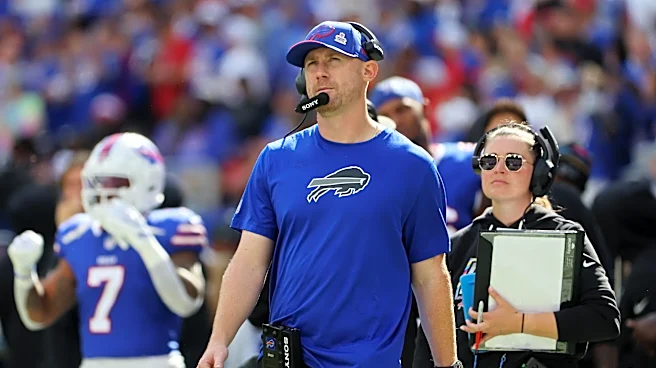
Whatever the phrase entails (“put the ball down” is the Buffalo Bills head coach Joe Brady’s newest idiom), it’s something people gravitate towards like a weighted blanket; it provides comfort and helps them feel like they’re being protected from the world outside. Reporters won’t make an entire story about it, talking
heads won’t berate you for it, and you’re not likely going to get a call from your agent saying you need to read a canned statement to apologize for it.
But there’s one such phrase that may actually harm a team like the Bills as they come off their first loss of the 2026 regular season. That phrase, or versions of it, has been spoken over and over again in locker rooms and Monday press conference for years on end. The phrase is something to the extent of:
“We are looking forward.”
Bill Belichick may have leaned into it most significantly with his famous “we’re on to Cincinnati” press conference, but players and coaches around the league have adopted this mindset and terminology when they simply want the press to get off their backs and would prefer a way to do that which is less likely to get them fined by their teams.
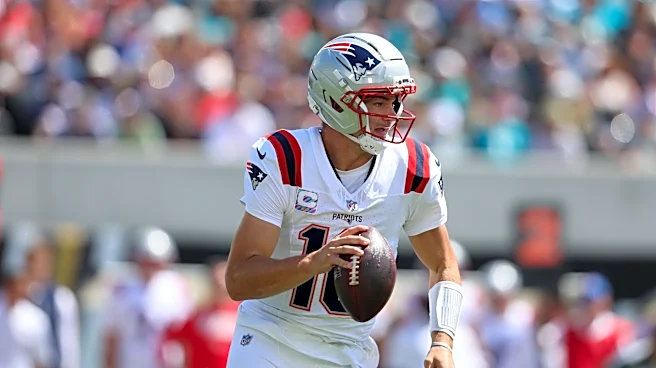
“How” and “why” are far more important interrogatives than “what”. This concept applies almost universally from everything encompassing the study of the universe to moral philosophy to fixing your dishwasher. The reason those specific interrogatives matter is because they are intrinsically more predictive, in addition to being descriptive. The Bills lost to the New England Patriots on Sunday. This is the “what”. “A win is a win” is the cliche for this situation, certainly. But “how” they lost and “why” a team wins or loses a game can help the team get a better handle on the future than simply the fact that they won or lost. “How” and “why” dabble in quality and components of play, and quality and components of play predict future outcomes more than past outcomes predict future outcomes.
I’d make the argument that even just reflecting on the most recent game isn’t looking back far enough to really capture enough of the “why” and “how” for them to be truly predictive. The Bills have played four games. It’s hard to believe, but almost 25% of their regular season is over. They have an appropriate sample size of games to glean info from that, regardless of wins and losses, they should be able to extract meaningful takeaways because it’s not only Bills sample size; it’s now sample size of all teams they’ve played. We can go over how much of a week to week league it is, but not all teams are qualitatively equal week over week, and we have markedly more evidence now than we did when the ball kicked off week one on not just the Bills, but on all Bills opponents and their opponents as well.
Buffalo played a Texans defense in Week 1 that is spectacularly talented but schematically simple on defense. The result was a barnburner victory for the Bills. The Texans are now 0-4 and their pass defense has proven to be less effective than 2025.
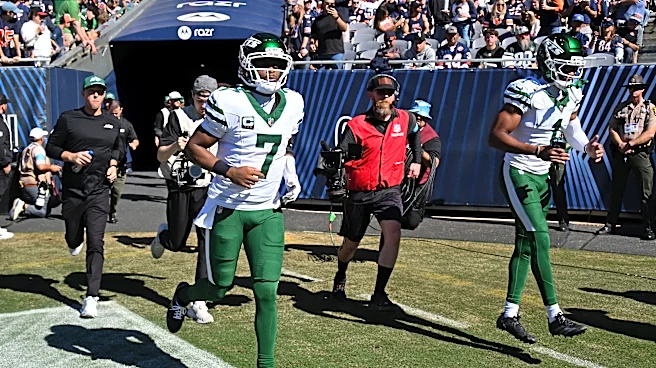
They played a shorthanded Detroit Lions team on a short week immediately after. This same Lions team then proceeded to give up a hope-inflating day to the New York Jets and quarterback Geno Smith and a franchise QB performance to Carolina Panthers QB Bryce Young, who was missing his #2 receiver. The Bills jumped out to an early lead against the Lions and held on as the Detroit offense heated up later in the game.
The Los Angeles Chargers maintained their 2026 stumbling through the Bills game and beyond, making the five turnover win the Bills pulled off look even less impressive in hindsight after the Bolts fell to 0-4.
The teams the Buffalo Bills have beaten have a collective record of 2-10. The NFL is not a league where every team is equally as good at the start of the regular season week; things are revealed in hindsight. Early season games are a lot like training camp reactions in the sense that you really don’t know if one side is good or the other side is bad until you see them against other non-Bills players. We’ve now seen the Bills against four teams who have been, through the first quarter of the season, bad or middling teams. They’re 3-1 against those bad and middling teams. With respect to legendary NFL head coach Bill Parcells, you are not what your record says you are until the season is over. Until then, you are a collection of “hows” and “whys” that hopefully lead to positive overall outcomes.
The Bills have a rookie head coach and a rookie defensive coordinator. There is no reason that being 3-1 against bad-to-middling teams should be an immediate cause for a panic. There’s every reason to believe that rookie coaches, like rookie players, are not a finished product and that the team can get better through their development. Instead of panic, we should (as Joe Brady himself noted) recognize the smoke detectors going off before the house is ablaze, go searching for the fire, and put it out. The Bills have the opportunity to do so in the week leading up to a showdown with a Super Bowl favorite Los Angeles Rams team. Maybe the detector is just missing a battery, maybe someone was cooking burgers on the stovetop and forgot to turn on the vent, or maybe there’s a roaring inferno that threatens to bring the fire department to the residence. But not all 3-1 teams are created equal.
Hindsight can tell us what type of 3-1 team we think the Bills are now, and hindsight will tell us in January what type of 3-1 team the Bills were now.
…and that’s the way the cookie crumbles. I’m Bruce Nolan with Buffalo Rumblings. You can find me on Twitter and Instagram @BruceExclusive and look for new episodes of “The Bruce Exclusive” every Thursday on the Rumblings Cast Network — see more in my LinkTree!