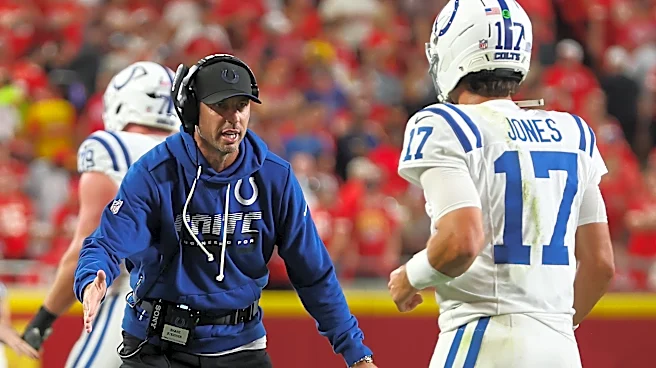


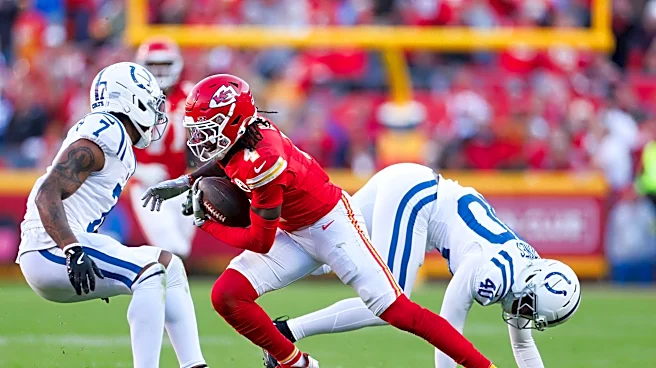
I have been hard on Shane Steichen plenty of times over the last few years, so I have no problem saying when he gets something right. Sunday night against Kansas City was the best coaching performance of his Colts career.
Indianapolis still lost 33-30 in overtime and fell to 0-2, so there are no moral victories to celebrate. Still, this was about as close as one gets. The Colts went into Arrowhead, played one of the best teams in football into the final seconds of overtime and did it while Kansas
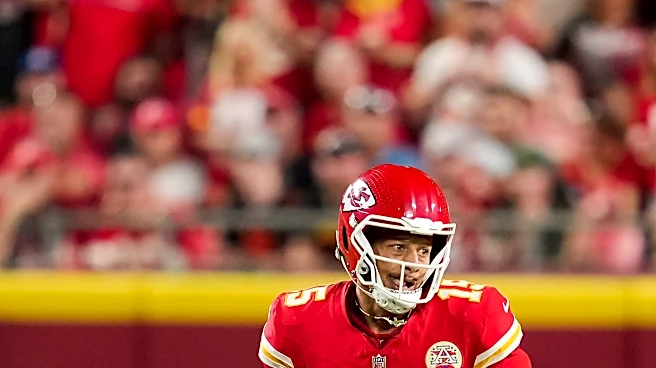
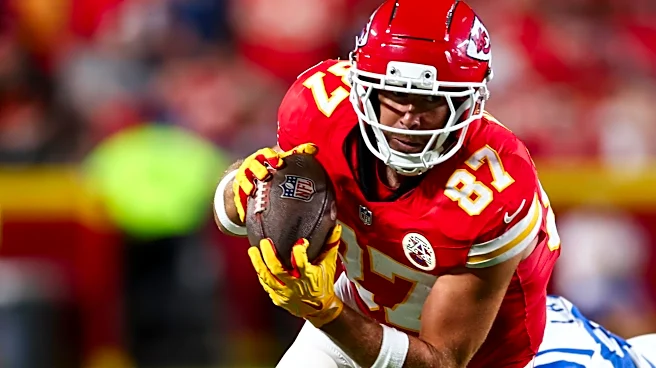
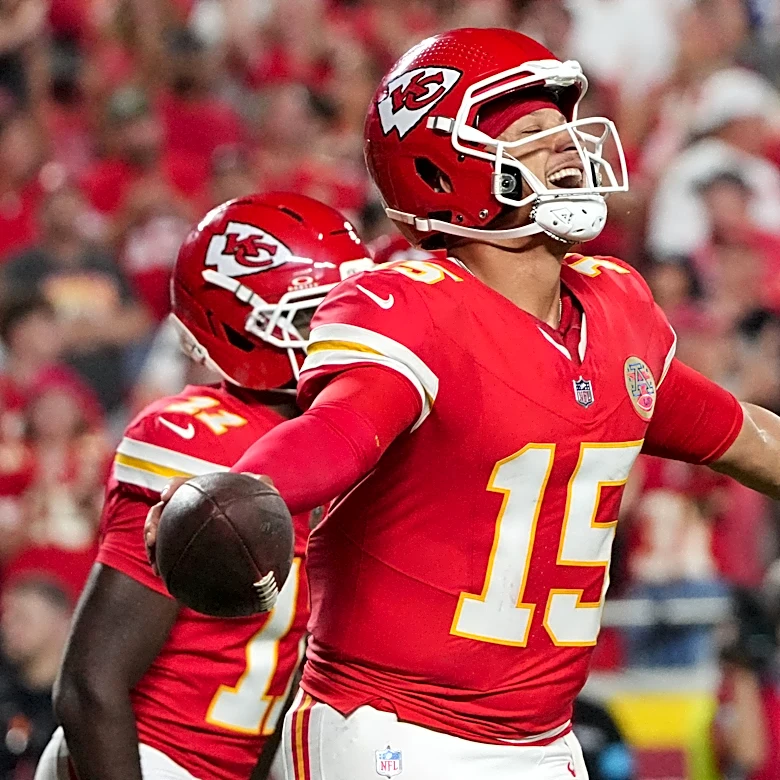
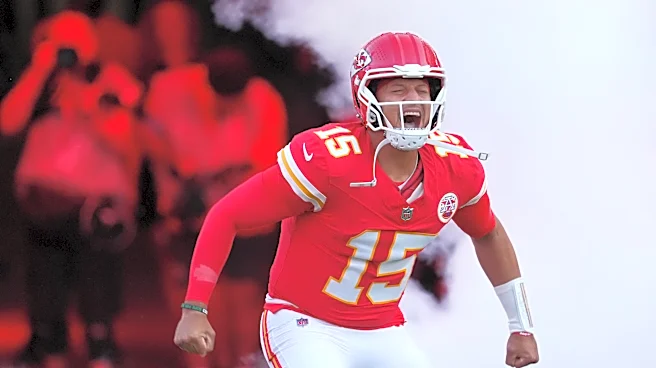
City’s best players were playing extremely well. Patrick Mahomes finished with 382 passing yards and three touchdowns, Kenneth Walker III ran for 117 yards and Travis Kelce looked like the Kelce of a few years ago with nine catches for 101 yards and a touchdown. Kansas City did not give Indianapolis an opening by playing poorly.
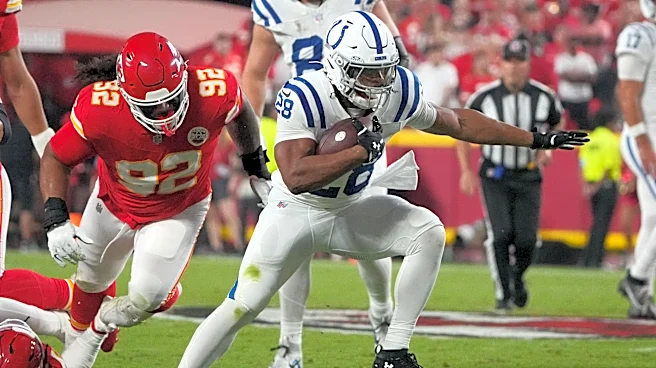
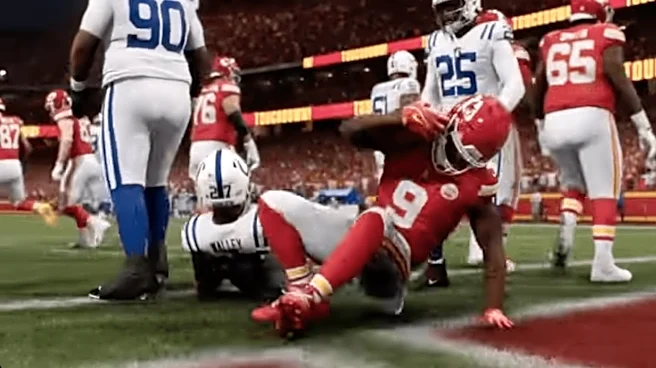
The Colts also lost Alec Pierce early in the second quarter after already entering the game without Ashton Dulin, yet Steichen continued to find ways to move the offense. Jonathan Taylor scored twice, Josh Downs consistently came through on third down and Laquon Treadwell, of all people, ended up making the biggest offensive play of overtime. The Colts scored 27 points in regulation and had a chance to win a game in Arrowhead that very few people expected them to be in late.
That is why I have a hard time with the criticism Steichen is getting for the decision that followed Treadwell’s 48-yard catch in overtime.
There is absolutely an argument for going for it on fourth-and-8. I understand it. I just do not agree with it.
The case for going for it
The easiest argument is also the most convincing one: keep the ball in your own hands.
Kansas City had already taken a 30-27 lead on Harrison Butker’s 31-yard field goal. The Colts answered immediately when Daniel Jones found Treadwell for 48 yards, moving the ball from their own 35 to the Kansas City 17. Three plays later, Indianapolis was facing fourth-and-8.
Go for it, pick up the first down and the Colts are suddenly in position to win the game themselves. Convert and they can continue draining the clock before either scoring a touchdown. It’s also worth noting that getting the 1st down does not ensure that they will win the game. However and more importantly, Patrick Mahomes never gets the ball back unless the Colts decide to give it to him.
That last part is going to drive most of the criticism.
Who wants to voluntarily give Mahomes another possession in overtime? He had already thrown for nearly 400 yards. Walker was running extremely well. Kelce was finding openings throughout the game. Kansas City had just driven 55 yards on its first overtime possession before Indianapolis finally forced a field goal. Mahomes getting the ball back is obviously not the preferred scenario.
There is also something to be said for deciding the game yourself rather than asking the defense to save it. If Jones converts fourth-and-8, nobody is talking about whether the Colts should have kicked. Steichen probably gets praised for being aggressive on the road against Kansas City.
The historical numbers do not make going for it ridiculous either. NFL teams converted fourth-and-8 at a 39.4 percent rate in play-by-play data from 2013 through 2022. In a vacuum, that is close enough to four out of every 10 attempts that an aggressive coach can justify keeping the offense on the field.
The problem is that this was not a fourth-and-8 in a vacuum.
This was a very difficult fourth-and-8
Field position changes everything.
The Colts were already deep in Kansas City territory, which meant the Chiefs did not have much field left to defend. The closer an offense gets to the goal line, the less vertical space there is for receivers to threaten. Safeties do not have to respect a route going 40 yards over their heads because there are not 40 yards available.
Kansas City also showed no obvious intention of bringing heavy pressure. If the Chiefs rush four and drop seven, Jones is looking at seven defenders covering five eligible receivers in a condensed part of the field. The Colts needed eight yards for the first down, and there were only about 20 yards of field behind the line of scrimmage.
Spread seven defenders across a space roughly 20 yards deep and 53⅓ yards wide, and that works out to about 152 square yards of field per defender. Each player could realistically only be 6 yards away from everything… that is nothing!
Obviously, football coverage is not divided into equal boxes, but it gives you an idea of how crowded that part of the field becomes. The Chiefs could sit around the sticks, keep everything in front of them and not worry nearly as much about being beaten deep.
The third-down play right before it showed exactly how difficult that area of the field was to throw into. On third-and-13, Jones dropped back and never even had a clean window to get the ball out. Kansas City flooded the short field, took away the routes and forced him to hold the ball. If the Colts could not find anything on third-and-13, there was little reason to think fourth-and-8 was suddenly going to offer an easy answer.
That is why I do not think the normal fourth-and-8 conversion rate tells the whole story here. Around midfield, the offense has much more space to stretch the defense vertically. Near the red zone, that space disappears. This was a much tougher fourth-and-8 than the average one.
That is a completely different fourth-and-8 from one around midfield, where the defense has to respect the entire field.
Could Steichen have drawn up something that worked? Of course. Downs is excellent underneath, Taylor can create after the catch and Tyler Warren is a difficult matchup. Jones had also made several good throws on third and fourth downs during the game.
It still would have been a very low-percentage play against a Chiefs defense that knew exactly where the Colts needed to get. It would have been much much less than 39%.
If the Colts fail, the game ends immediately. There is no second chance and no opportunity for the defense to make one play. Kansas City wins 30-27 and everyone spends Monday asking why Steichen passed up a 38-yard field goal.
That risk is being glossed over too easily.
Kicking gave the Colts another path to win
The field goal was almost automatic.
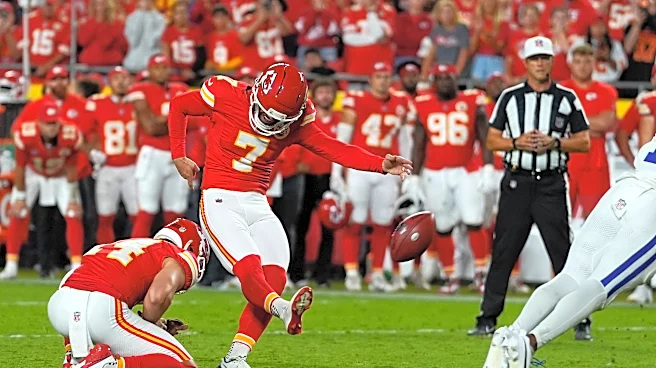
Shrader had already made kicks from 42 and 49 yards earlier in the game, and his 38-yarder in overtime tied it at 30. The decision essentially became this: attempt a difficult fourth-and-8 in a condensed field or make the short kick and ask the defense to keep Kansas City from gaining roughly 30 to 40 yards.
I will take the second option.
The Colts did not need the defense to shut Mahomes down for an entire quarter. They did not need a turnover. They did not even necessarily need to force an immediate three-and-out, although that would have been ideal. They needed to keep Kansas City outside comfortable field-goal range long enough to get the football back.
If the Colts force a punt, Jones gets another possession with enough time to move into Shrader’s range. Indianapolis had already watched Shrader make a 49-yarder with plenty of room to spare that night. Asking the offense to move 25 or 30 yards on multiple plays for a potential winning kick is a much more comfortable proposition than asking it to convert fourth-and-8 against eight defenders sitting in a short field.
Kansas City eventually moved 46 yards after the kickoff and Butker won it from 40 yards as time expired. Walker did most of the early work on the drive before Mahomes found him for 22 yards on third-and-1, which was the play that effectively put Kansas City into winning position.
The defense did not get the stop. That does not automatically make the decision wrong.
Results and decisions are not the same thing.
The play-calling criticism makes even less sense
This is the other part of the overtime discussion that I cannot understand.
After Treadwell’s 48-yard catch, Steichen gave the ball to Taylor twice. He lost one yard on the first carry and two more on the second. Jones then scrambled for five yards, leaving the Colts with fourth-and-8 before the delay of game moved Shrader back for the field goal.
People are going to criticize Steichen for running Taylor twice because the plays did not work.
What was he supposed to do? Every person and their mother were yelling on X to “FEED JT” who had been dominant all game. Taylor was the Colts’ best offensive player Sunday as he had already scored twice, including a 24-yard touchdown before halftime and the game-tying five-yard score in the fourth quarter. For most of the night, Colts fans were begging Steichen to keep feeding him and they were begging for him to feed him after the catch. Don’t believe me, go look at all the posts online.
Then the game reaches its biggest possession, Steichen gives Taylor the football and Kansas City stuffs both plays.
Sometimes the other team wins. What was funny was seeing every analyst and fan completely change their tone and rip the decision.
There does not always have to be somebody to blame for a failed play. Chris Jones and the Chiefs’ defensive front are animals. Kansas City knew Taylor was the player Indianapolis wanted to lean on and stopped him.
Had Steichen dropped Jones back three consecutive times after the Treadwell catch and ended up facing fourth-and-10, the criticism would have been completely predictable. Why did you abandon Taylor? Why are you putting everything on Jones? Why aren’t you feeding your best player with the game on the line?
Instead, he gave the ball to Taylor and now the complaint is that he was too predictable.
That is hindsight coaching and it is a specialty of Colts fans.
I have criticized Steichen’s play-calling before and will do it again when it deserves criticism. I thought he should’ve been fired before the 2025 season!
This sequence after the Treadwell catch does not deserve criticism. The Colts put the football in the hands of their best offensive player and Kansas City won those snaps. There are games where the proper call still produces a bad result because the defender makes the play.
Steichen made the right decision
Going for fourth-and-8 would not have been insane. There is a legitimate argument for it, especially when the alternative gives Mahomes another possession. If someone believes an underdog on the road should take one shot to win rather than extend the game against the Chiefs, I understand the logic.
I still think kicking was the better decision.
As mentioned earlier, the normal fourth-and-8 conversion rate is around 40 percent, and this was a much more difficult situation than the average attempt because of where the Colts were on the field and how Kansas City could defend it. Shrader was hot and staring at a short field goal. Make it, and the Colts only needed their defense to prevent Kansas City from moving into Butker’s range before getting another opportunity themselves.
That is a much more realistic path than converting a difficult fourth-and-8 with the defense able to crowd the sticks and protect very little field behind it.
Kansas City went down the field anyway. Mahomes made plays, Walker continued his excellent night and Butker ended it as time expired. That is why the Chiefs are the Chiefs.
It should not erase what Indianapolis did before that.
I am not a Steichen defender. I have been on the other side more often than most. Sunday was different. This was the best game the Colts have played during his tenure and, for me, the best game he has coached. Indianapolis went toe-to-toe with Kansas City at Arrowhead while Mahomes, Walker and Kelce were all playing at a high level, overcame Pierce’s injury and gave itself a chance to win in the final minutes of overtime. The Colts lost 33-30, but nothing about the performance looked like the team that was embarrassed by Baltimore one week earlier.
There are no moral victories in the NFL, especially for an 0-2 team that desperately needs to start winning games. Houston comes to Indianapolis next before the Colts head to London to face Washington, and playing Kansas City close does nothing for them if they follow it with another loss.
Still, if Sunday’s performance is the version of the Colts that shows up going forward, they will win plenty of games. The Colts are in a much better position now as a team than where they were a week ago.
For once, Steichen should not be the guy taking the blame.