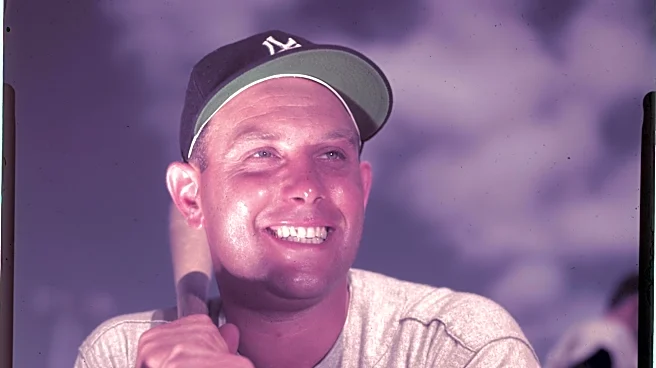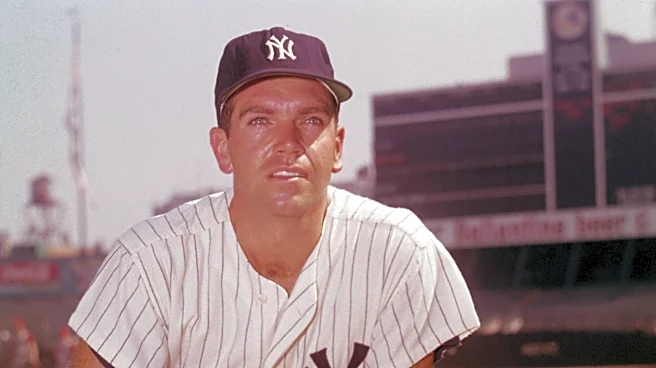



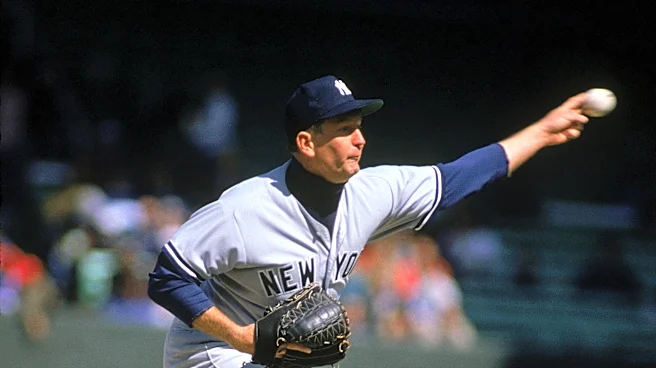
For some players, context defines their legacy. Bobby Richardson’s career statline — .266/.299/.335, 77 OPS+, 8.1 rWAR — was lackluster even by the standards of the 1950s and 1960s, and were it not for his elite defense at the keystone, he may have found the Yankees looking to replace him. But when the lights shined brightest, Richardson did too, posting a career .305/.331/.405 slash in the postseason.
Richardson is one of four players to have 11 or more hits in two or more World Series, has the most
RBIs (12) in a single World Series, and to this day he earns the distinction of being the only player in Major League history to win World Series MVP as a member of the losing team. And he did all of this despite retiring after his age-31 season in order to spend more time with his family.
Robert Clinton Richardson Jr.
Born: August 19, 1935 (Sumter, SC)
Yankees Tenure: 1955-66
Born and raised in Sumter, South Carolina, Richardson spent his youth dreaming of one day donning the pinstripes, thanks in part to the 1942 film Pride of the Yankees. After drawing attention from collegiate and professional scouts through his performance playing for youth clubs sponsored by the Salvation Army, the Kiwanis Club, and the American Legion, he signed with the Yankees on June 12, 1953 — the day of his high school graduation.
Over the next two years, Richardson steadily climbed the Yankees’ farm system, making his Major League debut on August 5, 1955, after Gil McDougald was injured after being hit by a batted ball during practice. The 19-year-old didn’t play much in that first cup of coffee, or in his second cup of coffee in 1956, as the Yankees already had a full infield that boasted McDougald, Billy Martin, Jerry Coleman, and Phil Rizzuto. Even so, he began to show the skills that would make him a staple in the Yankees lineup, stealing bases and flashing the leather.
A series of unfortunate events surrounding Billy Martin — a golf cart collision in spring training and an infamous brawl at the Copacabana nightclub — led to the Yankees’ incumbent second baseman being traded to the Kansas City Royals and opening the position for Richardson. A strong start to the season led to him earning his first All-Star nod, although he faded sufficiently down the stretch that manager Casey Stengel — who liked to platoon players and mess with the lineup, much to the frustration of the players — kept Richardson out of the lineup that October.
The situation repeated itself in 1959, where the Yankees failed to make the World Series, and again in 1960, as Richardson had a measly 67 OPS+. This time, though, he would finally get some extended postseason run, and Richardson would take advantage of it. Starting all seven games, Richardson went 11-for-30 with five extra-base hits (including a grand slam) and 12 runs batted in (including six in Game 3, a Major League record).
Thanks to this performance, Richardson was named World Series MVP despite the Pittsburgh Pirates coming away with the trophy. That would only be the beginning of Richardson’s reputation as an October presence. He was a key contributor to the Yankees’ 1961 and 1962 victories, slashing .391/.391/.435 in the former and providing elite defense in the ninth inning of Game 7 in the latter to protect a 1-0 lead. First, he executed a perfect relay with Roger Maris in right field to keep Matty Alou at third on a Willie Mays double. Then, he caught a screaming line drive off the bat of Willie McCovey for the final out; had the ball gone to the outfield, the Giants, not the Yankees, would have been champions.
Richardson played in the next two World Series, ultimately extending his streak of consecutive World Series starts to 30, although the Yankees lost both. In 1965, he decided to call it quits in order to spend more time with his family. After an injury forced Richardson’s close friend and double-play partner Tony Kubek to suddenly retire, the Bombers convinced Richardson to come back for one more year, and one more year was all they got: he hung up the cleats for good after the 1966 season at the age of 32.
Richardson’s bat was never his calling card, his one good year at the plate coming in 1962, in which he took advantage of the fact that, batting in front of Mickey Mantle and Roger Maris, he received pitches to hit, was aggressive at the plate, and posted a .302/.337/.406 line — all while striking out just 24 times. But what he lacked with the bat, however, Richardson more than made up for with his defensive reputation, winning five consecutive Gold Glove Awards.
Following his career on the diamond, Richardson remained in baseball in a less intense role: coaching college baseball. He managed South Carolina from 1970 to 1976, Coastal Carolina in 1985 and 1986, and Liberty from 1987 to 1990. Between it all, he sprinkled in an unsuccessful Congressional run in 1976, some public service in South Carolina, and a public speaking career. Although his wife just passed a month ago and he’s no longer a regular attendee at Old-Timers’ Day, he remains an active member of the community.

We wish Bobby a happy and healthy 91st birthday.
See more of the “Yankees Birthday of the Day” series here.