
Tonight is the 23rd anniversary of the most controversial call in college football history, and three nights ago Miami finally got its revenge.
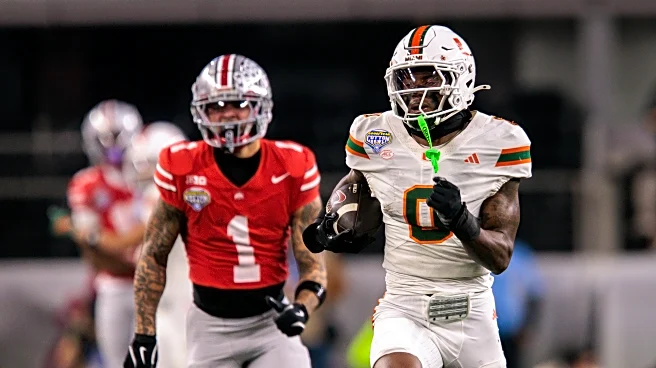
No. 10 Miami shocked No. 2 Ohio State 24-14 in the Cotton
Bowl, ending the Buckeyes’ quest to become the first repeat national champion in the 12-team playoff era, and the first since Georgia in 2021-2022 and Alabama in 2011-2012. The 9.5-point upset wasn’t just one of the biggest in the CFP era, but it was poetic justice 23 years in the making. It also set the tone on a weekend where Ohio State, Georgia, and Alabama all lost, marking a changing of the guard in college football.
And before moving on to a challenging Ole Miss opponent, it’s important to cherish the juxtaposition from this year’s New Year’s Eve to that night 23 years ago. In 2003, Ohio State ended Miami’s 34-game winning streak and stopped the defending champions from repeating. On Tuesday night, Miami returned the favor, stopping Ohio State’s own repeat bid with the exact same formula the Buckeyes used against them two decades ago.
For a program haunted by Terry Porter’s controversial pass interference flag in overtime of the 2003 Fiesta Bowl – the call that gave Ohio State new life and eventually a 31-24 national championship victory- this wasn’t just a win. It was redemption. It was closure. It was sweet, intoxicating revenge.
“I was full of emotions,” said cornerback Keionte Scott after his 72-yard pick-six gave Miami a 14-0 lead. “I think I took a little moment to peek at the [Ohio State] sideline and look at everybody and let them know what was going on.”
That sideline included this year’s Heisman finalist, Julian Sayin, who looked petrified throughout the night. That sideline included Ryan Day, who had no answer for Mario Cristobal’s trenches. And that sideline included Caden Curry, who came up with a hypothetical that Ohio State would beat Miami 9 out of 10 times if they played. A pointless hypothetical that Miami fans have been hearing throughout this postseason and one that was not at all a reality on Wednesday night.
The Canes sideline, however, included Miami legends Jimmy Johnson, Michael Irvin, and Ray Lewis – witnesses to The U’s most satisfying victory in a generation.
How the Mirror Reflected Back
The parallels between these two games are almost eerie, as if college football’s karma finally came full circle after 22 years. StateOfTheU’s own, Rob Weaver, discussed them in his feature leading up to the Cotton Bowl.
In 2003, Ohio State rode an elite defense featuring future NFL stars like Mike Doss, Will Smith, AJ Hawk, and Cie Grant. That defense held Miami’s star-studded offense – Willis McGahee, Clinton Portis, Andre Johnson, Kellen Winslow Jr., and Ken Dorsey – to just 24 points in regulation, controlled the clock, and physically dominated the defending champions.
In 2025, Miami used a similar blueprint. The Hurricanes’ defense, led by a diesel front of Akheem Mesidor and All-American Rueben Bain, Jr., held Ohio State to nine yards in the first quarter and sacked freshman quarterback Julian Sayin five times. They forced turnovers, including the epic Keionte Scott pick six. They punched the Buckeyes in the mouth – time and time again – until Ohio State had nothing left, including Jakobe Thomas who made future first rounder Carnell Tate cower under the bright lights, recording just three receptions for 37 yards. Sure, Miami native Jeremiah Smith was electric but he chose to chase waterfalls while Miami continues to build something special (the grass isn’t always greener Jeremiah, and you still have eligibility to right that wrong – but that’s for another day). The haymakers Miami threw continuously throughout the night were 23 years in the making.
The 2002 Buckeyes had Craig Krenzel, a game manager who let the defense dominate. Miami had Carson Beck, who completed 19 of 26 passes with zero turnovers and managed the game to perfection. Clean and efficient from start to finish. Neither quarterback was spectacular but each made the plays when needed. Krenzel made a key 17-yard pass on fourth-and-14 in overtime while Beck had an enormous run on third-and-long in the fourth. Both were exactly what their teams needed.
Ohio State in 2003 controlled the clock and won with methodical, grinding football, outrushing the Canes 145 yards to 65 yards. Miami in 2025 rushed for 131 yards on 40 carries, with Mark Fletcher Jr. earning offensive MVP honors. When Ohio State closed to 17-14 in the fourth quarter, Miami responded with a 10-play, 70-yard drive that consumed over five minutes and ended with CharMar Brown‘s game-sealing touchdown. Flipping the script from 2003, the 2025 Miami gathered 153 rush yards to the Buckeyes’ 45.
It was championship football – physical, relentless, suffocating. The kind of football Ohio State used to break Miami’s hearts in 2003. The kind of football Miami used to break Ohio State’s dynasty dreams in 2025.
The Hurricanes didn’t just beat Ohio State. They beat them the way Ohio State beat Miami in 2003, by punching them in the mouth until the defending champions crumbled.
What Was Stolen, What Was Returned
Understanding what makes this victory so sweet requires understanding what was stolen from Miami on that January night in 2003.
The 2001 Miami team has a legitimate argument as the greatest college football team ever assembled. The 2002 squad was almost as talented, riding a 34-game winning streak into the Fiesta Bowl as 11.5-point favorites – the near 10-point spreads in each game being another parallel. The Buckeyes were defending their championship against a program that hadn’t won a title in 32 years.
If Miami had won that game – if Terry Porter’s flag had never been thrown – the trajectory of college football might have been completely different. This is a little less of a hypothetical than the malarkey that Caden Curry and Notre Dame fans (regarding their playoff omission) have been spewing. Back-to-back titles could have cemented Miami as the dynasty of the 2000s. Recruits would have kept flowing to Coral Gables. The U would have maintained its throne.
Instead, the dynasty died that night. The 2003 Fiesta Bowl shaped the trajectories of both programs. Ohio State went 103-24 following that victory with multiple Big Ten titles, while Miami went 77-48 in the years after.
USC rose to prominence the very next season. Ohio State built their modern powerhouse on the foundation of that championship, playing in five national title games since 2003 and winning two more. Miami fell from grace almost immediately, never winning an ACC championship after joining in 2004, spending two decades trying to recapture lost glory.
The 2003 Fiesta Bowl didn’t just end Miami’s winning streak. It ended their dynasty. Ohio State built theirs on the ruins.
For 22 years, Miami fans have carried that pain. They’ve watched Willis McGahee’s knee get destroyed. They’ve replayed Ken Dorsey’s final incomplete pass. They’ve raged about Terry Porter’s delayed flag. They’ve watched Ohio State thrive while The U struggled to be relevant.
Tuesday night, Miami finally got to return the favor – and it felt glorious.
The Poetic Justice of It All
Perhaps the most poetic detail of Miami’s revenge? The Hurricanes will face No. 6 Ole Miss in the Fiesta Bowl semifinals on January 8.
The Fiesta Bowl. Yup, Miami’s first appearance in that stadium (kinda) since the night Terry Porter’s flag changed everything. Their first time playing in Glendale, Arizona since January 3, 2003 – when they left as heartbroken runners-up, their dynasty in ruins.
Now they return as giant slayers, having just ended Ohio State’s repeat bid the same way the Buckeyes ended theirs. They return with an elite defense punching opponents in the mouth and the capability to beat anyone in the nation if they repeat what they did Wednesday. They return with legends like Jimmy Johnson, Michael Irvin, and Ray Lewis believing again. Not only those legends, but the many Hurricanes who believed in Miami during the last two decades.
They return one win away from a national championship game at Hard Rock Stadium – their home field – where they could complete the most improbable redemption story in college football history.
Back in March, Michael Irvin posted about “stumping on the grave of that PASS Interference ghost.” That ghost has been exorcised. The pain has been washed away. The score has been settled. Irvin not only stomped on em, but he put that belt to ass.
The symmetry is almost too perfect: Ohio State ruined Miami’s title repeat in the 2003 Fiesta Bowl. Miami ruined Ohio State’s title repeat and now returns to the Fiesta Bowl to continue their championship run. The hunter became the hunted. The wounded became the avenger. The dynasty that was stolen might just be reborn.
What It Means
For Miami fans who have carried 22 years of anger, who have argued and who have wondered “what if” a thousand times – this victory means everything.
It means The U is back – not just competitive, but dangerous. Not just relevant, but feared. Not just hoping to recapture the past, but building something new while honoring what was lost. Mario Cristobal’s greatest strength – recruiting – has only been enhanced even more by proving his ability to secure quality wins and increase player development (this latter part has been on display not only with Francis Mauigoa and Bain, but also OJ Frederique, Malachi Toney, and Bryce Fitzgerald, among many other contributing underclassmen).
Ohio State came in as 9.5-point favorites, the defending national champions with dynasty aspirations. Miami punched them in the mouth for 60 minutes – the same way Ohio State punched Miami 22 years ago – and sent them home with their repeat dreams shattered.
The 2025 Hurricanes used 2003 Ohio State’s own formula against them: elite defense, game management, physical football, and relentless pressure. They beat the defending champions at their own game, in the biggest upset in CFP history, and earned a return trip to the stadium where their dynasty died.
Now Miami heads back to the Fiesta Bowl – not as 11.5-point favorites defending a championship, but as 3.5-point favorites trying to complete one of the greatest revenge stories college football has ever seen, especially after stubbing their toe against the likes of Louisville and SMU during this season and nearly squandering their playoff chances. One more win in Glendale, and they’ll play for a national championship at home in Miami Gardens.
The dynasty that was stolen in the 2003 Fiesta Bowl might just be resurrected in the 2025 Fiesta Bowl. The punch Ohio State threw 23 years ago finally got answered. The Canes continue their return to the promised land with their second big boy bowl in two weeks, countering the lone New Year’s Six they’ve played in the last two decades (an uninspiring 34-24 Orange Bowl loss to Wisconsin in 2017).
The pain is over. The revenge is complete. And somehow, impossibly, Miami gets to return to the scene of their greatest heartbreak to continue their championship run. The job is not finished.
Regardless, as it relates to Ohio State, after 23 years of waiting it feels like justice to return to Arizona.
The Hurricanes are back. And this time, they’re the ones doing the punching. We’re onto Ole Miss.
GO CANES!