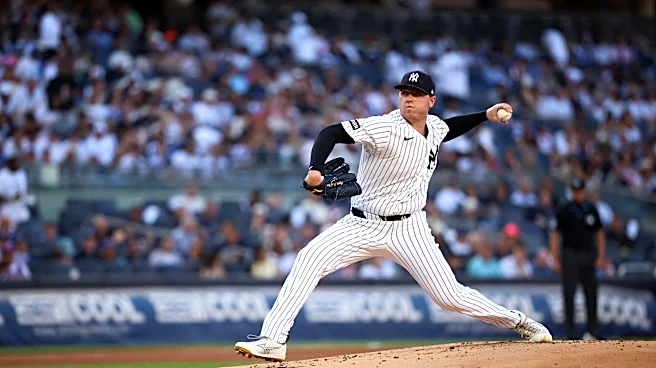





Welcome back to our series on the innovations the Yankees pitching department is making with the sinker! They’ve dusted off the pitch from a period of league-wide dormancy and have a renewed focus on disseminating it across as much of their pitching room as are willing to use it. Last month, I kicked off the series by looking at the way Cam Schlittler has incorporated the sinker into his arsenal and how that decision helped launch him to the stratospheric heights he is now pitching at.
For our second
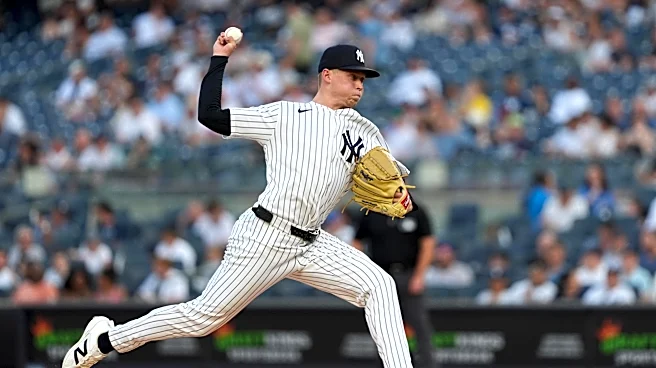
entry in the series, I’d like to turn to one of Schlittler’s rotation mates in Ryan Weathers. Acquired in a trade from the Marlins over the winter, Weathers was seen as an able deputy in the rotation while Gerrit Cole and Carlos Rodón recovered from their respective elbow injuries. Perhaps that is selling him a bit short, becuase with three years of team control and an enticing arsenal, it was easy to feel that Weathers was just scratching the surface of his abilities in his first five big league seasons and that he was someone the Yankees pitching coaches could mould into a rotation cornerstone for the present and future.
Weathers started off on a roll with a 3.00 ERA and 3.31 FIP across his first eight starts. But then he hit a serious rough patch giving up at least five runs in four out of five starts before steadying the ship a touch in his latest outing. The primary culprit for Weathers’ recent woes has been the long ball, the 26-year-old southpaw giving up ten home runs in his last six starts. He has allowed 16 on the year, which is sixth-worst among qualified pitchers. I believe the reason for this is his particular style of pitching.
Just looking at the raw metrics, you would think that Weathers’ four-seamer would be his most effective weapon coming in with an average velocity of 96 mph and over 15 inches of induced vertical break. However, it is tied for the 14th-worst four-seamer among the 571 pitchers who throw the pitch, worth -7 runs according to Statcast’s Run Value metric, which tells you how many runs a pitch is better or worse than average based on outcomes. Nine of the 16 home runs he has surrendered have come against the four-seamer, and I think I’ve discovered the reason why.
Generally when you throw a high-velocity, high-spin four-seamer, you want to target the top of the zone, particularly up and in to righties as a lefty pitcher. This keeps the pitch above the hitter’s swing plane, making it difficult to barrel and even harder to pull in the air with power. The problem for Weathers is that he likes to pitch his fastballs low in the zone, where it is much easier to do damage against the four-seamer.
Below is a heat map of all the four-seamers Weathers has thrown this season:

That hot zone down and in to righties is the problem area, as revealed when looking at all the home runs Weathers has allowed so far:

That is such a dangerous spot to throw the pitch to righties. Because it holds its vertical plane and remains flat through the zone, it becomes the perfect pitch to lift in the air when thrown there. It falls right in their natural swing plane whereas a sinker’s downward movement helps the pitch avoid the barrel low in the zone.
And that would be my prescription for Weathers: exchange out all those down and in four-seamers for down and in sinkers. The good news is it appears he is already starting to do that. Weathers is throwing the sinker a career-high 19.6-percent of the time as compared to just 3.1-percent of the time last year with the Marlins. This has come almost exclusively at the expense of the four-seamer, which is now sitting at a career-low usage rate of 27.8-percent, way down from 45.3-percent last season.
What’s more, the characteristics of the pitch have improved since he joined the Yankees. Last year with the Marlins, Weathers’ sinker averaged 20.6 inches of drop and 16.5 inches of arm-side movement. This year, it is averaging 21.8 inches of drop and 17.9 inches of arm-side movement, making it a top-30 sinker in the league when it comes to horizontal movement vs. average. This combined with Weathers’ ability to command the pitch at the bottom of the zone has made it his most effective pitch per Statcast’s Run Value at +3 runs. In addition, it is way better than the four-seamer at limiting damage, with a .400 SLG against as opposed to a .675 SLG against the four-seamer.
Finally, I believe further improvements with the sinker can facilitate a potential move to the bullpen. It’s between Weathers and Will Warren for demotion from the rotation once Max Fried returns from his elbow injury. Weathers and Warren have performed at a roughly similar level when looking at their expected metrics, but I just shudder at the though of Warren entering a game in the later innings with runners on base given his struggles pitching from the stretch.
Furthermore, I think Weathers’ stuff plays up way more in a bullpen role. Weather has triple digits in his arsenal when he pitches at maximum effort, whereas Warren hasn’t hit 96 mph since mid-May. The Yankees need more swing and miss in their bullpen, and Weathers narrowly edges Warren in that department. We’ve seen the way guys like Clay Holmes and Tim Hill have leaned on the sinker to limit damage coming out of the bullpen in recent years and I think a similar opportunity exists for Weathers should he find himself squeezed out of the rotation.