


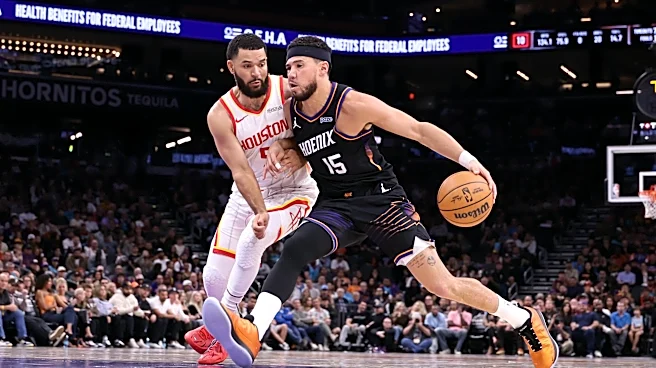
Need a little hope? Looking for something to give you those warm and fuzzies as you sip your morning coffee? The sugar and cream aren’t doing enough to brighten your day? Well, for all the ugly statistics we’ve been compiling about the Phoenix Suns lately, here’s one that might make that coffee taste a little sweeter.
Through the first six games of the regular season, Phoenix ranked dead last in the NBA in defensive rating, surrendering a staggering 124.5 points per 100 possessions. It was an atrocious
start, one that had us questioning whether this team possessed the personnel, discipline, or defensive identity necessary to compete night in and night out.
But since then? Things have changed considerably. Over their last five games, the Suns have posted a defensive rating of 109.0, the sixth-best mark in the NBA during that stretch. Their net rating has climbed to +4.2, ranking ninth in the league, a significant improvement from the -10.3 net rating that placed them 25th during their first six games.
That’s a pretty substantial turnaround in a relatively short period of time.
And perhaps the most encouraging part is that those numbers include the absolute shellacking Phoenix suffered at the hands of the Spurs. Even with that disaster factored into the equation, the Suns have managed to establish themselves as one of the league’s more effective defensive teams over their last five outings.
Now, does that mean all their problems have magically disappeared? Of course not. The rebounding remains atrocious, the lack of size continues to create significant disadvantages, and the questions surrounding roster construction and player fit aren’t going anywhere anytime soon. But there is something encouraging about watching this team begin to stabilize defensively.
Much like last season, Phoenix stumbled out of the gate, struggling to establish any semblance of consistency before gradually finding its footing. And while we’re still dealing with a relatively small sample size, the defensive improvement suggests that some of the early growing pains are beginning to subside.
The rotations are becoming more connected. The effort is more consistent. And the Suns are beginning to demonstrate they can make life difficult for opposing offenses, despite the physical limitations that continue to plague this roster.
There’s still plenty of work to be done, and nobody should be throwing a parade over five games of improved defensive efficiency. But considering where this team stood after six games, seeing Phoenix climb from the league’s worst defensive rating to the sixth-best over its next five is certainly worth acknowledging.
The defense is giving us something to feel good about. Perhaps it’s a reminder that sometimes these things take time. I’ll be the first to admit that I’m guilty of overreacting. I constantly find myself mining statistics, searching for numbers that either validate what I’m witnessing while watching these basketball games or challenge the conclusions I’ve already started forming. That’s always the fascinating part of analyzing sports. There’s the eye test, there’s the data test, and somewhere in between lies the reality of what’s actually happening on the court. And sometimes, multiple things can be true simultaneously.
The Phoenix Suns can be atrocious on the boards while still developing into a good defensive team. Those two realities aren’t mutually exclusive, and we’re beginning to see evidence of that as Phoenix demonstrates an improved ability to shut down opposing offenses for extended stretches, creating enough separation to secure victories.
The issues with rim deterrence remain, and opposing teams continue to exploit the Suns’ lack of size around the basket. But on the perimeter? Things are beginning to look considerably better. Through the first six games of the season, Phoenix was allowing opponents to shoot 40.3% from beyond the arc, the second-worst mark in the NBA. It was a troubling statistic that reflected a defense struggling with rotations, communication, and the ability to consistently contest shots. Since then, that number has dropped to 33.9%, the 10th-best mark in the league during a five-game stretch in which the Suns have gone 4-1.
Part of it can certainly be attributed to regression toward the mean. Opponents were unlikely to continue shooting above 40% from deep indefinitely. But dismissing the entire improvement as statistical normalization would overlook the tangible progress we’re witnessing from Phoenix defensively. The individual numbers help illustrate that improvement.
During the first six games, opponents were shooting 46.7% from three against Dillon Brooks. Over the last five, that number has dropped to 37.7%. Still not particularly impressive, but considerably better than what we witnessed during the opening stretch. Miles Bridges, who appeared lost on more than a few defensive rotations early in the season, has experienced a similar improvement. Opponents were shooting 38.1% from beyond the arc against him during the first six games. That number has since fallen to 34.7%.
These aren’t insignificant developments. They’re signs of players beginning to understand their responsibilities, recognize rotations, and operate with greater cohesion within Jordan Ott’s defensive system.
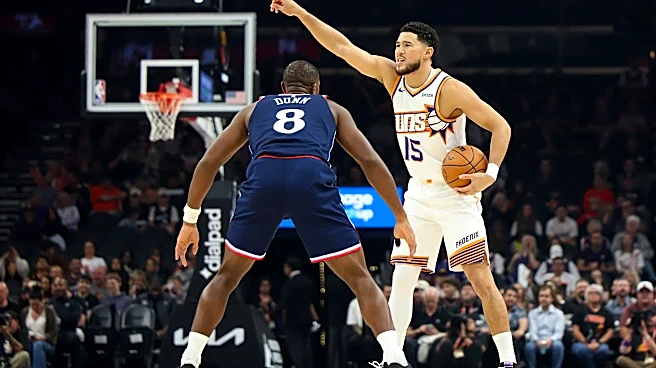
There’s another factor contributing to the increased defensive intensity. The bench. Jordan Goodwin has been fantastic over the last two games, bringing the kind of relentless energy and defensive aggression that can completely alter the complexion of a basketball game. Ryan Dunn has also begun making a more noticeable impact, using his length, athleticism, and defensive instincts to disrupt opposing offenses. Together, they’ve helped give Phoenix something that was desperately missing during the early portion of the season: a second unit capable of changing the momentum of a game through defensive effort.
The numbers reflect that impact. Through the first six games, the Suns’ bench posted a net rating of +1.5. Over the last five games, that number has improved to +5.3. That’s meaningful progress, particularly for a team whose starting lineup continues to struggle with consistency and finding the right combinations.
The bench has become a catalyst for much of the Suns’ recent success, providing the defensive intensity, cohesion, and energy that have helped stabilize a team that looked completely disjointed at the start of the season.
Does five games of improved defensive performance mean Phoenix has solved all its problems? Certainly not. The rebounding remains a disaster, the interior defense still needs significant attention, and the roster continues to present challenges that aren’t going to disappear overnight. But perhaps that’s the lesson here. As much as we want immediate answers, as much as we want the statistics to confirm our suspicions after every game, sometimes a team needs time to figure out how its pieces fit together. While the Suns are still a work in progress, the defensive numbers suggest that some of those pieces are finally beginning to fall into place.
So go ahead. Take another sip of that coffee.