




Every year, after the coffers are refilled through the draft, it is a good time to take a look at where the organization’s depth stands. Over the last few seasons, the Yankees have promoted several of their top prospects and used their farm system depth to acquire pieces at the Trade Deadline. Coming into this season, many evaluators ranked New York’s farm system in the bottom third of baseball. The system was also seen as top-heavy, with a drop-off after the first four players and then another big
drop from the sixth slot down.
The draft is not going to fix those flaws over one weekend, but it is a starting point. Prior to the draft, the farm system was particularly thin at catcher and among position players in general. Other than top prospect George Lombard Jr. and the injured Dax Kilby, the Yankees desperately needed an infusion of mitts and sticks.
Brian Cashman and the rest of the front office addressed that need by using two of the team’s first five picks on catchers, adding Brendan Brock out of Oklahoma in the third round and Bear Harrison of Texas A&M, in the fifth. The Yankees do not currently have a catcher ranked among the organization’s top 30 prospects, as they’ve used their previously compiled depth in various trades over the past couple years. In the past, the team has often turned to the international signing period to add catching talent. The current lack of depth appears to have pushed the organization toward adding some domestic talent to the pipeline as well.
Other than the previously mentioned Lombard and Kilby, the only other Yankees position player prospect ranked in the organization’s MLB Pipeline top 10 is Spencer Jones. Putting it nicely, the organization is thin as a rail when it comes to hitters.
In addition to the two catchers, the Yankees added rock-solid outfielder Paul Gutierrez Contreras II from Cal State Fullerton in the fourth round. They then dipped into the high school ranks to select third baseman Andrew Gonzalez out of Americas High School in Texas in the sixth and returned to the prep ranks in the 13th and 15th round for outfielder Lee Garris and shortstop William Cutshall. Look for any draft slot value surplus go toward adding these talented young hitters and convincing them to go pro; despite the rounds where they were taken, there’s likely a higher ceiling on both than many of the collegiate players from the back half of the first 10 rounds. This is always the calculus with the modern MLB Draft. As of now, Garris and Cutshall are on the verge of signing, but Gonzalez could take time.
Luke Pettitte, a two-way player and son of former Yankees great Andy Pettitte, was selected in the eighth round out of Dallas Baptist. Many evaluators believe he projects better as a pitcher, but Pettitte performed well as a designated hitter last season while rehabbing from Tommy John surgery. It would be a surprise to see any of these position players initially crack the organization’s top 10, but a few could land in the teens, with several others potentially filling out the back end of the top 30 prospects list.
If there was one area where the Yankees already had some depth, it was on the mound. Prior to the start of the season, the Yankees had more pitchers ranked among their top 30 prospects than any other organization, with 21. That was particularly true among right-handers, who made up six of the organization’s top 10 prospects including three of the top five in Elmer Rodríguez, Carlos Lagrange, and 2024 first-rounder Ben Hess. This is not even counting Ben Grable who recently went to the Futures Game to showcase his 96.1 mph with his four-seamer that produces about 21 inches of induced vertical break.
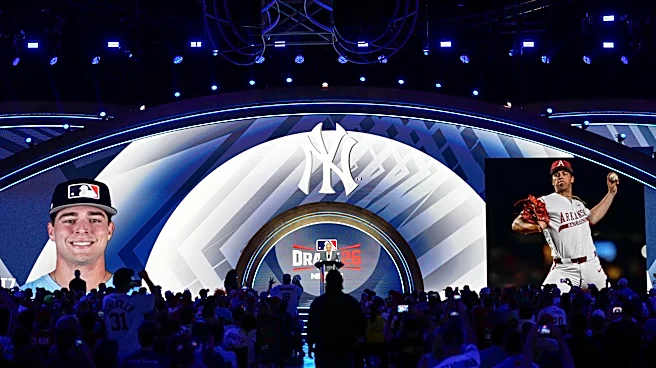
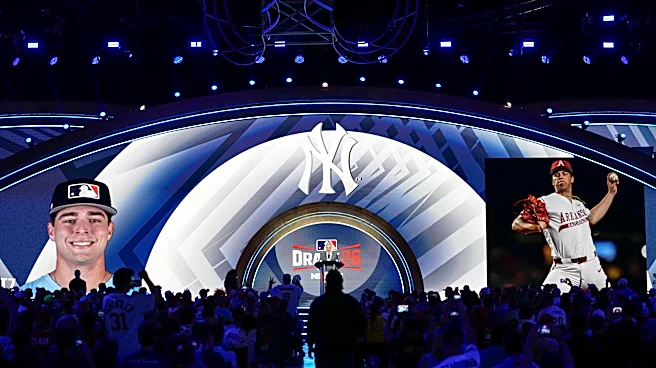
Despite being stick-thin, literally, the Yankees opted to use their first two picks on pitchers. However, both were lefties with high ceilings who fell to the Yankees’ draft slots, at least in part, because of injury concerns.
Hunter Dietz is a big lefty out of Arkansas, while Sean Duncan is a prep arm from British Columbia. Dietz, like most first-round picks, projects to slot into the organization’s top 10 prospects and will likely be the team’s top ranked lefty , while Duncan could debut somewhere in the teens. The team also added a few right-handers in the first 10 rounds, selecting Michael Harpster out of East Tennessee State in the seventh and David Leslie from Pittsburgh in the ninth.
The back half of the draft has been fruitful for the Yankees lately, with Ben Rice serving as the most obvious example, but after the 10th round, players become much harder to project. A few names to keep an eye on over the next several years include shortstop Anthony Potestio, right-hander Garrett Ahern, and first baseman Tyce Armstrong.
When you consistently pick near the back end of the first round, it is difficult to infuse top-end talent into the farm system through the draft. It appears the Yankees focused on the best value available with their first two selections before making a somewhat-concerted effort to address organizational depth, especially at catcher. The sticks remain thin for now, but the pitching pipeline has a few more names ready to slot in and begin climbing the rankings.
In case you missed it, check out Pinstripe Alley’s full draft coverage!