

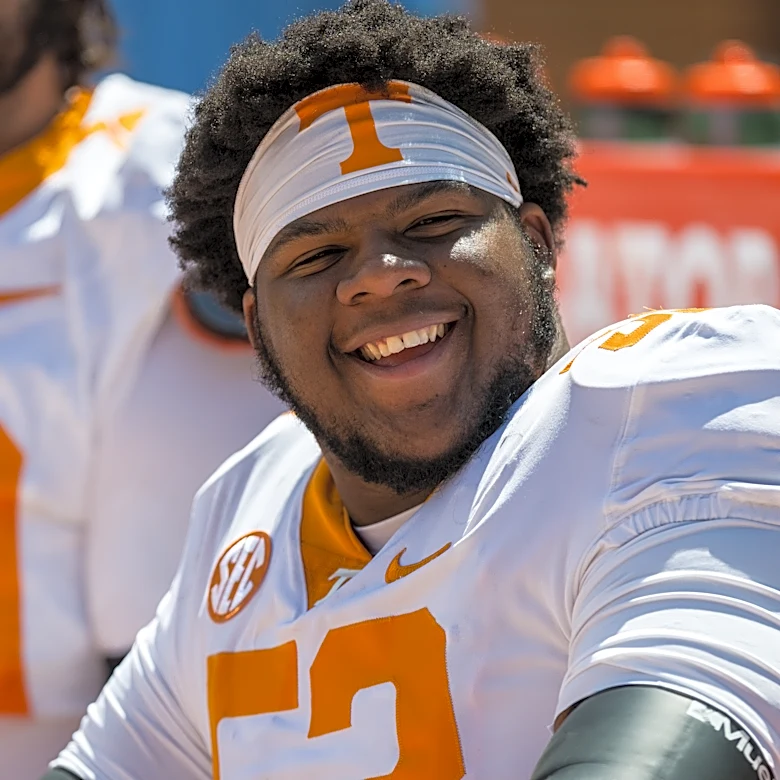
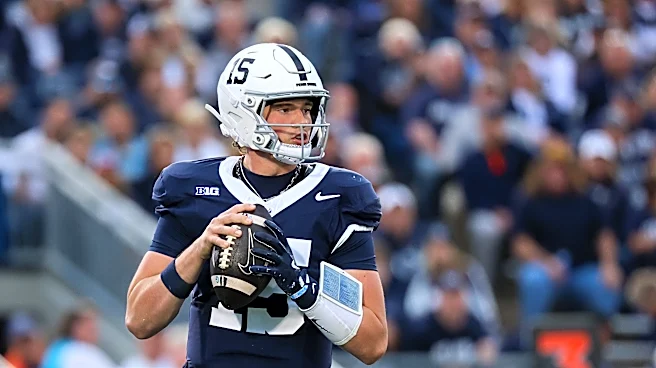
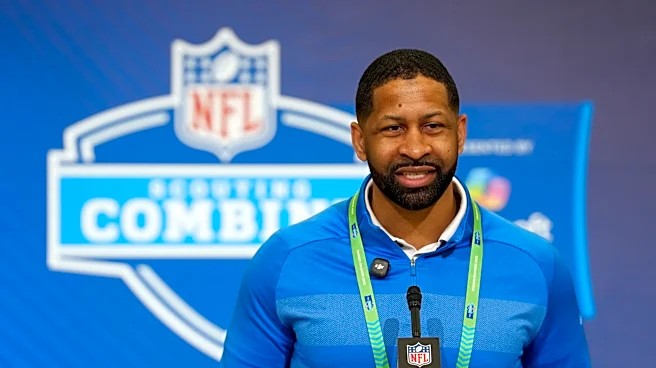
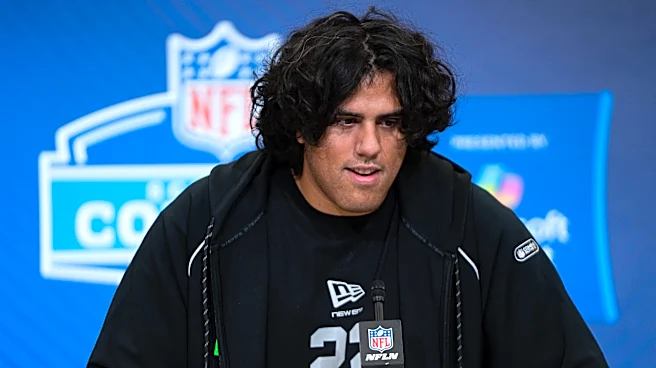
Buffalo Bills GM Brandon Beane made 10 selections in the 2026 NFL Draft, the second time in three years he’s hit the double-digit pick mark, and with the dust settled, a comprehensive review of the club’s draft class is in order.
Instead of a granular examination of all 10 rookies — that’ll be coming this week, don’t you worry — I wanted my debut analysis-based article back at Rumblings to be a general, all-encompassing review of what Beane and Co. did by answering what I’ll assume are the most front-of-mind
questions for Bills fans after the draft.
Did the Bills draft enough starters?
I think the answer to this question has to begin with how the Bills’ season ended — they were a blown call in overtime — yes, it was a catch — away from advancing to their second-consecutive AFC championship game, and they didn’t have a mass exodus during free agency, so “starting” gigs or, more aptly described as “full-time” positions were never going to be easy to come by, particularly on the offensive side of the ball.
Buffalo is returning 12 of its top 13 snap percentage leaders on offense from the 2025 campaign — the only non-returnee is, of course, left guard David Edwards. Unironically, the Bills drafted two potential eventual replacements for Edwards in the 2026 draft with fourth-round pick Jude Bowry and seventh-rounder Ar’Maj Reed-Adams.
We all know, with an entirely new system with a fresh defensive coordinator in Jim Leonhard, his side of the ball is where most of the job openings resided. Even with the acquisition of Bradley Chubb, given Michael Hoecht’s early-November Achilles’ tear, the Bills low-key needed another stand-up rush outside linebacker — insert T.J. Parker.
(Last season, the third and fourth stand-up rush outside linebackers in Denver, Dondrea Tillman and Jonah Elliss, played 31.7% and 28.2% of the defensive snaps respectively during the regular season for the Broncos, for reference.)
The inside linebacker group didn’t have a crying need for a full-time player, but depth was clearly a priority — insert Kaleb Elarms-Orr.
The nickel position and what’s asked of that role is undergoing a significant makeover, as evidenced by the trade of longtime nickel stalwart Taron Johnson. Even with the signing of Dee Alford in March, a more sizable presence was needed. Heck the Bills literally downsized going from Johnson to Alford and we all know how Johnson was put through the wringer as a box linebacker against the run. Insert Jalon Kilgore.
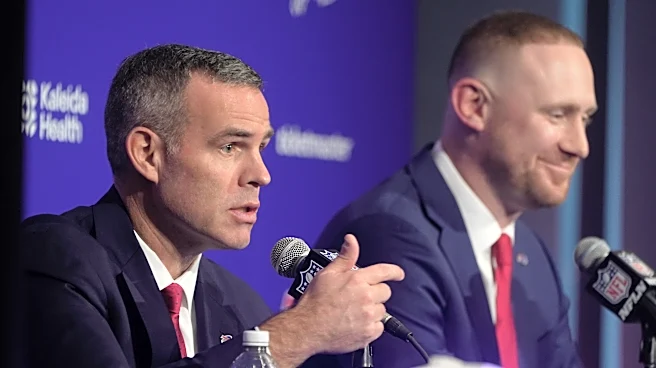
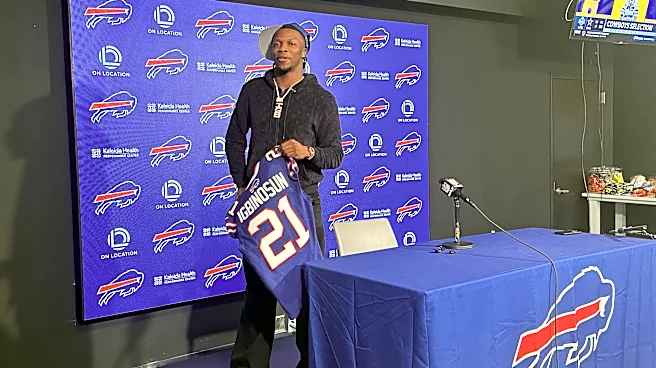
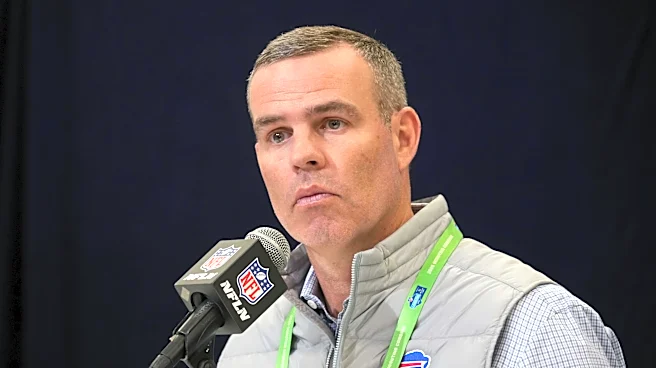
In his post-draft presser, Beane made multiple references to the chaotic divisional-round loss to the Broncos, mostly citing the lack of cornerback depth, which has come back to bite the Bills in back-to-back playoff exits — insert Davison Igbinosun and Toriano Pride Jr. While I’m back on the most recent postseason defeats, let’s not forget about who received the final two targets of the Bills’ 2025 season — Mecole Hardman and Brandin Cooks, both of whom were added in November, and had a grand total five catches between them for Buffalo during the regular season. Insert Skyler Bell.
When you’re a Super Bowl contender like the Bills, particularly one that retained essentially of its marquee free-agents, full-time starting gigs are hard to come by.
Which brings me to the next question…
Where’s the nose tackle?
The perceived largest need — both literal and figurative — to many Bills fans was nose tackle despite the intimidating presence of 6-foot-7, 330-plus pounder Deone Walker, because we all saw in 2025 he’s best when attacking not devour blocks.
Because it has been nearly a decade since the Bills deployed a base three-man front, it’s completely understandable to have lost sight of what that defensive scheme needs. Heck, it’s taken time for me to recalibrate too.
And much has changed with the odd-man fronts in the NFL since the days of Rex Ryan patrolling the sidelines in Orchard Park. During the 2025 season, “base” defenses (see: non-nickel, dime etc.) “climbed” to 29.6%, up from just under 24.0% in 2024. What I’m getting at is, and what I’ve come to accept myself — it’s a bit mathematically silly to obsess over 3-4 vs. 4-3 from a traditional sense, especially re: nose tackle. In short, the Bills will likely trot out a 3-4 look, in a traditional sense, 25% – 30% of the time, and we’ve all probably focused on the addition of a hulking, immovable, double-team eating nose tackle much more frequently than that.
Also, the 2024 and 2025 Broncos defensive line group featured exactly one 315-plus pounder, Eyioma Uwazurike, and the highest snap percentage he had in those two years was 36.9%, in 2025. Heck, last season’s Broncos featured *more* defensive linemen who weighed under 300 pounds (3) than the Bills (2).
To me, the Bills’ disregard for the traditional nose tackle was not a misstep by Beane during this draft — it was planned, and it’s completely justifiable.
Did Brandon Beane trade back too much?
Based on how close KC Concepcion got to the Bills in Round 1 — just two spots away — and what transpired afterward — three trade backs from Buffalo— this “what if” scenario is rightfully a question on the mind of Bills fans to start the week after the draft.
Would a trade up for Concepcion — that likely would’ve cost pick No. 125 (Round 4) and probably a little extra even if the Browns were willing to slide back — have been the better decision? As someone who adored Concepcion from the jump in this draft process, pegging him as the ideal separator the Bills needed at receiver, I would’ve been giddy about that specific ascension from Beane.
However, I can tell you I literally have had the words “trade down” my Twitter/X bio for a few years now, so the alternative and what actually transpired in reality aligned with my main draft philosophy. I won’t go deep into that philosophy because it’s pretty simple — in something as unpredictable as the draft, I want as many rolls at the table as possible, and when you’re scouting an entire class like I have for the last 10-plus years, there are a plethora of Day 2 and Day 3 picks with which you become enamored.
And as we saw the Bills depth tested along the offensive line, at receiver, linebacker, cornerback, edge, safety, and defensive tackle a season ago, the quantity-based approach was probably the better option than only two picks in the first 126 selections or so.
Believe me too — I was #TeamWR during this draft process — yet we can’t forget about Beane’s trade for D.J. Moore, which, ironically, after the multiple trade backs, essentially became “free.”
Was cornerback really the Bills biggest need going into the draft?
Like you, I found Beane’s aforementioned comment about the cornerback position fascinating, and, frankly, unexpected. I do think Beane and Co. tend to overweigh the final game of the season — see: 2020 AFC Championship Game and subsequent selections in Round 1 and Round 2 of Greg Rousseau and Boogie Basham — but technically, his assessment of the cornerback position was not totally out of left field.
A season ago the Bills desperately signed then 30-year-old Tre’Davious White, off a brutal stint with the Rams and only an average one in Baltimore, to serve as a mentor for first-rounder Maxwell Hairston. Then with Hairston’s training camp injury and normal rookie-year onboarding, White ultimately played the third-highest percentage of defensive snaps (71.3%) of anyone on that side of the ball.
The cornerback spot was not discussed often entering the draft as a position in dire need of depth, and it should’ve been. The presence of a well-paid CB1 in Christian Benford and a 2025 first-round pick at the other boundary corner spot likely halted any conversation about that position. Before this draft, who else was part of the cornerback room? Alford — slot only — and then… practice squadders Te’Corey Couch and MJ Devonshire if we’re not counting Dorian Strong due to the uncertainty of his neck injury.
The need at cornerback was a microcosm of the Bills wholesale needs — depth was required, and at that position, critically so.
Who was the worst Bills draft pick?
Strictly following my pre-draft grades that would be Kaleb Elarms-Orr, who I had a Top 20 overall grade on in this class. Yet as someone who believes in this day and age, always lean offense, I’ll go Skyler Bell, a speedy, inside-out separator with deceptively trustworthy contested-catch ability, whom I had graded as the No. 63 overall player and the Bills got at No. 125.
Who was the best Bills draft pick?
Davison Igbinosun was the most sizable reach who also has the most arduous path to seeing the field, so I’ll go with him, although technically Jude Bowry was a more significant reach on my pre-draft board.
Now, as discussed above, Beane decided to address depth with a premium-ish pick (No. 62), which does buck conventional wisdom on when depth should be added, yet he likely wanted to feel more confident about IGB if and when he needs to see the field early in his NFL career than he would’ve with a later-round cornerback selection.
As for Bowry, his blend of high-caliber athleticism and positional flex is undoubtedly appealing, yet there were more classically trained guards I would’ve preferred with that No. 102 selection.