

For the most part, teams that play a quarters system at the NFL level usually like to play with a 3-4 front. Personnel doesn’t matter as much when teams are in their nickel sets, but it does when they’re in their base defense — which is usually what defensive coordinators call to match multiple-tight-end or multiple-back looks. (Every NFC North team was above average in multiple-tight-end and multiple-back looks other than the Minnesota Vikings in 2025
.)Defensive coordinators play the 3-4 front
because both safeties are in high alignments when they play quarters (or when they’re bluffing pre-snap that they’re in quarters), which means that the line of scrimmage needs to slow down the run for the safeties to enter into run fit after being pass-first players. These quarter-based defenses get away with playing those high safeties because there’s an extra body on the line of scrimmage in a 3-4 look compared to a 4-3 look. Truly, the only difference between a 3-4 and a 4-3 defense is that you’re taking off an off-ball linebacker (from a 4-3 defense) and putting another defensive tackle body (in a 3-4) on the field.
If you want to see how some of these slow-play techniques work on the line, here is a clip from a clinic that current Seattle Seahawks defensive backs coach Karl Scott, who coaches in this quarters-based system, did while at Alabama. Most of what he talks about here is out of a nickel set (because college is almost exclusively nickel looks at this point), but the same fundamentals apply to the 3-4 defense. The coverage is really what dictates what you do on the line of scrimmage, not the personnel.
The tricky thing about running a 3-4 defense, though, is what happens when you want to play true coverage and drop seven players out of 3-4 personnel.
The Packers are not new to a 3-4 defense. They played it under Dom Capers, Mike Pettine and Joe Barry, only getting away from it under Jeff Hafley. Under both Pettine and Barry’s watch of the defense, Green Bay head coach Matt LaFleur repeatedly stated that he doesn’t consider a five-man rush, from the five line of scrimmage players in a 3-4 defense, a blitz.
There’s a point to be made there, because none of the three defensive tackle-type bodies or two edge defenders are usually coverage-first defenders. With that being said, allocating five rushers down-to-down when you’re in this base defensive look does leave you down an extra number in coverage compared to the standard 4-3 defense.
So, when the 3-4 defenses want to use seven coverage defenders, the standard rate for all personnel sets other than the 3-4 defense, how do they do it? Well, they drop an edge defender.
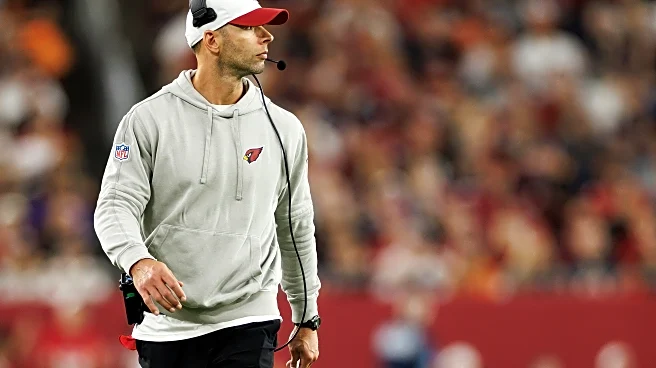
In Arizona last year, Jonathan Gannon’s Cardinals defense played with five primary edge rushers (think 3-4 outside linebackers) throughout the year. For whatever it’s worth, the top four all played between 475 and 518 snaps (and played at least 15 games each), so they rotated the group pretty equally across the board.
According to NFL Pro’s data, those edge defenders dropped into coverage a total of 151 times last season. This data only includes when they actually lined up on the edge, too, so it’s not like they were split out or off the ball for these looks.
For what it’s worth, Gannon’s team played 279-pound Jordan Burch on the edge 91 percent of the time in Arizona in 2025. If you’re thinking that Lukas Van Ness (272 pounds) is going to move inside, if Gannon is going to bring the 3-4 defense back to Green Bay, then you’ve got another thing coming. The 3-4 defensive ends in this scheme aren’t much different from the 3-4 nose tackles. They’re on the field to eat blocks and avoid getting knocked back. Size is a premium on the inside, be it end or tackle.
To put those 151 coverage drops from primary edge defenders into perspective, Green Bay only dropped their edges into coverage, even with all of the sim pressures that Hafley ran after the Micah Parsons injury, 31 times last year. If Gannon’s defense looks like what it did in Arizona, then the Packers will lap that number five times in 2026.
That’s just sort of the cost of business of moving into a 3-4 defense, and one reason why I don’t love it in today’s football. People love to allocate bodies to stop the run, but the shortcut ends up costing an extra coverage defender or puts a player like Parsons or Van Ness into a coverage responsibility.