




Thanksgiving week is the time of the NFL season that many services start to offer up free trials or discounts. Perhaps the most notable is NFL Sunday Ticket, which has a massive promotional deal for the rest of the season this week.
But one promotion that’s notably free is at FTN, the online publication that is home to DVOA. While DVOA numbers remain behind their paywall, FTN has opened up its StatsIQ database to anyone with a user account on the site, and it has a wealth of statistics dating back
to the 2023 season.
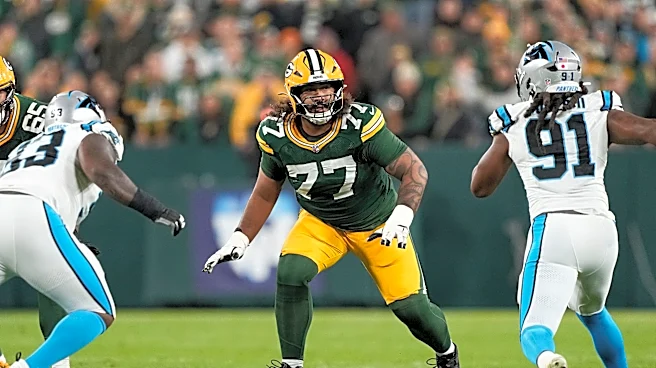
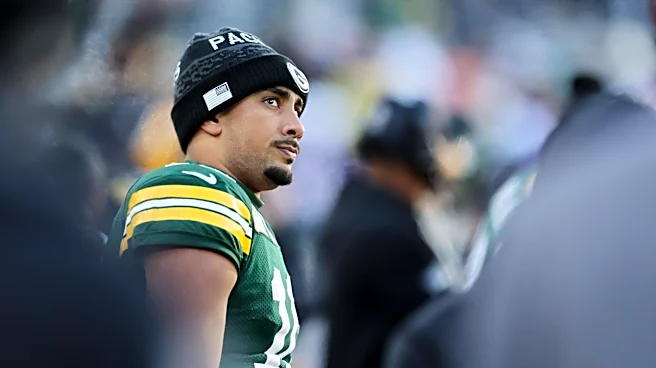
As a bit of a number cruncher myself, I immediately went on to the site to see if there was anything I could glean about the Green Bay Packers’ performance this season, particularly as far as the team’s offense is concerned. Unsurprisingly, I found a number of interesting indicators of the team’s struggles to protect Jordan Love and why, despite being under nearly constant pressure, he is still on a relatively short list of MVP candidates with seven weeks to go in the season.
It’s not just the numbers from this season that are notable, either; it’s the contrast that becomes visible when looking at the difference from 2025 to 2026. Let’s examine three areas that help illustrate why the Packers’ passing game looks and functions the way it has so far this season.
Average Time to Pressure
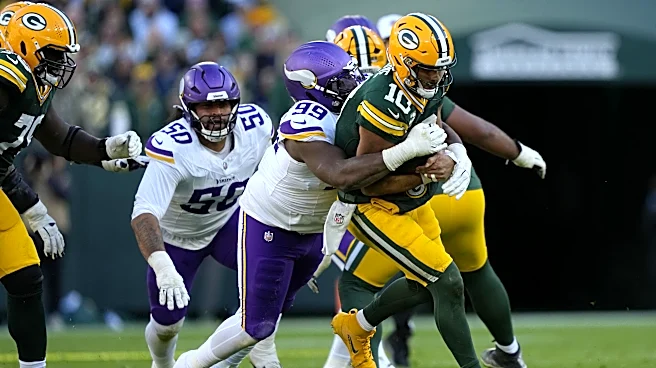
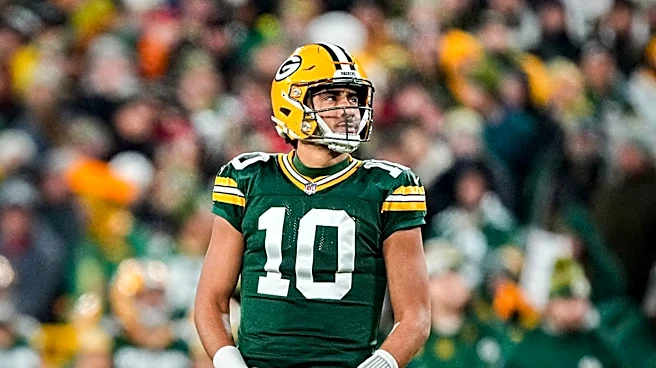
Unsurprisingly, the Packers’ offensive line is drastically affecting the function of the Packers’ passing game, and obviously it is doing so negatively. Love is tied with Justin Herbert for the third-fastest average time to pressure in the NFL this year at 2.44 seconds, with the only two faster being Patrick Mahomes (2.43) and Jameis Winston (2.41). That has sped up Love’s clock in the pocket, as he’s the NFL’s fastest quarterback in average time to throw (2.30 seconds).
Compare that against last season and the impact of the line is obvious. In 2025, Love’s time to pressure was 2.80 seconds, more than a third of a second longer, and his time to throw averaged 2.74 seconds. Both of those numbers were 10th-longest in the league, and they were each very close to his numbers in 2024 and 2023 as well.
Opposing rushers are getting to Love only a little bit more this season according to the raw pressure rate numbers (30.1% pressure rate in 2026 compared to rates around 28% in each of the past two years), but they are doing it much more quickly, and Love has had to deliver the football far faster than in years past. Surely, if he were still holding the ball longer and had an average time to throw on par with the last few years, that pressure rate would have spiked much more than it has so far.
Depth of Target
And yet, despite his clock accelerating, Love is averaging deeper throws this year than he has in the past. In 2024 and 2025, Love’s average depth of target (aDOT) was 8.8 yards, putting him around 4th or 5th in the NFL; this season he has increased that by more than a half-yard to 9.4, matching C.J. Stroud for the league’s top spot.
It’s actually quite impressive that he’s averaging deeper throws than last season despite his clock speeding up. Deeper routes typically need more time to develop, so one would think that Love would be focusing on more short passes. Instead, he’s putting the ball up with regularity and letting his speedy wide receivers run under them.
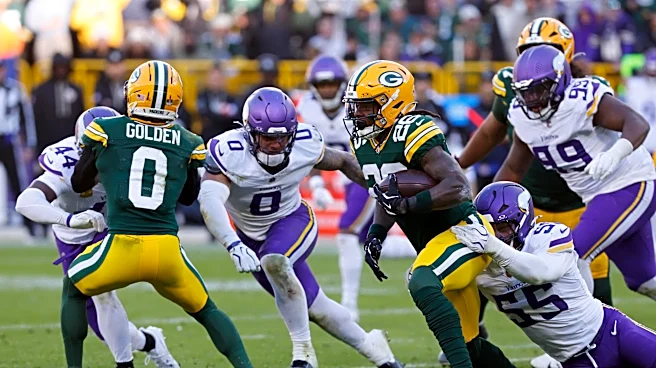
To that end, Matthew Golden and Christian Watson both rank in the top five in total air yards on passes targeting them, with Golden first in the NFL and Watson fifth. Some of that is target volume; Watson is 10th in aDOT and Golden is 17th, but Golden ranks third in the NFL in total targets. Watson, meanwhile, has the highest yards per target of any player with 45 or more targets this season.
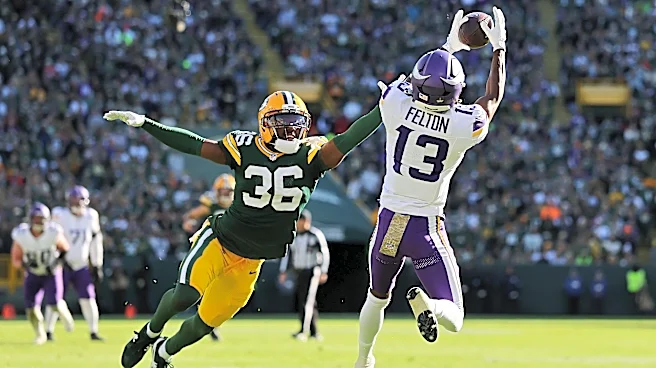
Love is facing pressure quickly and lofting deep balls quickly to his top receivers, confident that they’ll run under them and make the catch. Most of the time they do, but sometimes…
Drops
The numbers bear out the eye test on the 2026 Packers in terms of drops. No quarterback has seen his receivers drop a higher proportion of his passes than Jordan Love, who has seen 6.5% of his passes hit teammates’ hands before hitting the turf. The only quarterback dating back to 2023 with a higher drop rate over a whole season was Trevor Lawrence last year at a whopping 7.3%.
But not only are the Packers’ receivers dropping passes, they’re dropping meaningful passes. Love leads the league in air yards erased by dropped passes with 235, putting him on pace for 400 over a 17-game season. That would blow Lawrence’s 2025 number out of the water, as he lost 339 yards to drops. Love targeting players downfield more is a factor, but even Lawrence was near the top of the aDOT leaderboard last year, suggesting that the Packers are dropping deeper passes, on average, than the Jaguars did last year.
Unsurprisingly, Golden has been the biggest culprit among the Packers’ receivers. His 146 air yards lost due to drops make him the only player in triple digits so far this season. Notably, Detroit’s Jameson Williams had 154 yards lost to drops a year ago, but he and Golden are the only players to exceed 130 in a season since 2023.
It’s clear when you watch a game that the Packers’ passing game looks different than it did a year ago. But just imagine what this unit could look like if it had a more consistently competent offensive line blocking for Love and if the receivers — Matthew Golden in particular — could shake their issues with drops.
Packers fans saw a glimpse of the possibilities two games ago when the Packers dismantled the Patriots 45-27. Even though the Patriots’ pressure rate was higher than Love’s season average, their averate time to pressure was significantly slower at 2.59 seconds. That bought Love enough time to hit on some deep balls, as he had a whopping 13.2 aDOT in the game en route to a phenomenal performance.
That version of the passing game is certainly there. The Packers need to find a way to give Love just enough time to make it happen.