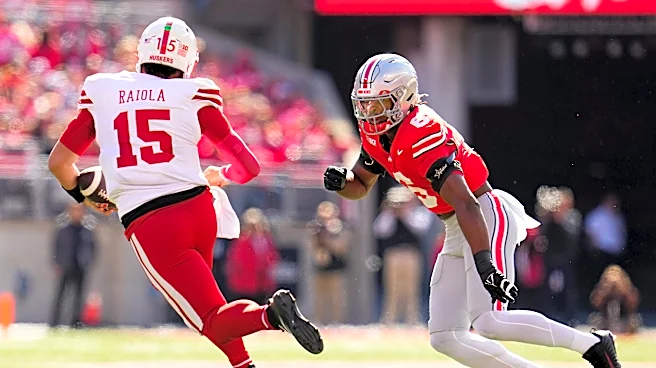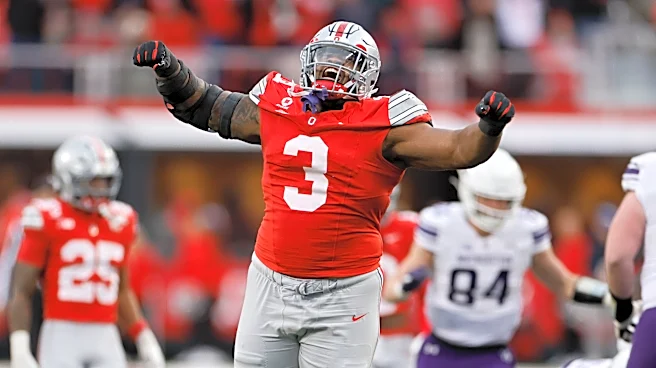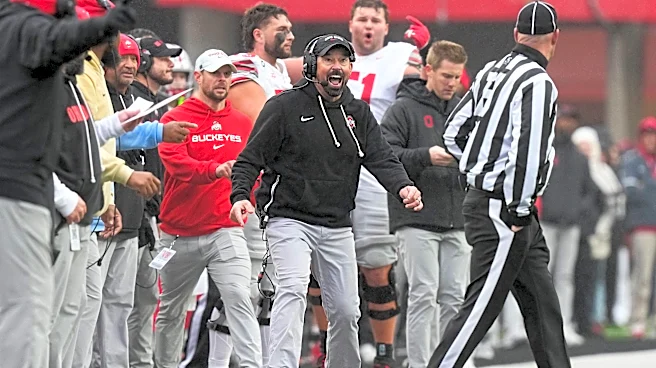


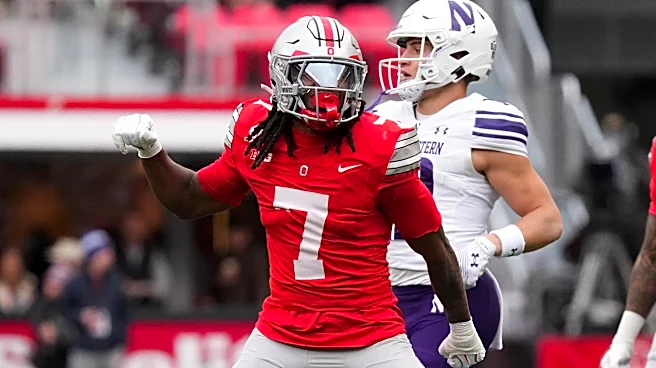
I know it is reductive to suggest that Ohio State players and coaches, who devote nearly every waking hour of their lives to winning championships, have lost all semblance of heart and fight. But after watching the Buckeyes’ 31-28 loss at Nebraska on Saturday, I am struggling to find a more charitable explanation for what we witnessed in Lincoln this afternoon.
There were moments of promise, and I don’t want to pretend otherwise; Ohio State erased a 14-point deficit, Bo Jackson scored twice, and Luke
Fahey made some excellent throws. But fleeting displays of resolve are not the same as the sustained urgency and passion that playing for this program demands. Far too often, the Buckeyes looked less like a team fighting to save its season than one waiting to be put out of its misery.
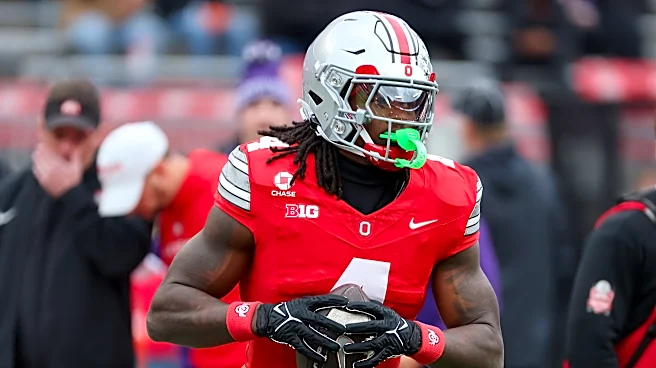
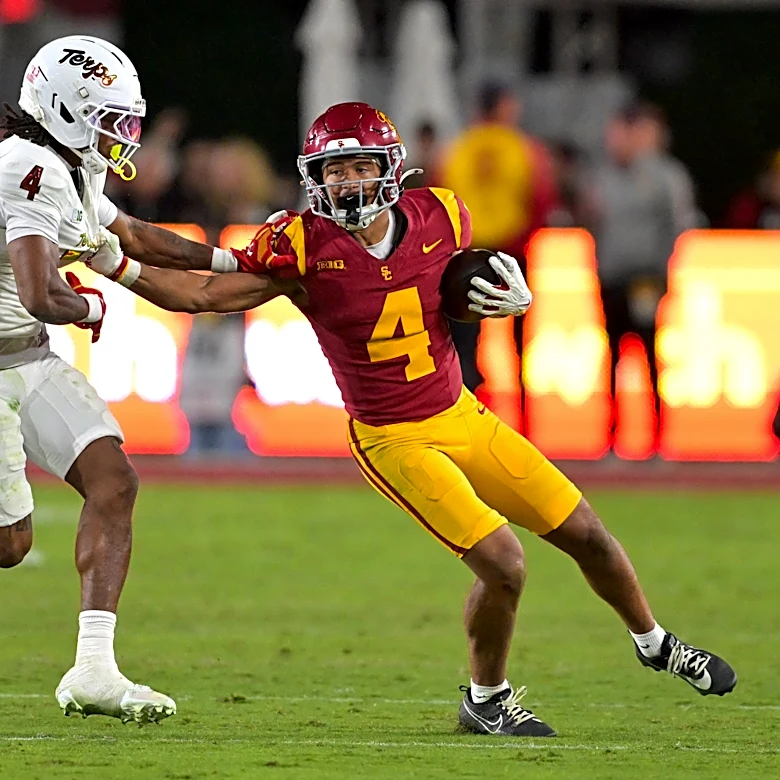
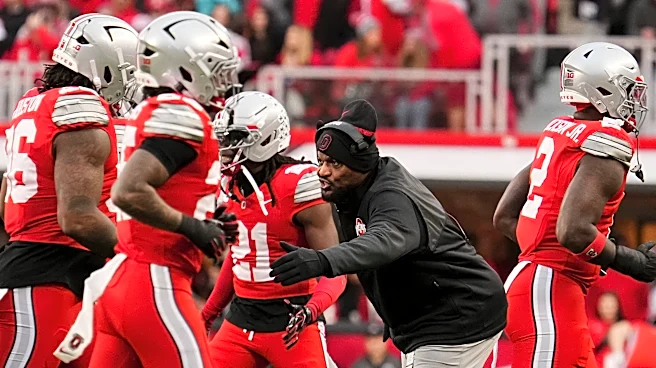
Of course, there was one precious exception to what has become an exasperating rule: Jeremiah Smith caught six passes for 165 yards and two touchdowns, including a 67-yard lightning bolt on Ohio State’s opening possession and an absurd 31-yard scoring grab just before halftime. His second touchdown tied Terry Glenn’s Ohio State single-season record of 17 scoring catches. His preternatural competitiveness and transcendent gifts were on full display, even as so much around him sputtered. If this Ohio State team has a heart, it beats inside No. 4’s chest.
But I don’t believe a team simply wakes up one morning and decides not to care. That’s why, while some players deserve criticism, most of the blame belongs to the men paid exorbitant sums to recruit, develop, prepare, and lead them.
I generally hate agreeing with Urban Meyer on damn near anything, but during Saturday’s “Big Noon Kickoff” — which I only caught because it bled past noon, since Fox apparently regards kickoff times as suggestions — he described this afternoon’s contest as a coaching game, one that would be decided by which staff pulled the right strings. Unfortunately, Ohio State has made a habit of being the staff still searching for where strings are located long after the pulling needs to be done.
If you need an example, look no further than Matt Patricia’s defense. Nebraska converted 10 of 16 third downs and both of its fourth-down attempts, ran 73 plays to Ohio State’s 49, and held the ball for more than 35 minutes. The Cornhuskers put together three consecutive touchdown drives in the first half, and when the Buckeyes desperately needed one final stop to get Fahey another possession, they couldn’t do it. That’s not an acceptable afternoon for any Ohio State defense, regardless of the opponent.
Patricia deserves credit for what his defense accomplished last season, but he was also operating with a ludicrous collection of NFL-caliber talent. This year, with a less imposing roster and opponents increasingly adept at finding weaknesses, his defense’s inability to adjust has become impossible to ignore. Great defensive coaching requires the humility and ingenuity to abandon a failing plan and find something — anything — else that works. Patricia, with all of his Super Bowl rings and NFL experience, seems wholly uninterested in even attempting to try.
Arthur Smith hasn’t offered much more reassurance on offense. A freshman quarterback inevitably imposes limitations, but an experienced coaching staff of alleged offense gurus is supposed to minimize those shortcomings and manufacture advantages. Too often, Ohio State’s response to adversity has been predictability masquerading as discipline. As if doing the same thing over and over but expecting a different result is not the colloquial (but not actually clinical) definition of insanity.
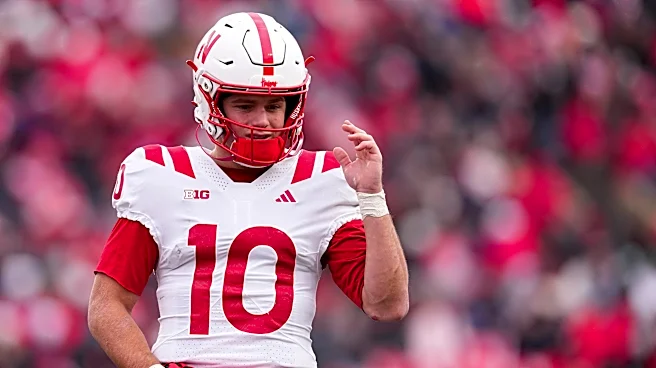
And no, I am not pinning this collapse on Fahey. He threw for 259 yards and two touchdowns in Lincoln, and his play has not been the principal reason that Ohio State has lost three of its last four games. But he also has not demonstrated that he is ready to be the starting quarterback at Ohio State, and I personally haven’t seen anything that suggests that he will ever be worthy of that position. He was supposed to spend this year — and likely one or two more — developing, not salvaging a championship season.
I was clearly wrong to trust the backup quarterback plan, and I blame my limitless naivete and optimism when it comes to this program. However, the bulk of indictment belongs on the adults who built this substandard quarterback room. If Tavien St. Clair, a former five-star recruit now in his second season, isn’t ready to help, that’s a developmental problem. Ohio State did bring in veteran transfer Justyn Martin after Lincoln Kienholz departed, but if he is the fourth-string guy, then he was never a serious addition to the roster. Julian Sayin’s injury was unfortunate, but being so unprepared to survive it was not inevitable; it was an utter failure in evaluation and roster construction.
And that failure extends well beyond the quarterback position. For all the recruiting rankings, transfer portal maneuvering, and hype from friendly outlets about all of the talent acquisition, the past several recruiting cycles have produced far too many holes and way too few dependable solutions. Ryan Day inherited a recruiting juggernaut and helped keep it humming for years. Increasingly, though, the roster no longer offers the overwhelming talent advantage that once obscured his staff’s shortcomings. With the introduction of NIL and the expansion of the transfer portal, you cannot simply assume that the brand power of Ohio State is going to perennially provide a roster stacked with enough talent to dominate nearly every opponent. That’s just not how things work anymore.
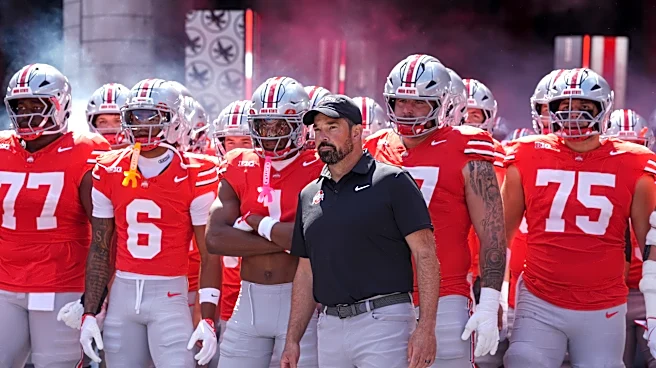
As I wrote last week, Day’s record is enviable, and the national championship he delivered is real. None of that makes him immune from the increasingly uncomfortable conclusion that the old “born on third base” accusation has evolved from a rival’s bitter taunt into a legitimate question about what he has actually done with the advantages at his disposal. Dating back to the latter years of Urban Meyer’s tenure, Ohio State has too often been less than the sum of its parts. Under Day, that tendency has calcified into an identity; under his leadership, the Buckeyes have become the kings of doing less with more.
Look at all of the NFL draft picks that have gone through the Woody Hayes Athletic Center since Day took over, and then compare them to how many Big Ten Championships he has won (two, and none since 2020) and national titles he has brought home (one, which required a near-complete roster revolt before he would change his stubborn ways, only to default back to them the next season).
I’ve spent years calling Ohio State college football’s only recession-proof program. The money, resources, reputation, access, and institutional support are supposed to insulate the Buckeyes from the prolonged downturns that swallow other powers. But even the strongest enterprise cannot indefinitely survive poor investments, strategic inertia, and leadership that mistakes stability for progress. At 7-6 over its last 13 games, the economic indicators are flashing ominous warnings of downturns.
There is a difference between being talented enough to wear an Ohio State uniform and consistently playing to the standard that uniform represents. Some players simply haven’t met that standard, whether because of effort, execution, or ability. They shouldn’t be insulated from that truth, but Day is fond of reminding everyone that “the standard is the standard,” and right now, too few players — and even fewer coaches — are even approaching it. At an institution built to contend for championships on a yearly basis, explanations can only go so far before they become excuses.
Earlier this month, I argued that only one regular-season game still truly mattered. Now, beating TTUN is all that remains of Ohio State’s three preseason goals. When That Team Up North walks into Ohio Stadium next Saturday, I don’t want to hear any more hollow platitudes about brotherhood, toughness, resilience, or the standard. I want to see those words turned into action on the field. I want to see players who refuse to be outworked, coaches who refuse to be outsmarted, and a team that understands the privilege and responsibility of wearing the scarlet and gray. None of that should be an unreasonable expectation at Ohio State.
And make no mistake, even a victory over their rivals — as glorious and desperately necessary as it would be — cannot absolve Day of the failures that have brought his program to a point when effort and heart have to be cajoled out of his team. Four regular-season losses aren’t the inevitable consequences of a single injury or a particularly difficult schedule; they are the culmination of years of questionable evaluations, inadequate development, strategic inflexibility, poor personnel decisions, and an increasingly pervasive stubbornness in the face of mounting evidence.
So, next Saturday is not merely another installment of the greatest rivalry in sports. It is a referendum on the direction of Ohio State football and the man responsible for leading it. Because the standard isn’t what you preach at press conferences or slap on signs inside the Woody; it is what you are unwilling to accept and how you fight to uphold it.
If Ryan Day cannot inspire his players and coaches to produce a performance worthy of that standard in The Game, after everything they have already squandered, then Ohio State needs to confront the uncomfortable question it has spent far too long avoiding: Why should the man who has presided over the erosion of this program’s standards be trusted to restore them?