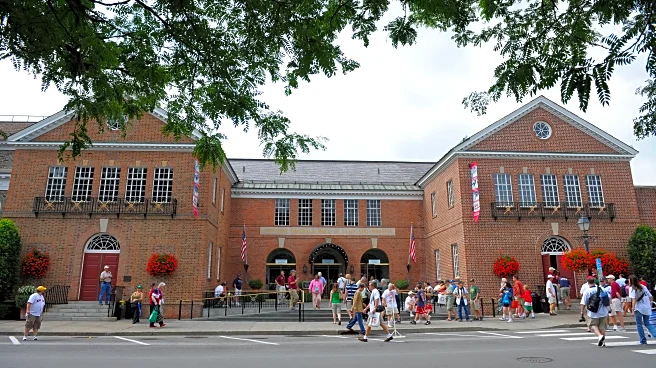


The results of the 2026 National Baseball Hall of Fame ballot of Baseball Writers Association of America members will be announced on January 20 on MLB Network, and my votes will be included among the 400 or so ballots summited.
I never dreamed this would happen, but then again I didn’t think the BBWAA would let a blogger into their ranks way back in 2016. But they did, and now that I’ve been a member for 10 seasons I am eligible to vote for the Hall of Fame for the first time. Much like the four
seasonal awards on which I’ve voted so far — National League manager of the year in 2022 and 2024, NL Rookie of the Year in 2023 and 2025 — I consider voting for the Hall of Fame a tremendous honor and responsibility. Here’s a look into my thought process on the 2026 ballot.
The locks
Carlos Beltrán is most likely going to make the Hall of Fame this year, and if not he’ll probably get in next year. He already got 70.3 percent of the vote last year, his third on the ballot. Beltrán totaled 70 bWAR and 67.4 fWAR, and during his eight-year peak from 2001-08 averaged 29 home runs, 29 steals, and a 124 wRC+ while manning center field. He made the postseason for five different teams, and hit .307/.412/.609 with 16 home runs and a 169 wRC+ in 65 games, adding to his ledger.
That it has already taken this long for Beltrán to be inducted to Cooperstown is likely for his involvement in the Houston Astros sign-stealing scandal in 2017, his final season as a player. The MLB investigation two years later interviewed 68 people, though all of the players were granted immunity. But the then-retired Beltrán was the only Astros player named in the January 2020 report. He was also the only Astros player to suffer any sort of consequence — outside of being booed on the road — as Beltrán was hired to manage the Mets in November 2019 but was dismissed two months later once the report came out, before he ever got a chance to manage a game.
I don’t view Beltrán’s involvement in the Astros scandal as a disqualifying event. The Hall of Fame considers him eligible, so I weighed the total package here and came up in favor.
Chase Utley was the best player on the Phillies team that won consecutive pennants, including a World Series triumph in 2008, though his teammates Ryan Howard (2006) and Jimmy Rollins (2007) were the ones who won Most Valuable Player awards. Utley had a stretch of five straight years (2005-09) of at least 7.2 WAR by both Baseball Reference and FanGraphs.

Utley did just about everything well, hitting with power — 411 doubles, 259 home runs — reaching base by both walking and getting hit by pitch, and playing a stellar second base. By the time Utley got to the Dodgers, he was 36 years old and a diminished version of himself. But he was absolutely adored in the clubhouse in Los Angeles, and not just by Kiké Hernández, who called Utley dad.
”I’ve never been around a guy that basically any moment in time, on the clubhouse or on the field, is doing something to try and help us win a game,” Dodgers president of baseball operations Andrew Friedman said during spring training in 2017. “Often times it’s about him getting ready for a game, but there are times where he’s watching video of our pitchers, just different things all with the mind of trying to help us win a game.”
Andruw Jones probably would have been among this group on my ballot, as the best defensive center fielder I’ve ever watched. But I can’t bring myself to vote for him after his 2012 arrest and guilty plea for domestic battery.
The rest of the ballot involves players who won’t be elected this year, but careers on which I’d like to at the very least continue the conversation.
Starting pitchers
Felix Hernández won the 2010 American League Cy Young Award, finished second two other times and fourth another time. From 2008-15, Hernández averaged 225 innings, 216 strikeouts, 5.4 fWAR, and 5.2 bWAR. Over those eight years he led the majors in innings and second in strikeouts, in the latter only 22 behind Clayton Kershaw. Hernández was only 33 years old in his final season, so his argument relies on his peak years, and they were special.
Cole Hamels, technically a former Dodger, is on his first Hall of Fame ballot, and while he doesn’t have the peak of King Felix, their career numbers have a lot of similarities:
Hamels: 163 wins, 2,560 strikeouts, 2,698 innings, 3.43 ERA (123 ERA+), 59 bWAR, 51.6 fWAR
Hernández: 169 wins, 2,524 strikeouts, 2,729 2/3 IP, 3.42 ERA (117 ERA+), 49.8 bWAR, 54 fWAR
Another benefit in Hamels’ ledger is his 3.41 ERA in 17 postseason games, including 16 starts. That includes winning both NLCS MVP and World Series MVP in the Phillies’ championship run in 2008.
If you want postseason stats, Andy Pettitte is your guy, the all-time leader with 44 postseason starts, 19 wins, and 276 2/3 innings, the latter over 50 innings more than anyone else. He never won a Cy Young Award but finished in the top five four times, and put up a 117 ERA+ (same as Hernández and Mark Buehrle) but over 3,316 regular season innings.
Mark Buehrle was as steady and reliable as they come. After debuting with the White Sox mostly as a reliever in 2000, he started at least 31 games in each of the next 15 seasons. He averaged 216 innings over that decade and a half, and the only reason his streak of 200 innings didn’t last 15 years was that he missed the milestone by only four outs in 2015, his final season. Buehrle, who pitched a perfect game in 2009, finished with 3,282 1/3 innings, one of only four pitchers since 2000 with at least 3,000 innings. The others are CC Sabathia, a Hall of Famer, Justin Verlander, a future Hall of Famer, and Zack Greinke, who will get my vote when he’s on the ballot in three years.
Performance enhancers
I don’t begrudge anyone who doesn’t vote for players who used performance enhancing drugs. I thought about using the cut off of not voting for anyone who tested positive or was suspended by MLB’s joint drug agreement (which began in 2005). But I don’t necessarily see a drug suspension as disqualifying, but rather something to consider in the total package for each player.
Pettitte in 2007 admitted to using Human Growth Hormone in 2002 to recover from an elbow injury, and in 2008 in Congressional testimony also admitted to using HGH in 2004 as well.
Alex Rodríguez was suspended for 211 games, later reduced to 162 games (the entirety of the 2014 season) “based on his use and possession of numerous forms of prohibited performance-enhancing substances, including Testosterone and human Growth Hormone, over the course of multiple years.”
He also hit 696 home runs and is one of the greatest players ever. Rodríguez would get my Hall of Fame vote under normal circumstances, but thanks to some strategic voting I left him off this year because I needed all 10 slots. Rodríguez got 37.1 percent of the vote last year and is in no danger of falling off the ballot this year, and he has up to five more years remaining on the ballot.
Manny Ramírez on the other hand is in his 10th and final year on the ballot. Having topped out at 34.3 percent last year, there’s no way Ramírez is getting inducted this year, so any vote for him would be a waste.
Why I needed the ballot space
Bobby Abreu will need to make some gains, after getting 19.5 percent in 2025, his sixth year on the ballot. But I think he merits further discussion. A pick by the Rays in the 1997 expansion draft, Abreu was immediately traded for Kevin Stocker and the Phillies were the benefactors. Abreu averaged 40 doubles, 23 home runs, 29 steals, 107 walks, a 141 OPS+, and 5.6 bWAR over the next eight seasons.
Abreu is one of only six players with at least 250 home runs and 400 stolen bases, along with Barry and Bobby Bonds, Rickey Henderson, Craig Biggio, and Joe Morgan.
Dustin Pedroia was an MVP, a Rookie of the Year, was integral to two Red Sox championships (2007, 2013) and technically around for another (2018). The second baseman averaged 40 doubles, 5.1 bWAR, and a 118 wRC+ over his first 10 full seasons, before a knee injury derailed his 2017 season, leading to multiple surgeries and a career cut short.
Similarly, David Wright saw his career cut short by neck and shoulder surgeries, but not before the Mets third baseman put up a 138 wRC+ and averaged 36 doubles, 23 home runs, and 4.9 bWAR over his first nine full seasons. To me, both Pedroia and Wright are similar to Kirby Puckett, whose career was cut short by an eye injury after playing only 12 seasons:
Puckett: 7,831 PA, 414 doubles, 207 HR, 122 wRC+, 51.1 bWAR, 44.9 fWAR, 10x All-Star, 6x Gold Glove
Pedroia: 6,777 PA, 394 doubles, 140 HR, 115 wRC+, 51.8 bWAR, 44.8 fWAR, 4x All-Star, 4x Gold Glove
Wright: 6,872 PA, 390 doubles, 242 HR, 133 wRC+, 49.1 bWAR, 51.3 fWAR, 7x All-Star, 2x Gold Glove
My last vote went to Torii Hunter, who won nine Gold Gloves, which counts for something. The only outfielders with more Gold Glove Awards are Willie Mays, Roberto Clemente, Ken Griffey Jr., Jones, Al Kaline, and Ichiro Suzuki.
Voting for Hunter bumped Rodríguez off my ballot. Not because I think Hunter was better than Rodríguez, and not necessarily because Hunter is a surefire Hall of Famer. But I think he merits further discussion, and he’s in danger of falling off the ballot entirely. Hunter got 5.1 percent last year, narrowly reaching the five percent required to remain on the ballot the next year.
Even if Hunter doesn’t stick around for Cooperstown consideration, his contract with the Angels was finalized at a Del Taco, which has to count for something.