



To think the AL West is so flawed this season that 3 teams, hovering just above or below the .500 mark, are clustered within 2 games of one another battling for 1st place.
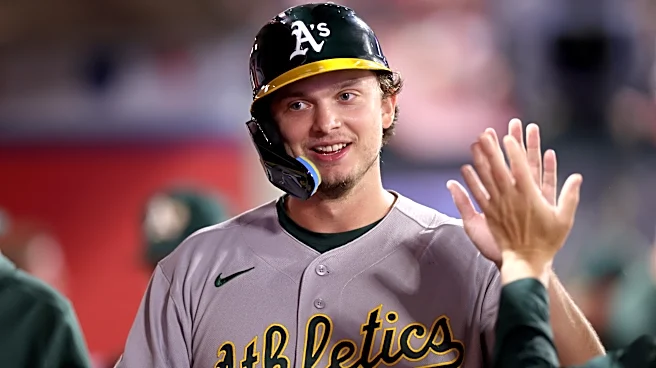
Trouble is the A’s are not one of those teams. Now 6 games under .500, with a better team on the IL than on the field and an ERA north of 6.00 at home, the A’s enter July on a precipice trying to avoid falling more clearly out of any possible playoff picture. Numerically they’re still relevant so long as you don’t watch the actual
performance.
Here are some random eyeball notes as the calendar turns to July and the A’s hope a new month brings a new level of play to a hobbled and reeling club…
Henry Bolte, CF
Bolte has been one of the bright spots, still maintaining a 110 wRC+ and keeping Lawrence Butler out of CF. There has been plenty to like, from his .370 OBP to 11 stolen bases in just 44 games.
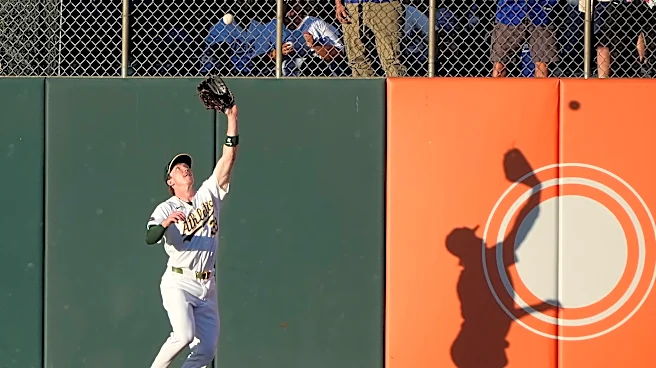
Where the Eyeball Scout is less impressed than the stats is Bolte’s CF play so far. It hasn’t been bad, mind you, but Fangraphs gives him above average ratings with +2 DRS and +2 OAA. That’s not quite what I have seen. Last night provided one latest example of a “Bleday read” where Bolte’s initial step was back followed by an arc route in for a shallow fly ball that fell in.
A key difference between Bleday and Bolte, of course, is that Bolte’s elite sprint speed allows him to outrun the majority of his mistakes — but that doesn’t mean he can afford to get poor reads or jumps often, as sometimes the lost ground is simply too much to make up.
I have seen some tangible improvements from when Bolte first arrived, such as not overthrowing the cut off man recently. He still does not take charge as much as you would ideally like, a case in point being the drive to the left-center field wall that Joey Meneses missed because he finds catching fly balls either hard or a nuisance. Thanks to his speed, Bolte got there in time to catch it, but deferred to an outfielder known to be terrible at fielding.
In any event, I’m still optimistic that Bolte can be at least an average CFer if not better, but I kind of expect the metrics to catch up to my eyes and for him to settle in at only being average now. Still, at a premium defensive position, “average” at age 22 is not a bad thing. I just think there is a lot of work yet to do.
Max Muncy (ours)
I won’t harp on this too much because I wrote about it recently, but with each passing day far from getting more comfortable and improving, in fact Muncy’s 3B defensive metrics continue to slide.
After last night’s game, in which I thought an E-5 absolutely should have been charged on a sharply hit ball Muncy ‘ole’d’ to his left, here is how his 3B numbers look: 342.2 innings (38 full games), -12 DRS, -7 OAA.
It’s bad enough that the A’s need to make it a priority not to play him there, whether it means DHing him, benching him, or optioning him.
Obviously the timing is poor with both Jacob Wilson and Zack Gelof sidelined, but since Muncy is not hitting much anyway (.235/.299/.409 for the season now with a 32.9% K rate), the A’s would in fact be a better team with McNeil-Williams-Kuroda-Grauer or Kuroda-Grauer-Williams-Hernaiz at 2B, SS, 3B.
You could even make a case for calling up Tommy White even though his inflated stats at AAA are still below league average. The reasoning would be that White has made only 2 errors in 28 games at 3B and that if you are going to get limited range and a below average bat at 3B it may as well come with more sure-handed defense and fewer strikeouts.
But for now the A’s best bet is probably a “defense first” arrangement that puts a somewhat ghastly bottom 1/3 of the order out there in the name of run prevention. A team giving up over 6 runs/game at home, lately 9, could use all the run prevention possible.
Jeffrey Springs
Not to beat up on someone when they’re down, but some of the numbers on Springs are eye-popping. And by that I mean you want to take the nearest skewer and pop out your eyeballs to avoid seeing the next start.
Springs threw only 27 innings in June yet still managed to serve up 12 HRs. Yes, folks, that’s a HR every 2.5 innings on his way to a cool 10.00 ERA for the month.
Here’s what the Eyeball Scout has to say about it. Is it truly THAT hard for a pitcher to learn a 2-seam fastball, aka a sinker, that is mostly a different grip on a familiar pitch? I understand that “hey, add this new pitch” is popular with fans in theory and hard for pitchers in practice, but we’re not talking about an unusual pitch like a forkball or a knuckle-curve here.
The A’s know they play their home games in a launching pad ill suited to extreme fly ball pitchers. How, in 1.5 seasons, have they not been able to help Springs develop just a serviceable pitch that sinks, one he could bring out only at home if he wanted, just to keep balls from flying out of the park left and right?
If you’re wondering how dire the situation is, after last night Springs’ home ERA for the season stands at 6.79 with 16 HR in 54.1 IP. Overall, when it comes to serving up the long ball Springs is alone atop the American League, his 27 tied with Shota Imanaga.
In a game of adjustments, this old dog (33) needs to learn one new trick or he is simply not equipped to survive, let alone thrive. Adapt or perish, as they say.
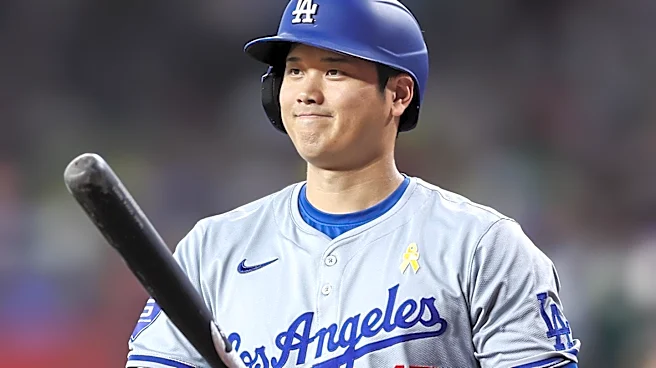
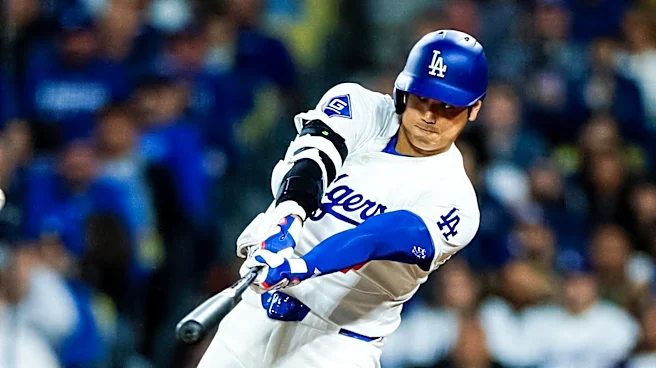
Glimmer of hope alert: With Shohei Ohtani’s start pushed back to Friday, the A’s have a match up that is actually somewhat favorable on paper: JT Ginn against a “bullpen game”. Let’s hope July greets the A’s better than June sent them off.