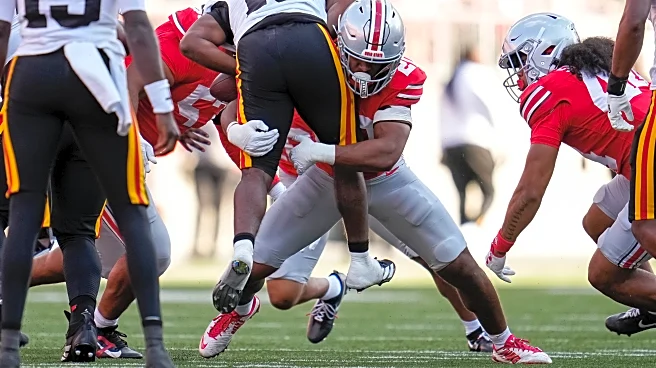

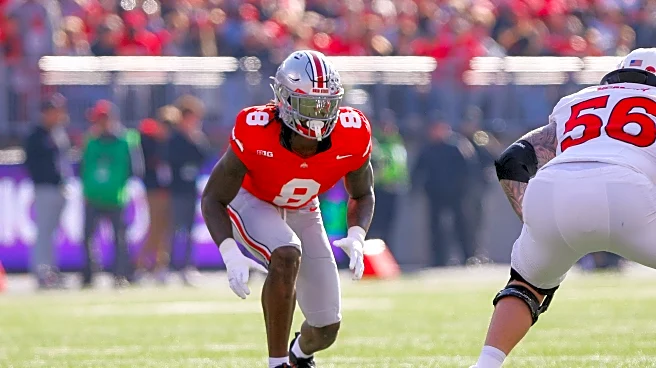
Ohio State does not just recruit linebackers. It develops identities.
Over the past two seasons, the Buckeyes have showcased two very different versions of elite linebacker play.
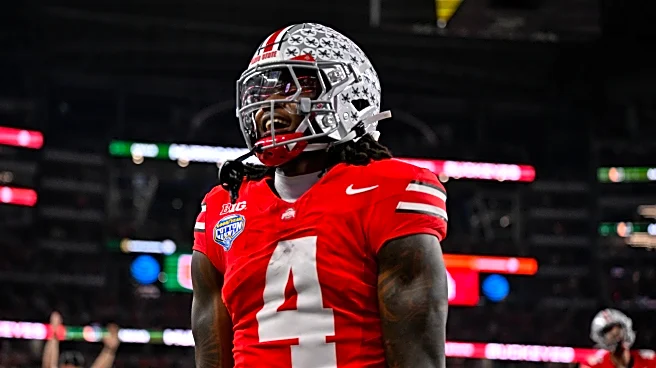
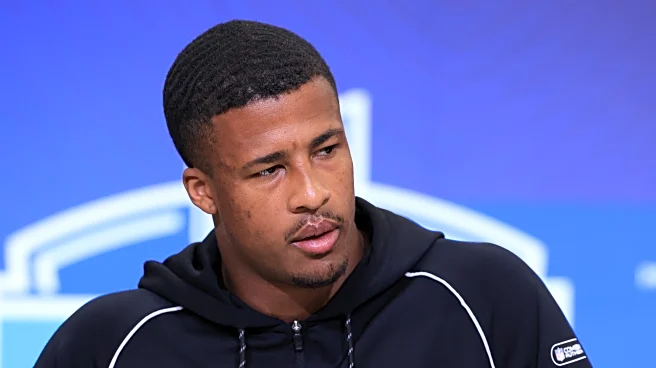
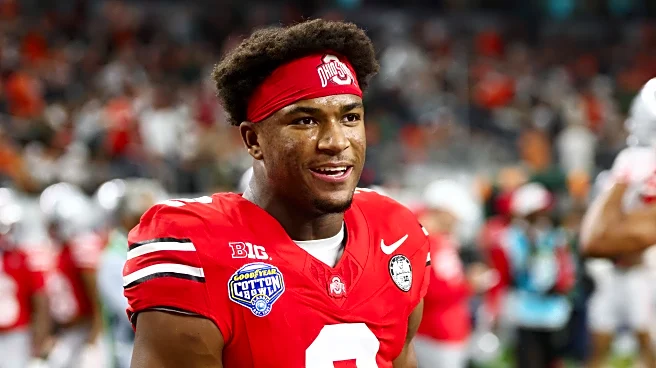
Sonny Styles represented the modern off-ball centerpiece. A true sideline-to-sideline defender who controlled the middle of the defense, communicated, and erased space with athleticism. Arvelle Reese, on the other hand, redefined versatility. A hybrid weapon who could align off-ball, rush off the edge, attack gaps, and disrupt
offenses in multiple ways.
Now, as Ohio State looks ahead, the question is not just who steps into the linebacker room. It is what that role becomes, and that brings the focus to Riley Pettijohn.
The profile: why Pettijohn was such a coveted recruit
Pettijohn arrived in Columbus as one of the most intriguing linebacker prospects in his class. A highly rated recruit out of Texas, he brought a rare blend of size, athleticism, and positional flexibility that immediately made him stand out.
Physically, he checks every box. Around 6-foot-2 to 6-foot-3 with a strong, developing frame, Pettijohn combines length with movement ability. But what separates him is not just his measurables. It is how he moves.
He plays fast. He closes space quickly. And he has the kind of burst that shows up both when pursuing ball carriers and when attacking downhill. That profile is exactly why his long-term role has never felt locked into one lane.

Year one flashes that matter more than the numbers
Pettijohn’s freshman season was limited in terms of volume, but not in terms of impact.
In a rotational role, he recorded nine tackles, one tackle for loss, a forced and recovered fumble, and a pass deflection. Those numbers are modest, but the context matters. When he was on the field, he made plays.
More importantly, he looked comfortable. That is not always the case for young linebackers at this level. The position demands processing, discipline, and physicality all at once. Pettijohn showed early signs that the game was not too fast for him.
And that is often the first indicator of what a player can become.
The Sonny Styles path: the off-ball anchor
One possible trajectory for Pettijohn is following the Sonny Styles model.
That role is built on consistency and control. The middle linebacker is responsible for diagnosing plays, aligning the defense, and impacting both the run and pass game. It requires discipline, communication, and the ability to play sideline to sideline.
Pettijohn has the tools for it. His range and athleticism would allow him to cover ground in space. His size gives him the ability to take on blocks and hold up against the run. And as he continues to develop mentally within the system, he could grow into the kind of player who stabilizes the entire defense.
If Ohio State leans in this direction, Pettijohn becomes the foundation. The player who does everything right, consistently, and allows others to play aggressively around him.
It is the safer projection. But it may not be the most dynamic one.
The Arvelle Reese path: the Swiss army knife
The more intriguing path is the Arvelle Reese model. This is where Pettijohn’s ceiling becomes especially interesting.
Reese was not just a linebacker, he was a weapon. He lined up off-ball, rushed off the edge, attacked interior gaps, and forced offenses to account for him on every snap. His value came from unpredictability as much as production.
Pettijohn has the athletic traits to fit that mold. His burst allows him to close quickly as a blitzer. His frame gives him the ability to add strength and become more effective in pass-rush situations. And his movement skills allow him to operate in space without being a liability in coverage.
If Ohio State chooses to deploy him this way, Pettijohn does not just fill a role. He becomes a problem for offenses to solve. This is the higher-variance outcome. But it is also the higher-ceiling one.
The reality: it may not be one or the other
The most likely answer is somewhere in between. Modern defenses rarely ask linebackers to stay in one lane. The best players are the ones who can shift roles based on down, distance, and matchup. Pettijohn’s versatility makes him uniquely suited for that kind of usage.
On early downs, he could function as a traditional off-ball linebacker, fitting gaps and flowing to the ball. On passing downs, he could become a pressure piece, attacking protections and creating disruption.
That kind of flexibility is exactly what Ohio State has leaned toward in recent seasons, and it is exactly what Pettijohn offers.

Why Pettijohn’s development matters so much
Ohio State’s defense is entering a transition. Replacing players like Sonny Styles and Arvelle Reese is not just about production. It is about identity. Those players defined how the defense operated, both structurally and schematically.
Pettijohn represents the next iteration of that identity. If he becomes the off-ball anchor, the defense regains stability and control in the middle. If he becomes the hybrid weapon, the defense maintains its ability to create chaos and disrupt offenses.
Either way, his development will shape how the unit looks.
The ceiling: Next in line
Ohio State has built a reputation at linebacker. It is a position defined by evolution, from traditional thumpers to modern, versatile athletes.
Pettijohn fits the next version of that trend. He may not be fully defined yet. His role may shift, and his usage may evolve.
But that is not a limitation, it is a sign of what he can become. Because the best linebackers in modern college football are not just one thing. And Riley Pettijohn might be the next example of that at Ohio State.