
The Mariners got better just because.
Fangraphs on Monday dropped their standings model for 2026 and the commensurate playoff odds . It was the biggest news for most of the morning because the Mariners,
wouldn’t you know it, were the top projected team in the American League. No, not the best team in the American League, a distinction reserved for the Yankees or the Blue Jays or maaaaybe the Red Sox. But instead the team projected for the most wins, thanks to their good fortune of not playing in the AL East.

These odds felt final, a rubber stamp on another quiet offseason, the justification for continued austerity. For years the organization has committed to building good-not-great rosters, seeing 85-90 wins as a sort of sweet spot; just enough to always be competitive—favorites, on occasion—without risking prospects or profits.
And to their credit, it’s kind of worked. They’ve won 85-90 games in five consecutive seasons. They’ve made a deep playoff run. They’ve developed two of the five best batters in MLB and a premier pitching staff. They’ve made shrewd trades to supplement the roster. And they’ve done so while maintaining a top five farm system, one that’s beginning to graduate legitimate Big League contributors. They’ve held onto their cake, they’ve eaten their cake, and they’ve ensured us of its caloric efficiency.
The question this offseason was whether the Mariners would see this strong position as an ultimatum to chase their first ever World Series; or if they’d see last year’s playoff run as proof of concept for the model that’s gotten them, well, however far *this* may be.
I was prepared for the latter as of Monday at noon. They hadn’t been active since Christmas, and most of the good options had been snatched up by more diligent teams. Eugenio Suárez felt like the last realistic fit, and he’d signed with the Reds over the weekend on a modest one-year deal that the Mariners could have beaten if they cared. Sure, Jerry Dipoto said at Fan Fest there was another trade in the works, but I’d learned to ignore these verbal pacifiers, especially as he sounded committed to their strategy in December:
“And while we’ll continue to evolve our model, mold our model in certain places… I don’t think we’re going to bust it and start over again. We like the model. And right now we’re starting to see some tangible results of what that looks like. We still have goals that we want to achieve that we haven’t achieved yet. So plenty to do, but I think the infrastructure is the way we want it, and we’ll keep relying on the things that we do.”
We can see that “model” had them perfectly aligned with their historic quality. Again, it was arguably enough:

Now, I’d been writing about this strategy since 2021, exhausting all the pros and cons and logistical nuances across far too many words. But I’d never decided how to feel about it as a fan. I could appreciate—and even respect—a group of administrators with the competence and conviction to execute a long-term plan. I felt strongly about the core roster, as people and as players, and I was compelled to watch them every night. And I had some level of confidence that their success, relative as it may be, wasn’t likely to vanish again anytime soon. The Mariners, as of Monday at noon, were worth my time.
But it was easy to forget the hard feelings that existed around the organization from October 2022 through August 2025. For a model based on risk management, it still assumed an incredible amount of risk, all for a step above mediocrity. Baseball is a game. The point is to win. And doing so by technicality—by attrition, really—goes against the nature of competition itself. The Mariners, as of Monday at noon, were kind of pathetic.
Anyways…
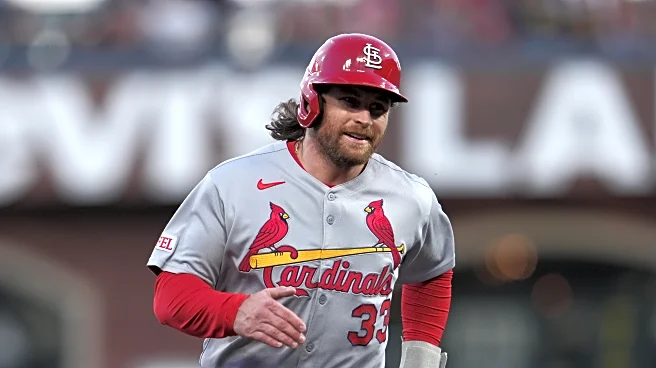
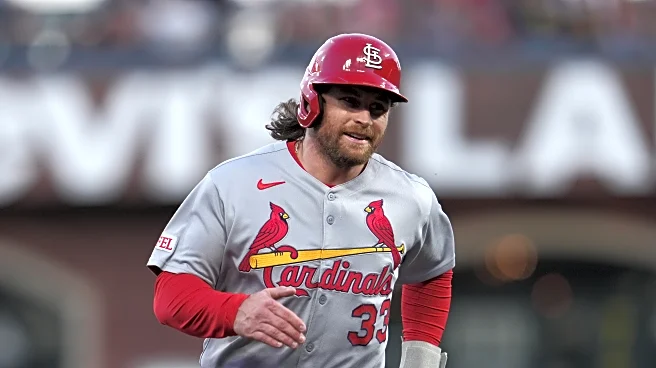
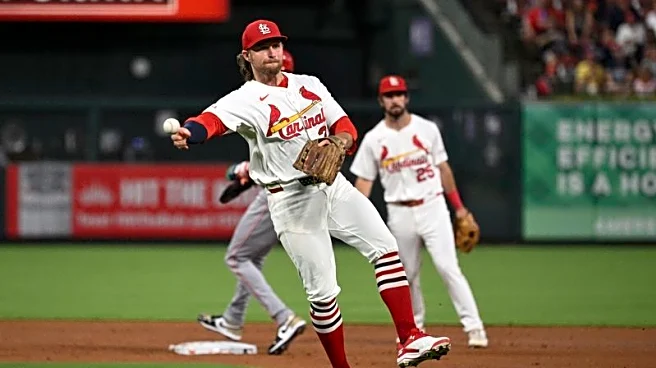
At about 2 p.m., the Mariners traded a bunch of prospects for Brendan Donovan. The deal added a net +2.1 fWAR to their projection, with Donovan coming in at 3.1 fWAR by Steamer and Ben Williamson going out at 0.9 fWAR. As the plot below illustrates, this gives the Mariners their best ever projection by a considerable margin, an increase of 5%:

This doesn’t actually change their odds much. The Mariners’ projected standing increased by 1.4 wins; their odds to win the division increased by 6.9 points; their odds to win the World Series increased by 2.4 points. They’re in the same position now as they were before the trade:

The Mariners with this deal got better simply for the sake of getting better. It’s the first time that’s happened since… I honestly cannot remember. It might as well be forever. This is a legitimate win-now deal that commits more resources to 2026 than scales linearly. It’s inefficient, and at this level, that makes it a step towards greatness—the first of Jerry Dipoto’s tenure. I’d call this a new era.
There’s a bit of irony, of course, that I’m making so much hay about a deal for a player I don’t think is great himself. Donovan is obviously “good,” to be clear. He makes a ton of contact while still hitting the ball hard (a distinction that separates him from the likes of Adam Frazier and Kolten Wong). His ability to play so many positions is an exciting premise for a roster already oozing with flexibility. But I see this more as everyday depth, or maybe “fringe core,” if you had to name it as an aesthetic.
I’m also kind of surprised by the cost, even I can justify letting go of each piece individually. I didn’t buy into Ben Williamson’s bat, but I bought into his glove. I was skeptical of Jurrangelo Cijtnje’s left arm, but I was encouraged by his right. The rest was long-shot trade filler, but why did the Cardinals require so much of it? That’s the price of progress, I suppose.
If this is it—and it probably is—the roster is close to ideal for a team now with both feet in the water, gauging its initial depth and temperature, considering whether to fully submerge and dive for the deep. They have great players. The have good players. They have role players. They have prospects. They have quality and contingency; now and later. They are the favorites in the American League. They’re maybe even great.