



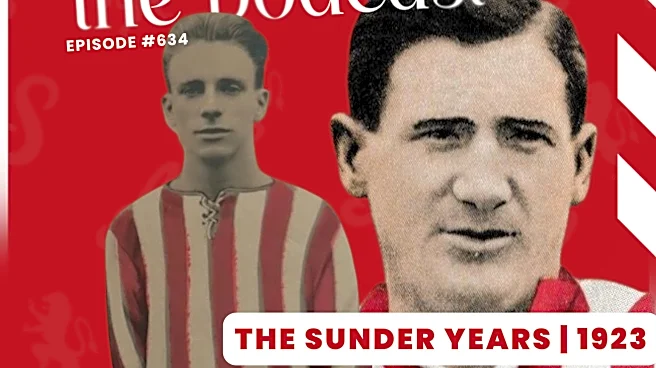

Henry Forbes Low (sometimes known as Harry) died 106 years ago on this day — yet another Sunderland hero, whom we shouldn’t allow to be forgotten.
As I’ve written on these pages before, the 1973 FA Cup Winners are rightly praised and idolised by modern fans. The club did a fantastic job of raising awareness of our 1937 FA Cup Winners with the release of our 2026/2027 home strip. Yet, there are many notable players from the past who helped to create the history that this great club can now stand on and be rightly proud
of, and Harry Low was such a player.
Low was one of those gifted footballers who could adapt and fit into several positions on the pitch.
He was mainly a centre back or a wing half, but during his Sunderland career, he mostly played on the left-hand side — a ‘left half’, in old parlance.

Born in Old Machar, Aberdeen, in 1882, Low began his career playing for Orion FC (one of three minor organisations along with Aberdeen and Victoria United) at the age of nineteen. These three smaller clubs then amalgamated in 1903 to form Aberdeen FC, which allowed them to enter the Scottish League.
Low made 103 appearances for the Dons, and so when Sunderland secured his signature in 1907, for £400 at the age of twenty-five, he was already a seasoned campaigner. He would go on to represent the club a total of 228 times in league and cup, scoring thirty-eight goals.
He spent the rest of his playing career of twelve years with Sunderland, eventually retiring in May 1919, and like so many, his career was disrupted due to the outbreak of war.

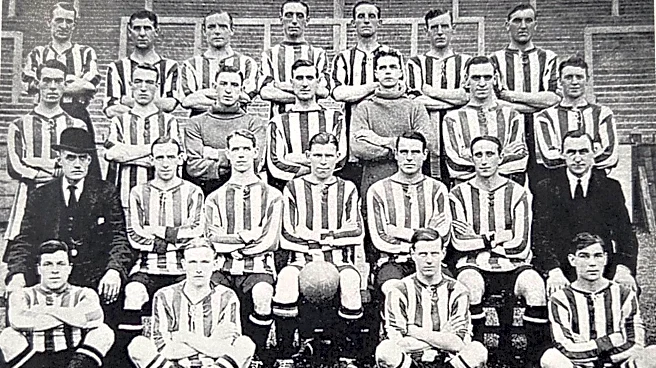
He played in all but one game as part of the 1912/1913 championship-winning side, alongside other glorious names including Cuggy, Thomson, Mordue, Buchan, Holley, Martin, Butler and Gladwin.
Low also played in all ten FA Cup fixtures that same season — including the final against Aston Villa at Crystal Palace which we lost 0-1 — as we missed out on the much coveted ‘double’ of League and Cup. To some, this represents perhaps Sunderland’s greatest season: winning the title and coming so close to the elusive double in what was Bob Kyle’s eighth season in charge.
To almost add salt to the wound, Low was picked for the Scotland squad for a match in Ireland, but we had somehow managed to draw twice with the Visitors in the round of sixteen and the second replay clashed with the international game, and so he pulled out of the international party to help Sunderland through to the quarter-final.
Unfortunately, I’m not sure this went down very well at the SFA, and he was never selected again. Some decision that must’ve been to deny himself the chance of a cap and to represent his country.
Low was also part of a very talented family. His brother was Wilf Low, the Newcastle and Scotland player, and cousin of Willie Low, who played for Aberdeen at around the same time.
In February 1917, he enlisted in the Royal Navy as an able seaman, serving on HMS Dido and being honourably discharged after being wounded. He became the landlord of a pub in Monkwearmouth in 1919, but tragically died very young after contracting pneumonia in September 1920, at the age of just thirty-eight. He was married with four children.
Harry and players like him will hopefully always be remembered by the club and fans, through history books, record books, podcasts and museum displays. They are the foundations of the club.