




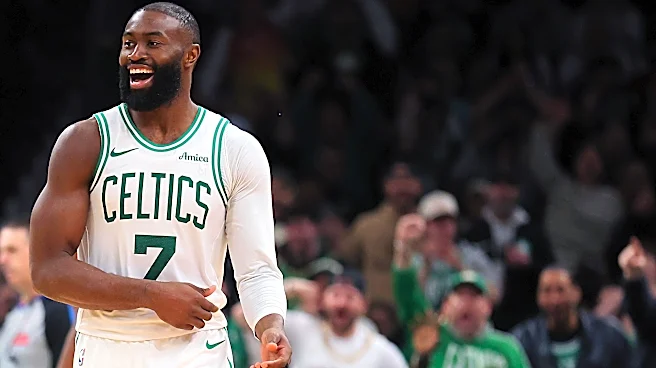
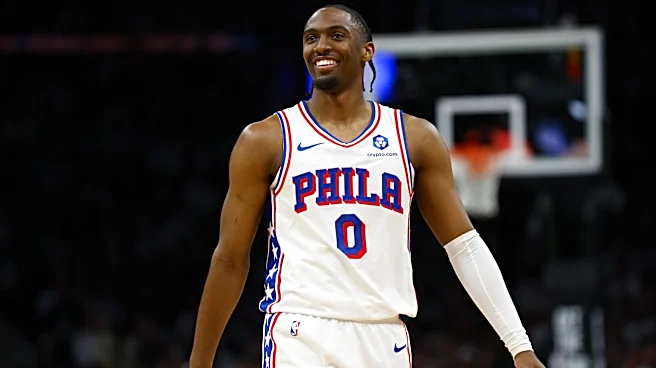
Entering his third season as a Celtic, Jordan Walsh needed to make a statement.
After a rough second year in the Summer League and spot opportunities in Year 2, Walsh had a massive opportunity to crack the rotation in Jayson Tatum’s absence. Early on, it didn’t feel like those opportunities were coming Jordan’s way, and then he hit a corner dagger against Orlando on Nov. 9.
That shot set Walsh on the path to a solid season as a 3&D wing, earning 25 starts and 68 appearances, while establishing himself
as the team’s go-to defender against opposing stars.
Walsh finished the regular season guarding star-caliber players 30.74% of the time, placing him in the 99th percentile (7th out of 523 players according to BBall Index).
Let’s look back on Walsh’s season, and what’s to come for the 22-year-old.
The Regular Season Breakout
The two biggest things that stood out about Walsh’s season were his defense and his 3-point shooting.
Defensively, Walsh made a legitimate impact on a team that was ranked fourth in defensive rating and first in opponent points allowed.
Two nights after the Orlando shot, Walsh guarded Tyrese Maxey in Philly for six minutes, holding him to 1-of-9 shooting. The very next night, it started the chain of 16 consecutive starts. The feeling was that Walsh was quickly establishing himself as a legitimate starting wing for the first time in his NBA career.
James Harden, Cade Cunningham and Paolo Banchero were all in the top-5 of Walsh’s list for most common matchups, and he often left with passing marks against his greatest challenges. There were even some Victor Wembanyama minutes (3:24 to be exact). Walsh’s versatility was finally on display.
As a perimeter player, what was once a huge point of emphasis in his game actually grew into a strength.
Walsh wasn’t a high-volume shooter by any stretch, averaging 1.8 attempts per game and 125 attempts in total, but when he fired them off, it became a reliable sight to see him drain it. He shot 38% on all threes, 42% on catch-and-shoot looks and 40% from the corners.

Something that also flies under the radar but was an important part to Walsh’s regular season success was his impact crashing the glass. For a team that heavily emphasized rebounding from all positions after a frontcourt overhaul, Walsh emerged as one of their best glass-crashers from the wings, averaging 4 rebounds per game.

After Walsh’s string of starting appearances, he saw a drop in his time on the floor as other starting combinations began to take shape, particularly with the return of Jayson Tatum. After Tatum returned on March 6, Walsh had eight DNPs for the month, though he’d finish the season with starts in the last three games.
Notable season highlights include a perfect 100% shooting night on eight attempts against the Wizards on Dec. 4, which ended with a career-high 22 points, a 6-for-7 shooting night with four threes against the Lakers on Dec. 5, and double-doubles in wins against the Cavaliers (Nov. 30) and Clippers (Jan. 3).
Limited postseason opportunities mar regular season progress
A favorite for minutes off the bench after a promising sample size defending Tyrese Maxey, Walsh ultimately found himself ninth in playoff minutes.
Those minutes fluctuated to as high as 19 in Game 6, and to as low as a shade under 5 minutes in Game 7.
Walsh played the second most minutes on Maxey behind Derrick White, and Maxey shot 47% with two turnovers and one blocked shot during that matchup. Among all Sixers matched up with Walsh, he held them to a 41% defensive field goal percentage for the series, forced four turnovers and blocked two shots.
From what we saw, his defensive impact mostly held up, though Maxey proved to be a more difficult assignment than what we saw in the two regular season games where Walsh matched up on him.
Most disappointing was a significant dropoff in his low-volume scoring efficiency, particularly from the 3-point line. Walsh shot just 2-of-12 on his 3-point tries and was an overall 21% shooter, ending the season with two missed threes and no other counting stats in his brief Game 7 appearance.

With the season on the line and Jayson Tatum out, the Celtics put more trust in Baylor Scheuermann (22 minutes) and Hugo González (13 minutes) to round out the rotation.
Looking Ahead
What felt like his last chance to crack the rotation ended in restored faith in Walsh’s future prospects with Boston.
The Celtics have a lot of wing options on the bench, but Walsh has his own identity, and with a club option that’s a team-friendly $2.4 million cap hit, it’s likely the Celtics will retain his services at a low-cost, or look to even extend him now.
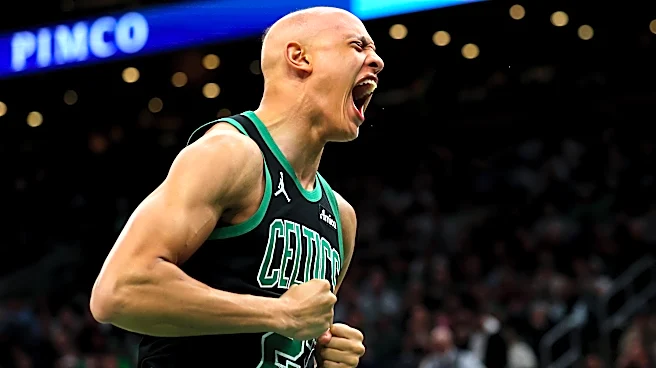
A seismic change could possibly warrant a choice between picking up the options of either Walsh or Ron Harper Jr., but with both displaying different types of upside as rotation contributors, it’s a good bet to assume they both find themselves on the Opening Night roster.
Walsh needed a chance to show what two seasons riding the bench did for him, and he got it. We saw some promising signs from the 38th overall pick, who is looking like another quality late-draft find from Brad Stevens.