




Fact: next year’s football team could be vastly improved relative to 2025 but still finish 4-8.
The schedule on paper appears that daunting. Yes, predicting how good or bad next season’s opponents will be when they show up on the schedule this far out makes things extremely speculative. Still, working through the schedule, it’s clear next season’s slate will be much tougher than last season’s. That’s partly due to how absurdly easy last season’s schedule turned out to be. Still, next season’s schedule could
end up the toughest UNC’s faced in a long time.
Let’s start with a metric that’s been making the rounds since Phil Steele’s blog post on the subject rolled out last month. An old standard for measuring upcoming schedule strength takes last year’s win percentage for this season’s opponents and ranks whose opponents won the most. By that measure, UNC ‘s 2026 schedule ranks as the toughest in the land. Only five teams face a slate of opponents that racked up over 100 wins last season, and UNC tops the list at 103. All 11 of UNC’s FBS opponents next season had a winning record last season, with ten of them participating in a bowl or playoffs. Notre Dame, if you recall, threw a tantrum when they were (correctly) excluded from the playoffs and then refused a bowl invite.
This old formula was flawed even before the transfer portal and NIL made every off-season a free agent scramble. That tends to rob programs in the ACC of elite players, who migrate to the B1G and SEC for bigger paychecks. Rich programs loading up on transfers can see those plans fall apart with missed evaluations and locker room culture issues.
At a casual glance, the measure seems more accurate with teams in conferences with proven depth. SEC and B1G teams on the list ended up largely within range of their predictions. Example: In 2025, Arkansas topped the list preseason and finished with a schedule strength ranked 16th by FEI and 8th by FPI. #6 TCU, on the other hand, ended up with a schedule ranked 69th and 50th. The lone ACC entries in the 2025 top 20 were Syracuse at 5th and Boston College at 17th. The Orange schedule rated 35th via FEI and 19th via FPI. The two metrics nearly agreed on the Eagles’ schedule, at 54th and 55th.
No one expects UNC to end 2026 with the nation’s toughest regular season schedule. However, the leap from a schedule rated in the 90s to one ranked anywhere in the top 20 could cause some heads to spin on the UNC sidelines. Consider the following:
ACC Schedule: Using FEI from last year, the ACC schedule retains Virginia (33), Clemson (37), NC State (41), Duke (46), and Syracuse (94). Miami (5), Louisville (29), and Pittsburgh (34) replace California (79), Stanford (84), and Wake Forest (51).
Miami and Louisville will be much tougher opponents than Cal and Stanford, that seems certain. Wake Forest, which paired a top notch defense last season with a struggling offense, seems Pittsburgh-esque in that sense, so we’ll call that a wash for now.
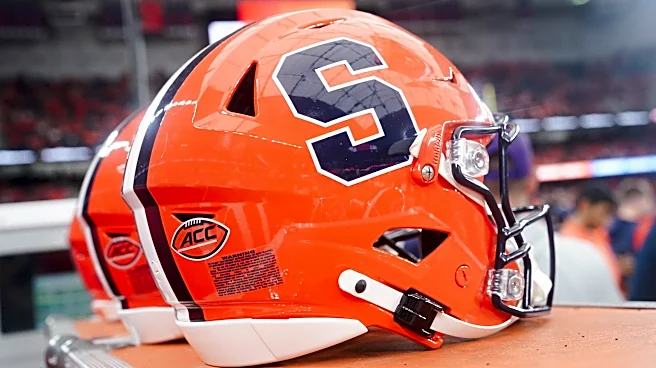
Clemson loses a lot of production from a team that underwhelmed last season, so the team may regress. On the other hand, Dabo could have named his score in Chapel Hill last season. Clemson’s dealt with coaching issues, but the talent’s always there. Syracuse could be the team that won 10 games in 2024 and then manhandled Clemson in Death Valley early in 2025. It could be the team that had to start a true freshman lacrosse player at QB against UNC (and still led at halftime).
Virginia in 2026 will be relying heavily on the portal, which can be boom or bust, but it’s probable they move back in the rankings this season, at least somewhat. NC State lost its starting left tackle, #1 running back, and #1 wide receiver to the portal this off-season but retains CJ Bailey. Duke’s the clear off-season loser, calibrating its entire roster build around Darrian Mensah, who left for Miami on the portal’s closing day. Expect the Blue Devils to be a shadow of the team that up-ended Clemson in the regular season and earned revenge over Virginia in the ACC title game.
Within the ACC, two losses seem certain, and two more losses seem probable. Three opponents rank as “who knows what that team will look like,” while one opponent seems a probable victory. The ACC schedule could yield anything from 5-3 to 1-7, with 3-5 looking the most likely.
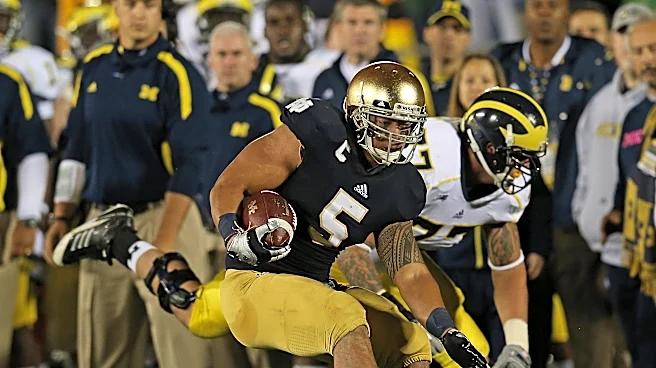
Out of Conference Schedule: TCU, UCF, Charlotte, and Richmond becomes Notre Dame, TCU, UConn, and East Tennessee State. Notre Dame projects as a top 10 playoff team. TCU moves from the toughest opponent of the 2025 season to perhaps the 4th or 5th toughest opponent for 2026. UConn lost their entire coaching staff and most of their roster from last season’s 9-4 team that beat ACC champion Duke, but they’d have to put in serious work to match 2025 Charlotte, among the five worst teams in FBS last season. ETSU and Richmond seem comparable FCS programs, finishing 41st and 42nd last season in Massey’s FCS rankings.
Interestingly enough, TCU head coach Sonny Dykes grabbed his new offensive coordinator from UConn, for more emphasis on the running game, and lost star QB Josh Hoover to Indiana. TCU landed Jaden Craig, a four-star transfer QB from Harvard who has never faced FBS competition, much less P4 competition. Against Villanova in the opening round of the FCS playoffs, Craig posted nine completions on 21 attempts in a 52-7 loss.
UNC went 2-2 out of conference last season. 2026 could mirror that result. Besting it would require Belichick’s defensive staff to flummox TCU’s new QB in his first game against P4 competition and Petrino’s offense to play a clean game. That’s actually not an unreasonable possibility. If that happens, UNC stands an excellent chance to go 3-1 out of conference.
Put it all together…
At this point, Fanduel, Sportsbook, and Oddsshark all offer a UNC win total of 4.5. The path to that number seems clear. East Tennessee State rates as a clear win. Notre Dame, Miami, and Clemson at their place rate as probable losses. That’s 1-3. TCU and Louisville project to be solid favorites in those matchups. That’s 1-5. The other 7 games rate as toss-ups, which yields 3.5 wins. Total expected wins: 4.5.
Every season, the various metrics identify teams with five or six wins that on a play by play, drive by drive basis rate in the top 34 (upper quartile) of the FBS division. Examples last season include Penn State, Auburn, Kansas State, and South Carolina. Below them, Kansas, Florida, and Arkansas all finished the top 50 despite losing records. Arkansas managed that while going 2-10. The disparity in schedule strengths in college football can see a team with major flaws luck into nine wins while a well-constructed, well-coached team ends up with five.
That’s one reason last season’s 4-8 result against an easy schedule stings so badly. Schedule opportunities like that don’t come around too often. For UNC, schedules that rank in the top 20 by season’s end are also rare. The last time UNC faced a schedule even in the top 30 was 2009 (28th). If Bill Belichick in year two runs into UNC’s toughest football schedule in two decades, he plausibly could field a vastly improved team that still finishes 4-8 or 5-7. Even a moderately improved team could find itself on the wrong end of a bounce or two to finish with three wins.
That’s college football, which has no interest in parity, much less mechanisms to help foster level playing fields. This is the job Belichick lobbied for. It’s an opportunity to show the world he remains an elite football coach.
If Belichick somehow gets to 6-6, expect a loud argument for a third year. Even 4-8 or 5-7 would create some controversy and leave room for doubt. It’s that middle ground result that should worry you. Would UNC opt for a third year of Belichick after two losing seasons? The schedule difficulty would seem to put that possibility into play.
How do you see next season shaking out?