
After two decades of unprecedented success, the New England Patriots came crashing down in 2023. Their former first-round quarterback had flamed out, years of talent drain and questionable decisions caught up with the team, and organizational infighting reached a point of no return.
When Robert Kraft and Bill Belichick stood at the podium at Gillette Stadium to announce their mutual decision to part ways after 23 years and six Super Bowls, a new era was therefore ushered in for the franchise. And
yet, improvement was anything but immediate: one year after going 4-13 under Belichick, the Patriots went 4-13 under Kraft’s hand-picked successor, Jerod Mayo.
Fast forward another 13 months, and the team is now preparing for an appearance in Super Bowl LX.
So, what happened?
The Patriots punching above their weight may have played a role in it, the same with a fourth-place schedule that allowed them to develop while also continuing to win. Ultimately, however, four big steps were taken that all contributed to the club speed-running through a rebuild and returning to the Super Bowl only seven years after its last appearance on the biggest stage in the sport.
Step 0: Building the core
The Patriots took Bigfoot-size steps over the last 13 months, but they wouldn’t have been able to do so without already having some semblance of a core in place. Its pieces came from both the Belichick and the Mayo eras, and they have been vital to what looks like a lightning-fast turnaround but has actually been several years in the making as far as some critical spots on the roster are concerned.
Take the most critical of them all, quarterback. Drake Maye arrived in Foxborough a year before the current coaching staff headed by Mike Vrabel. And while his rookie campaign was one of growing pains, he managed to take some strides already under Mayo and offensive coordinator Alex Van Pelt — building a foundation Vrabel and new OC Josh McDaniels successfully built on.
No player on the Patriots’ current roster is as important as Maye, and the team’s overall development goes hand in hand with his individual growth into a true franchise-caliber player. That said, there are other pieces worth mentioning, too.
Rhamondre Stevenson, Kayshon Boutte, DeMario Douglas, Hunter Henry, Mike Onwenu, Christian Barmore, Christian Elliss, Christian Gonzalez, Marcus Jones, Jaylinn Hawkins and Brenden Schooler were part of the team already before Vrabel arrived; the same is true for special teams coaches Jeremy Springer and Tom Quinn. All of them have had an active hand in New England reversing its fortunes.
Likewise, identifying them as important pieces of the puzzle and retaining them was crucial as well.
Step 1: Error reversal
The decision to fire Jerod Mayo was not made during the Patriots’ win over the New York Jets to close out their 2024 campaign. Within two hours of the fourth win of that season, after all, a lengthy, pre-drafted statement was released announcing that Mayo was let go after just one year at the job.
The decision was not entirely unexpected given that the team had played some uninspired football under Mayo. And yet, it was a difficult trigger for Robert Kraft to pull: he had committed to his new head coach several years back, much to Belichick’s dismay. Now, he had to acknowledge that promoting the former assistant coach without any search was a mistake that ultimately he and nobody else was to blame for.
The Patriots, however, needed that acknowledgement and the fresh start it brought. It was what ultimately allowed them to bring in Mike Vrabel.
Vrabel getting hired looked like a foregone conclusion from the jump, so much so that another candidate — now-Jets head coach Aaron Glenn — declined to even interview for the job. While the road to get there might have been unconventional, the result was one that ended up reigniting the flailing franchise from the jump.
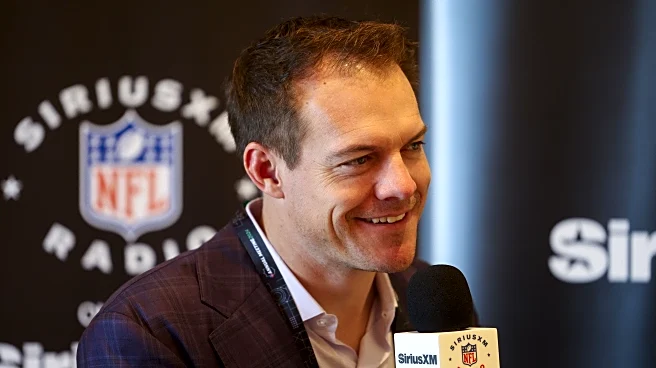
“Once the players showed up in April, really understanding how quickly he was able to do it,” said Patriots EVP of player personnel Eliot Wolf on Super Bowl Opening Night on Monday. “We knew he’d be able to do it and get everybody to buy in, but it was really impressive to see the shift once the season start from guys that have been here kind of waiting for something bad to happen to shift into being ready to make those plays.”
Vrabel’s background was similar to Mayo’s, but there was one major difference between them: while the latter had limited coaching experience and virtually no network outside of New England, Vrabel was a seasoned NFL head coach who had spent time with six different organizations as a player and coach before returning to One Patriot Place in January 2025.
He used that experience to purposefully build out his staff and set the tone from the top down. This, in turn, allowed the Patriots to quickly reshape their identity after the culture had started to deteriorate.
“It started with trying to put a program in place with the people other than the players,” Vrabel said. “Whether it’s the operations, it’s the training staff, it’s the coaches, it’s the personnel. And then when the players came in in. April, they started to believe in it, they started to see it. We got the right players in the building at the right time, but for me it was about making a program, creating a program that these guys wanted to be proud of and wanted. to protect.”
Step 2: Cultural investment
Toward the end of the Tom Brady era, the Patriots had one of the most experienced and by extension expensive rosters in football. They went on to use 2020, the year after Brady’s departure, as a reset of sorts and to allow themselves to start the post-Brady era in earnest beginning in 2021.
The effects of that process could still be felt several years later. With the organization bringing a rookie on board in hopes of becoming a long-term fix at quarterback — and, to his credit, he looked the part early on — they were free to spend money differently than with Brady commanding around 10% of their available cap space in any given year.
This, in turn, also allowed them to set themselves up for another rebuild following the 2023 season. At that point, Mac Jones had shown that he would not be part of the process moving forward. It turns out, Belichick himself wasn’t either.
When Eliot Wolf took over as quasi-general manager, he therefore inherited a four-win roster without a quarterback and holes all over the place, but with some premium resources in hand: the third overall selection in the 2024 NFL Draft as well as significant cap space.
Having resources and using them, however, are two different tasks. And the Patriots did not pass the test with flying colors in 2024.
Their draft class was, with the exception of that third pick, a disappointment, while only a handful of their “draft and develop” investments remain with the team as of today. However, that one hit in the draft was a big one and has paid major dividends since: Drake Maye quickly proved himself a more realistic “quarterback of the future” candidate than Jones turned out to be.
“We felt like we knew what Drake could be, and obviously, here we are,” said Wolf. “Maybe the timeline is a little bit faster than some people thought, but from Day 1 he’s put his head down and worked. He’s a tremendous competitor and teammate, and obviously the improvement has shown this year on the field.”
With Maye in place and Vrabel aboard, the Patriots approached the 2025 offseason differently. The focus was not just on re-signing internal talent, but on rebuilding the entire structure around the QB and those other core pieces.
“When you look at free agency, you have to get the right people,” explained Vrabel on Monday. “They have to be talented, but you have to get the right people that are made of the right stuff — that their bones are good, that they come from the right stuff. That’s the challenge that you wage in free agency sometimes. We were very, I think, intentional about the people that we wanted and the type of people that we wanted to bring in and make commitments to.”
The Patriots used their league-leading cap space to bring in veteran cornerstones Stefon Diggs, Mack Hollins, Garrett Bradbury, Morgan Moses, Milton Williams, Harold Landry, K’Lavon Chaisson, Robert Spillane and Carlton Davis. They then went on to fill out their roster with a draft class full of Year 1 contributors such as Will Campbell, TreVeyon Henderson, Jared Wilson and Craig Woodson.
“We had really good guys in the draft and then guys that were left over,” said Vrabel. “They committed to becoming a team early on and that process still is happening right now.”
All of those players helped rebuild the culture the way Vrabel was envisioning it.
“He built it from the ground up,” Stefon Diggs remarked on Monday. “He built it the right way. He made sure he wanted guys that wanted to win.”
Step 3: Starting to believe
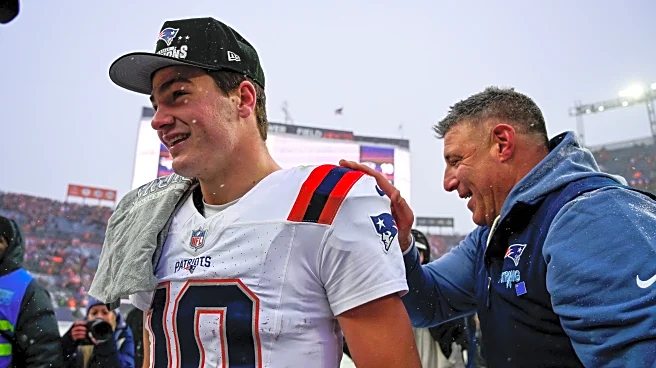
Following the AFC Championship Game against the Broncos, Mike Vrabel spoke about his belief in the team and how it developed before others might have been able to see the same potential.
“You have to believe things sometimes before you can see them,” he said in the aftermath of his team’s 10-7 win to advance to the Super Bowl. “And you have to believe that what you’re doing is the right thing and if it’s not you have to recognize it and make adjustments and changes to the program and everything else.
While Vrabel’s belief in the process and the team he and his colleagues have assembled was strong from early on, the players also needed to buy in. And with no frame of reference, that did not happen overnight.
By early October, however, the locker room’s confidence had fully started to reflect that of its coach. New England’s primetime win over the previously undefeated Buffalo Bills was a major turning point in that regard: it showed the Patriots that they could hang with the best teams in football, and indeed were headed in the right direction.
What happened since has been well-documented. They only lost one more game the rest of the way, won their first AFC East title since 2019, then their first playoff game since 2018, and are now playing for the ultimate prize the sport has to offer.
For a franchise with as storied a history as the Patriots, this present another chance to add to the legacy. For Drake Maye, however, it is something different: the manifestation that the new era that was ushered in in 2023 has truly arrived New England.
“I think there was a big enough gap to the legacy and what the Patriots did in the past. It’s time for a new era,” he. explained. “I think we’re embracing it, and Coach Vrabel and what we’re trying to build here8 is something that we’re buying into. I wouldn’t say it’s daunting. I think it’s rewarding to be in this position and knowing how quick the turnaround happened, and just take advantage of it and hopefully be something for years to come. But at this moment right now, we’re worried about the big game on Sunday.”