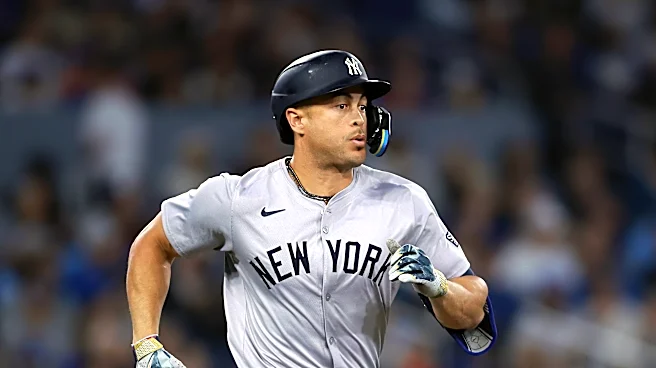



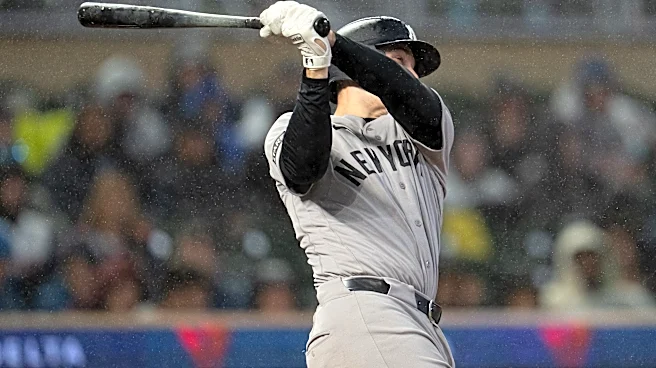

Giancarlo Stanton’s less-than-stellar speed is widely known throughout the baseball community. During the Yankees’ pennant run two years ago, Bob Costas went viral in the baseball community for bringing it up at every possible opportunity as the Bombers took on the Kansas City Royals, noting that “it’s not his fault” because repeated lower body injuries had sapped him of his speed and athleticism. Fans of MLB: The Show recognize him as arguably the slowest player in the game, with a speed rating
in 2-3 range. And, of course, when we check out the Statcast data, we see that Stanton’s 23.8 ft/s ranks sixth-worst in the league, better only than Sandy León, Jose Trevino, Christian Vázquez, Alejandro Kirk, and Salvador Perez — i.e., five catchers.
Earlier this week, I was scrolling through the Statcast data on Yankees baserunners, and I thought to myself, “Just how fast are these players?
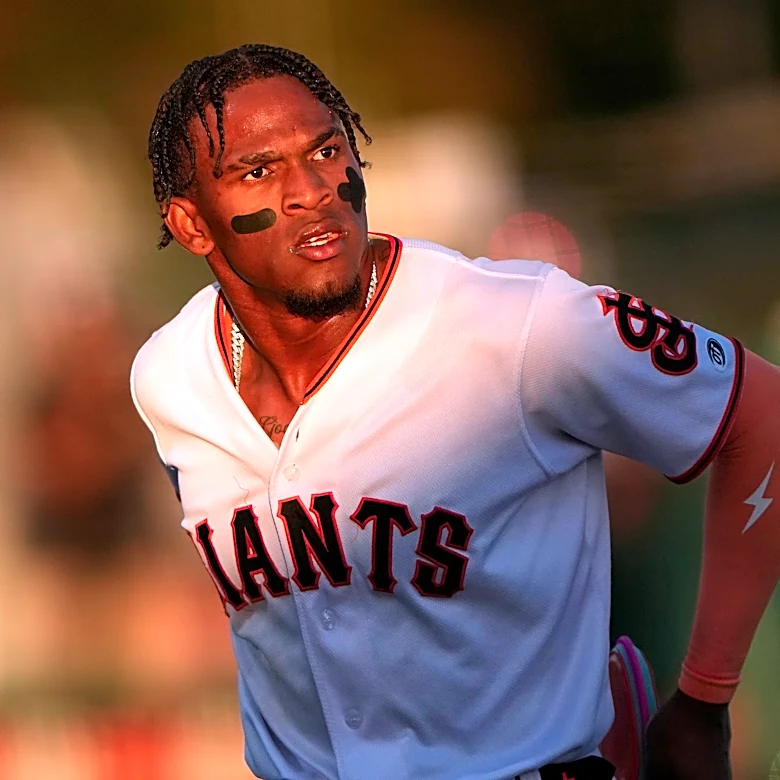
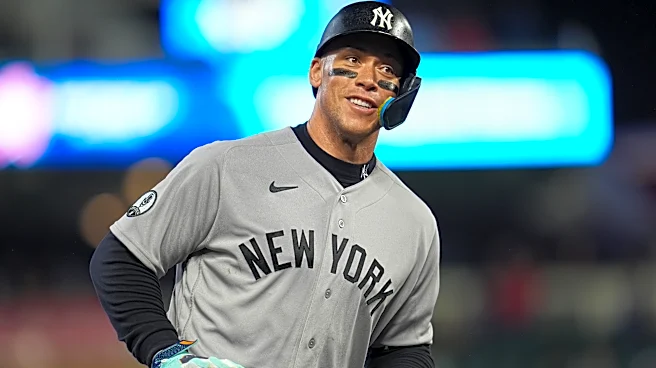
You see, back in high school, I was on the track and cross country teams (if you’re reading this, hi coach!), and because of that, I generally think of sprint speed based on 200, 400, and 800 meter dash times. And so, I decided to take the sprint speeds of a few prominent Yankees — Stanton, Aaron Judge, Cody Bellinger, Spencer Jones, and George Lombard Jr. — and calculate what their times would be in these races would be.

Realistically, these numbers aren’t perfect — a runner’s times generally don’t scale perfectly linearly, like they do here, because each race requires something different: a 200-meter dash is an all-out sprint, a 400-meter dash is a sprint where you run out of gas midway through and try to die slowly, and an 800-meter dash is the stepchild of a sprint and distance race in which you have to sort of pace yourself, but not too much. For most people, this results not in your personal time increasing linearly, but the initial targets you aim for at the beginning of your career increasing linearly or slighly above linearly (e.g., 30 seconds for the 200, 60 seconds for the 400, and 2 minutes and ten seconds for the 800). Even so, these numbers do tell a bit of a story, particularly when we hone in on the one most comparable to a sprint on the basepaths: the 200-meter dash.
Not surprisingly, the speedsters on the team have phenomenal projected times: 22 seconds would not have qualified for the NCAA championships earlier this year, but was only about a second to a second and a half off the slowest time in the championship race — not bad since, you know, they neither train as sprinters nor wear a track singlet, which is much more conducive to running than a baseball uniform. But this was not all that unexpected, at least to me. What caught my eye, on the other hand, is the player whom I talked about in the introduction, Giancarlo Stanton.
Compared to professional athletes, Stanton is slower than slow. (Although he did steal a base this year!) Compared to the average person, on the other hand? A 27.5-second 200-meter dash time would have been perfectly average in a high school track meet — it certainly wouldn’t get you a medal, but considering the fact that the first major milestone a freshman sprinter aimed for was a 30-second 200, it wouldn’t put you at the back of the pack, either.
Oh, and Stanton is doing this as one of the slowest players in the game, one who jogs more than he runs, using legs that have been hampered by years and years of lower body injuries.
At the end of the day, does this mean all that much? Not really — after all, we’re not competing in professional sports, and professional baseball players don’t train to run on a track. Nonetheless, it’s yet another reminder that, no matter how they might look on television or from the third deck of the ballpark, professional athletes compete at a level that we can barely even fathom.