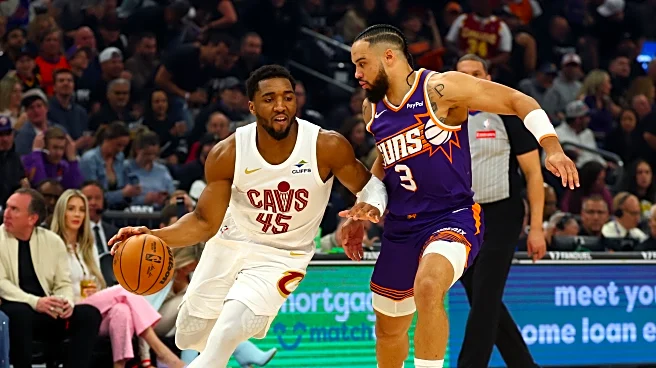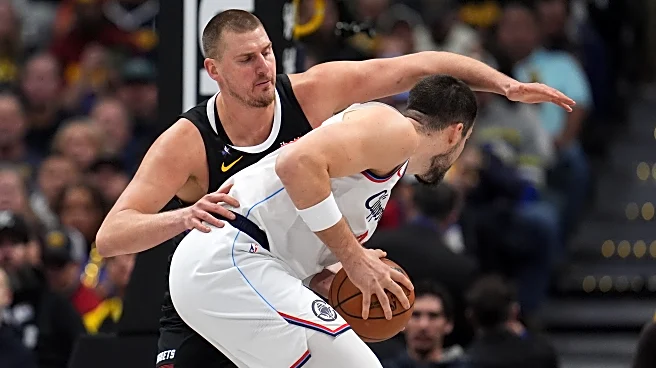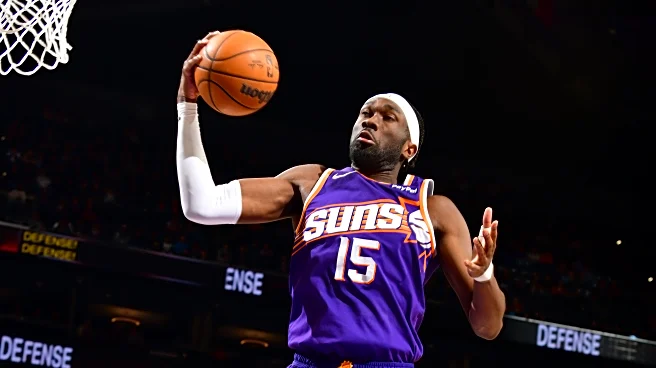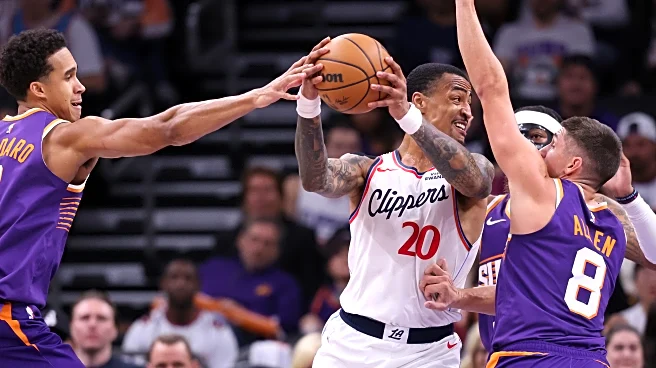

The final game of a five-game homestand for the Suns results in a 117–93 win for the Clippers. It was a clear-cut loss for the Suns, who were outplayed in every key area of the game. Despite a solid start
and coherent defense on Kawhi Leonard, Phoenix never managed to contain Los Angeles’ interior dominance. Ivica Zubac ruled the paint with a massive double-double (14 points, 20 rebounds), and the Clippers scored 64 points in that zone, compared to just 18 for the Suns.
The Suns’ game plan held up for a while: pace, outside shooting (41% from three on 46 attempts), some steals, and a real intent to disrupt the Clippers’ offense. But too many fouls (26 fouls and 34 free throws conceded), too few rebounds (82 to 41 for L.A.), and a painful lack of offensive variety (9% on short midrange, 22% on long midrange) ended up sealing their fate.
Grayson Allen (23 points, 8 assists) and Dillon Brooks (22 points) tried to keep Phoenix afloat, but Ty Lue’s adjustments and the Clippers’ physical density made the difference. A game that exposes Phoenix’s structural flaws: a paint presence that’s too soft, a free-throw battle that never tilts in their favor, and an inability to flip the momentum when the initial plan falls short.
Game Flow
First Half
The Suns start the game with control: Kawhi is well contained, passing lanes to Zubac are cut off, and on the other end, Phoenix sticks to its identity, firing from deep (3/7). The game is simple, efficient, but still imperfect. Ott calls the first timeout after six minutes.
Ten minutes in, the plan is still working: Kawhi is held to 33% on contested shots, and Zubac barely touches the ball. The Clippers’ main duo is neutralized, but that focus leaves too much room for the supporting cast. Collins and Sanders take advantage, already combining for 11 points with two minutes left in the quarter.
The Zubac–Lopez duo hurts Phoenix in the final possessions: Dunn, Bouyea, and Oso all crash into the two giants, while the Clippers execute a clean interior play on the other end. After 12 minutes, L.A. leads 24–20 in a game that’s enjoyable to watch.
The Suns’ defense keeps bothering the Clippers, already 7 turnovers forced. Yet Phoenix trails, mostly due to poor shooting (27%). Nothing alarming, the looks are good, but the finishing needs to be cleaner.
Meanwhile, the Clippers keep attacking the paint, and Phoenix doesn’t like it: 4/5 in that zone, free throws drawn (classic Kawhi tax), and a 15–2 run in four minutes that forces Ott to stop the bleeding.
Phoenix responds by bringing more presence in the paint and intensity on the boards to limit the Clippers’ game plan. They cut the lead to four, but fouls remain a heavy burden: Kawhi has already taken 9 free throws in the first half, 13 for the team overall.
Two minutes before halftime, the Suns finally tied the game thanks to threes and steals. Since they’re giving up free throws, they try to create extra possessions in transition and score higher-value baskets. Basketball is just math, after all.
Phoenix finishes the half well but still trails (49–43). They’ve closed the paint and improved their shooting, but two major issues remain: too many fouls and a rebounding gap heavily favoring the Clippers (40 to 22). A stat that perfectly reflects Phoenix’s struggles in the paint — 36 of L.A.’s 49 points came from that zone.
Second Half
In continuity with the first half, the Clippers keep dominating the paint, and the Suns still can’t slow them down. L.A. even adds some variety with outside shooting, keeping the lead at 68–61 with six minutes left in the quarter.
A rare sight this season: Phoenix is more efficient from three than from two, compared to league averages. The Suns shoot 43% from deep, but only 55% in the paint and a miserable 12% from midrange. A statistical anomaly that sums up their struggles in the short game.
Heading into the fourth, the Clippers still hold a nine-point cushion (78–69). Zubac already has a monster double-double (11 points, 16 rebounds), Kawhi rolls with 21 points despite decent defense, but too many fouls. The role players are locked in too, and Ty Lue’s adjustments sting: the lead grows logically to +14 (85–71).
Like a summary of the game, the final quarter starts…at the free throw line. The Clippers are already at their 27th and 28th attempts, while Phoenix has only earned 12. No complaints about the refs. The fouls are real, and they hurt.
As the minutes tick by, things look worse and worse for the Suns. The deficit balloons to 21, and Sundays start to feel like déjà vu. At this point, it’s hard not to believe in a Sunday curse.
Mark Williams gets ejected for six fouls with six minutes left, a perfect symbol of his team’s night: too much contact, too much delay, too much frustration. And that’s exactly what kills any chance of a comeback.
Garbage time lets rookies Maluach and Fleming get some run, but the game is long gone. The Suns lost for the second straight Sunday, 117–93. A tough but fair defeat: too many fouls, too little resistance in the paint, and too much waste in the short game. A night where Phoenix’s structural weaknesses were laid bare.
Up Next
After this frustrating home loss, the Suns will try to bounce back against the Blazers in two days. It’s not a panic moment, but this one could’ve helped solidify their case for the 6th seed in the West.