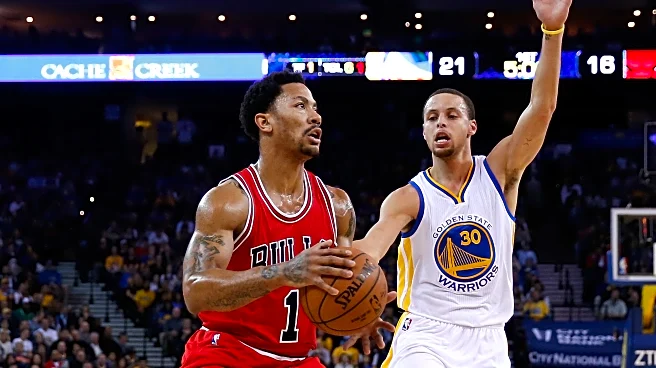

Time moves different in the NBA. Late January 2026 will go down as one of those weeks that makes you sit back and really feel the passage of life in this sport. On January 24th, Derrick Rose’s #1 jersey
was lifted to the United Center rafters. And I’d bet that if you’re Rose, maybe it felt like one week you’re the youngest MVP in league history with the whole world at your feet. And in the blink of an eye you’re standing at center court, waving goodbye as the fans cry and salute you as your jersey is retired in Chicago.
Less than a week from that, John Wall stood at Capital One Arena soaking in applause from Washington fans who remembered when he was the fastest, flashiest thing this city had ever seen.
Two generational point guards. Two #1 overall picks. Two players who were supposed to define the next decade of basketball. While Rose and Wall were having their past celebrated, somewhere across the country, the guy who was supposed to be the cautionary tale? He’s still out there. Still starting All-Star games. Still dropping 30 on whoever’s foolish enough to guard him. His name’s Stephen Curry.
.
Remember that 2011-12 Bleacher Report preview discussing the league’s point guards that had Rose at #2, Wall at #6, and Curry at #8? The logic was sound: Rose was the reigning MVP. Wall was the electric #1 pick with unlimited potential. And Curry was figuring it out between ankle surgeries and Monta Ellis’ shadow.
When Rose tore his ACL in Game 1 of the 2012 playoffs at 23 years old, all hoop fans felt sick. He never averaged 20 points again. Never made another All-Star team. Although he still carved out a solid career as a veteran, he never rose again to those MVP heights. Meanwhile Wall ruptured his Achilles in 2019 at 28 years old. He played just 43 games over the next four seasons. His game, like Rose’s, was predicated on speed and explosiveness. When those disappeared, so did his superstar status.
Curry? He rolled his ankles so many times that the Warriors gave him a “team-friendly” contract in 2012 because they legitimately feared he’d never stay healthy. But Curry’s injuries never stole the thing that made him special. His shot doesn’t require a 40 inch vertical. His off-ball movement doesn’t require youth. His basketball IQ only improves with time. His handles are a part of his identity. He built a game designed to age gracefully while Rose and Wall used games that could only be dominant in their physical primes.
That’s what made Rose’s jersey retirement, Wall’s homecoming, and Curry’s All-Star starter nod in the same week feel so surreal. Rose at 22 looked like the future of basketball. And now his #1 hangs in the rafters as a monument to the player he was for three brilliant years before his body betrayed him. Wall’s celebration carried the same melancholic weight. He should have led Washington to championship contention. Instead, his tenure is remembered for playoff disappointment and injury setbacks. Meanwhile Curry is still trying to rip hearts out on a nightly basis. He’s averaging almost 25 points per game at nearly the age of 38, still terrorizing defenses. and let’s not forget he’s the all-time three-point leader by a margin so comically wide it looks like a typo.
Take a look at the comparison:
- Derrick Rose: 723 games, 17.4 PPG, 1 MVP, 3 All-Star games, 0 championships
- John Wall: 647 games, 18.7 PPG, 0 MVPs, 5 All-Star games, 0 championships
- Stephen Curry: 1059 games (and counting), 24.8 PPG, 2 MVPs, 10 All-Star games, 4 championships
Good for Dub Nation that he’s not done yet. Curry isn’t just surviving, he’s thriving. While his peers give retirement speeches, he’s still hitting step-back threes from 30 feet. Time really does move different in this league. For most players, it moves too fast. For Stephen Curry, he’s trying to hit another stepback over Father Time’s outstretched fingertips.