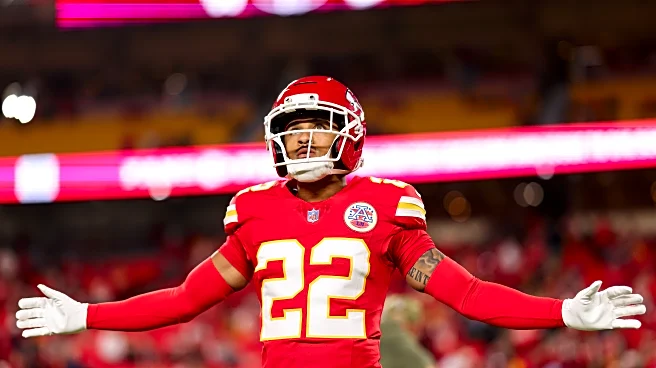

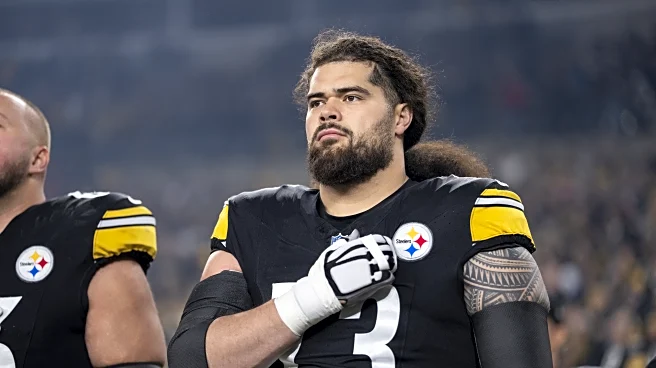
The Kansas City Chiefs exercised Trent McDuffie’s fifth-year option last spring, locking the former first-round pick into the 2026 season at a fully guaranteed $13.6 million. On its face, the move was straightforward. McDuffie is one of the defense’s most dependable players, a multi-time All-Pro, and a foundational piece in defensive coordinator Steve Spagnuolo’s secondary.
But as the cornerback market continues to inflate and the Chiefs face another cycle of financial decisions, McDuffie’s future
has become a legitimate roster conversation. The question is no longer whether he’s good enough to keep — it’s whether keeping him at market value is the most efficient use of resources for a team that consistently operates near the salary cap.
There is a strong case on both sides.
The Case for Keeping McDuffie
From a football standpoint, McDuffie checks nearly every box the Chiefs value defensively. He is scheme-flexible, assignment-sound, and reliable in all phases of play. Spagnuolo has deployed him inside, outside, in man coverage, and in match concepts. Few corners are trusted with that range of responsibility.
Even in what could be described as a statistically uneven 2025 season, McDuffie still graded among the top dozen cornerbacks league-wide according to Pro Football Focus. His run-defense impact remained among the best at the position, and his overall evaluation reflected a player whose value extends beyond basic coverage numbers. That matters in a defense built on communication, leverage, and discipline rather than pure isolation coverage.
McDuffie’s resume carries weight. He has earned multiple All-Pro honors, including first-team recognition earlier in his career, and was viewed as one of the league’s best corners as recently as 2024. Players with that combination of age, production, and versatility rarely become available without consequence.
There is also a practical salary-cap argument for extending him now rather than later. While the fifth-year option locks McDuffie in at $13.6 million for 2026, an extension would allow the Chiefs to convert salary into signing bonus and immediately lower his cap hit. For a team already strapped for space, extending McDuffie isn’t just about long-term security — it’s also a way to create short-term flexibility.
For a defense that has become a championship pillar, keeping a known, high-level performer — and smoothing the cap impact in the process — remains the safer option than trying to replace him through the draft.
The Case for Trading McDuffie
The counterargument begins with the same market realities. Cornerbacks are now being paid like elite receivers, and not all elite corners are valued equally. McDuffie is not a prototype boundary defender with rare size and length, and offenses have increasingly tested him with bigger receivers in contested situations.
In 2025, the results were mixed. McDuffie allowed more touchdowns and a higher passer rating in coverage than in his All-Pro seasons. While his overall tape remained strong, the efficiency dip provides leverage for teams hesitant to pay top-of-market money. It also justifies the Chiefs exploring alternatives.
Financially, the appeal of a trade is straightforward. Moving McDuffie would clear his entire $13.6 million cap hit from the 2026 books, a meaningful figure for a team that is routinely forced to maximize every dollar. That flexibility could be redirected toward the pass rush, offensive depth, or future extensions — all positions that tend to rise in cost.
Recent precedent shows how aggressive teams can be when targeting elite defensive backs. The Colts’ acquisition of Sauce Gardner, which cost multiple first-round picks and a young offensive contributor, reset expectations for what top-tier corners can command. McDuffie would not reach that ceiling, but the deal reinforced the value teams place on premium coverage players.
A realistic return for McDuffie would likely fall between a first-round pick and a strong Day 2 package. For a front office that prioritizes draft capital and cap health, that combination — plus immediate financial relief — is difficult to ignore.
Bottom Line
The Chiefs aren’t deciding whether Trent McDuffie is worth keeping. The front office is deciding whether he’s worth keeping at the price the market demands. Extending him could secure a core defensive piece while creating immediate cap relief through contract structure. Trading him would open $13.6 million in space and bring back valuable draft capital. Either path is defensible, and the decision will say as much about how Kansas City plans to manage the cap as it does about McDuffie himself.