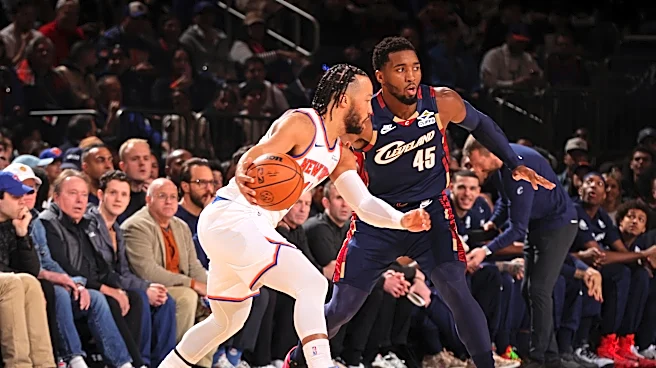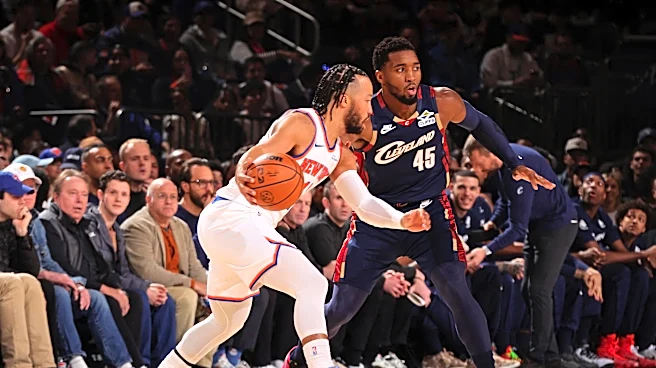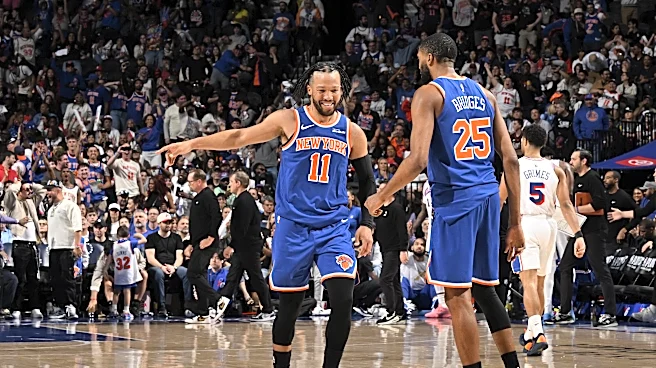




At long last, the Knicks will play basketball tonight.
Nine days after they finished off the Sixers in a dominant four-game sweep, the Eastern Conference Finals will finally begin, as the Cleveland Cavaliers will travel to the World’s Most Famous Arena for Game 1 tonight at 8pm.
It’ll be a truly massive difference in terms of rest between the Knicks and whoever survives tonight’s game at Little Caesars Arena. Eight days of rest versus just one. It’s a stark enough difference, especially in a playoff
setting, that makes you wonder about the age-old debate.
Rest vs. rust. Is it better to get the long layoff, or will the all-around cohesion we saw in the last seven games dissipate with the amount of time off?
The concern is very valid, especially when you look at other sports. In MLB, teams with a bye to the LDS have struggled considerably against fresh teams in the Wild Card Round over the last few years. In the NHL, there’s been a startling trend of teams that sweep series and get a long layoff struggling against teams that have played these prolonged series.
But those are different sports. Baseball is a game of repetition, and these guys play every single day. Hockey can be an issue with the physicality and the goaltenders getting too much time off. Basketball is different than both of those stylistically as a sport.
So what does the data say? Do teams with extra rest come out sloppy in Game 1?
The overall verdict? Not really.
Since 2000, there have been exactly 20 instances of a sweep in the second round or later. I decided to exclude first-round sweeps because it may skew the sample size with top seeds who were obvious massive favorites, making it closer to this exact situation.
In those 20 instances, the team coming off a sweep is 12-8, but 8-1 since 2016. Each situation also has entirely different context to one another, so we have to dive deeper.
Teams on 8+ days of rest
Looking back to the sample since 2000, there have been 12 instances in which a team had at least eight days of rest ahead of a conference final or NBA Finals matchup, and those teams are 7-5. What occurred in those losses, you might ask?
2003 New Jersey Nets: 10 days of rest, lost in six games to the Spurs (5 days rest)
2005 Miami Heat: 8 days of rest, lost in seven games to the Pistons (5 days rest)
2009 Cleveland Cavaliers: 8 days rest, lost in seven games to the Magic (2 days rest)
2013 San Antonio Spurs: 9 days rest, lost in seven games to the Heat (2 days rest)
2019 Golden State Warriors: 9 days rest, lost in six games to the Raptors (4 days rest)
Of these five occurrences, only one has happened in the last 12 years, and that deserves a big asterisk. The 2019 Warriors were bruised and battered and lost both Klay Thompson to an ACL tear and Kevin Durant to an Achilles tear during the series. Could this theoretically happen to the Knicks, too? Sure, but it deserves to be pointed out as an outlier.
Some recent series victories include the 2024 Celtics (vs DAL), 2017 Cavaliers (vs BOS), and the 2011 Mavericks (vs OKC). But let’s go even deeper to find the series that truly match up.
Big Rest vs Little Rest
To narrow the parameters, we’re going to break down series where one team has a rest advantage of at least six days. The Knicks currently have a seven-day rest advantage, so this will give us the proper comparison we need.
This gives us seven examples since 2001, in which the team with a rest advantage is 5-2. Four of the wins came in just five games, while both losses took at least six games. Let’s look at the full context of these series and evaluate from there:
2001 NBA Finals (Lakers/Sixers)
Rest advantage: Lakers +7 (9 to 2)
Winner: Lakers, 4-1
After completing a sweep of the Spurs in the Western Conference Finals, the Shaq & Kobe Lakers advanced to the NBA Finals in 2001, where they awaited the winner of a seven-game series in the ECF, in which Allen Iverson’s Sixers prevailed over Ray Allen’s Bucks. A quick turnaround for a very AI-centric Sixers squad doomed them from the start against a dynasty in the making.
It probably didn’t help that Philly had played two consecutive seven-game series leading into this (sound familiar?), but this was actually a potential warning for the Knicks as they enter Game 1 tonight. The Sixers actually won Game 1 in Los Angeles against a rusty Lakers squad, but the fatigue caught up to them to win the next four.
If the Knicks lose tonight, this series can be used as an example to stay off the ledge.
2009 Eastern Conference Finals (Cavaliers/Magic)
Rest advantage: Cavs +6 (8 to 2)
Winner: Magic, 4-2
LeBron James didn’t have much help in his first stint in Cleveland, but it was fairly disappointing when they lost an opportunity to square off with Kobe and the Lakers in 2009, as Dwight Howard led the Magic to the heights of a young Shaq in the 90s.
This might be a case of a lack of adversity dooming a team. The Cavs started their postseason 8-0 and most of those wins were by double figures, while the Magic gritted out a seven-game series against the Celtics in the second round.
As such, guess what happened when Orlando dragged Cleveland into one-possession games early in the series? The Magic stole Game 1 on a late Rashard Lewis 3-ball and took a 3-1 lead in Game 4 after narrowly surviving LeBron’s heroics late. It all culminated in a six-game series victory where Orlando went 3-0 at home.
2011 Western Conference Finals (Mavericks-Thunder)
Rest advantage: Mavericks +7 (8 to 1)
Winner: Mavericks, 4-1
Dirk Nowitzki’s redemption for 2006 finally came five years later, when he took advantage of a young and inexperienced Thunder team (that included a certain James Harden) in the WCF to continue a run that would result in a shocking upset over the Heat in the Finals.
A young Damian Lillard battled Dallas to six in the first round before a sweep of the defending back-to-back champion Lakers set up this titanic clash. OKC defeated Denver in five in the first round, but was pushed to seven games by the Grit-and-Grind Grizzlies and entered this series at a tremendous rest disadvantage.
OKC lost Game 1 by nine, but turned around and stole Game 2 in Dallas to even the series and put pressure on the veteran-laden squad. The Mavericks won each of the next three games by just 17 combined points, using their experience to overwhelm a Thunder team that wasn’t quite ready yet.
2013 NBA Finals (Spurs-Heat)
Rest advantage: Spurs +7 (9 to 2)
Winner: Heat, 4-3
Regardless of the connotation of the superteam Heatles in the early 2010s, these were two stacked rosters that went toe-to-toe in an instant classic of an NBA Finals. A 58-win team against a 66-win team with scores of future Hall of Famers and two of the greatest coaches of all time.
San Antonio had gone 12-2 in a rampage over the Western Conference, only being challenged by the plucky Mark Jackson-coached Warriors in the second round before sweeping the Grizzlies in the WCF. Meanwhile, Miami went 8-1 in the first two rounds before being pushed to seven by Paul George and the Pacers in the ECF, prompting a massive rest differential.
The rested Spurs stole Game 1 in Miami, but this series was back-and-forth the whole way through. It seemed like the Spurs were going to topple the reigning champions in six games, but Ray Allen’s heroics saved the day for Miami and forced a Game 7 that the Heat would ultimately take at home.
2016 Eastern Conference Finals (Cavaliers-Raptors)
Rest advantage: Cavs +7 (8 to 1)
Winner: Cavaliers, 4-2
Another series involving LeBron, who knew? In the midst of his legacy-sealing 2016 championship run with the Cavs, he faced an extremely similar situation to 2009, where his team was 8-0 entering the conference finals as considerable favorites against a Raptors team that would always be the bridesmaid in the East until acquiring Kawhi Leonard.
Cleveland swept their way here and showed no ill effects of a seven-day layoff prior to the second-round matchup against the Hawks. Toronto gritted through two seven-game series and had a quick turnaround after playing 7 games in 14 days against the Heat in Round 2 (sound familiar?)
The first two games saw the rested team demolishing the fatigued team, as the Cavs won by 50 points combined to take a 2-0 series lead. Toronto was able to pick itself up off the mat to win both north of the border, but got similarly pummeled in the next two games. In Cleveland’s four wins, they outscored their opponents by an average of 26 points a night.
2017 Eastern Conference Finals (Cavaliers-Celtics)
Rest advantage: Cavs +8 (9 to 1)
Winner: Cavaliers, 4-1
Oh, hey, it’s LeBron again. In their ultimately futile quest to repeat as champions in 2017, Cleveland squared off with an Isaiah Thomas-led Celtics team that featured a rookie Jaylen Brown and didn’t yet have Jayson Tatum. This was an infant version of the perennial contenders we know today.
As usual, a LeBron-led team strolled into the conference finals with back-to-back sweeps over Indiana and Toronto, while the Celtics won a six-game series against the Bulls before a highly entertaining seven-game series against John Wall and the Wizards led to them limping into a matchup with a man who had made the Finals in six consecutive seasons.
Boston did have home-court advantage, but it didn’t matter. Cleveland won by 57 points combined in the first two games in Boston, showing no ill effects from a nine-day layoff. The Celtics stole Game 3 at Quicken Loans Arena without IT thanks to an Avery Bradley buzzer-beater, but the toll came due to a 10-point win in Game 4 and another 30-point blowout in Game 5 to clinch the series for Cleveland.
2023 NBA Finals (Nuggets-Heat)
Rest advantage: Nuggets +7 (9 to 2)
Winner: Nuggets, 4-1
There are a lot of interesting wrinkles in this series. Nikola Jokic and the Nuggets are getting their era-defining championship against the No. 8-seeded Heat, who were basically Jimmy Butler and a dream at this point. Gotta give credit to Erik Spoelstra for seemingly doing this over and over again.
Denver took down the Timberwolves and Suns in the first two rounds before sweeping the Lakers in the WCF in a relatively competitive series for its length. Miami stunned the top-seeded Bucks in five games before defeating a young Knicks team in six to face Boston in the ECF. It looked like the Heat would stroll to the Finals like Denver, but the Celtics rallied back down 3-0 to force a Game 7 before ultimately falling short.
The quick turnaround didn’t necessarily faze the Heat, who split the first two games in Denver, but the fatigue slowly set in as their offense crumbled to dust around Butler’s brilliance in a series that ended in five games
What’s the verdict? There are obviously different circumstances with every case, but history suggests that rust is not an excuse for teams at this stage in the postseason. You got that extra rest after how dominant you were last round; now you get a chance to prove it.