

It’s a new year here at BCB After Dark: the coolest club for night owls, early risers, new parents and Cubs fans abroad. Welcome back. We’re so glad you decided to stop by. There’s no cover charge. We can check your coat. There are still a few tables available. Bring your own beverage.
BCB After Dark is the place for you to talk baseball, music, movies, or anything else you need to get off your chest, as long as it is within the rules of the site. The late-nighters are encouraged to get the party
started, but everyone else is invited to join in as you wake up the next morning and into the afternoon.
Last week I asked you which Cubs rookie you were most looking forward to in 2026. The final vote was close, but outfielder Owen Caissie came out on top with 38 percent of the vote. Catcher Moisés Ballesteros was close behind in second place with 35 percent.
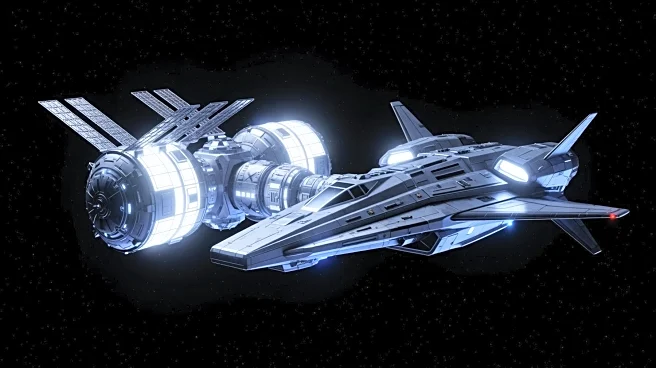
Here’s the part where we listen to music and talk movies. We’re into the second round of the BCB Winter Science Fiction Classic, but there’s no reason you can’t join in on the fun now.
Tonight we’ve got some in-studio big band sound with the Javier Nero Jazz Orchestra along with vocalist Veronica Swift performing “Softly as in a Morning Sunrise.” I’m not going to list all the performers, but we’ve got a piano solo by Alex Smith, a vibraphone solo by Warren Wolf and a tenor sax solo by Lucas Pino.
This is from 2025. That’s last year, in case you’ve forgotten.
You voted in the first second-round matchup. of the BCB Winter Science Fiction Classic and Godzilla (1954) came out on top over Metropolis (1927). A sound film is always going to have an advantage in these contests over a silent picture, even if the dialogue is in Japanese. Both films deserved to advance, but only one could. It was a tough vote, if you ask me.
As an aside, I think it’s pretty remarkable that the original Japanese version of Godzilla was basically unavailable in the US until 2004. And while I do think the Japanese version is superior to the Americanized Godzilla: King of the Monsters (1956), I do think the US version is worth watching. Yes, the edits make the film seem weird at times and Raymond Burr’s character staring at the Japanese actors seems creepy, but Burr really does turn in a fine performance as newspaperman Steve Martin. There are those who believe that Burr’s narration of the destruction of Tokyo does improve the scene and I can see their point.
So today we have the other second-round matchup from our “classic” bracket, which encompass the years 1902 to 1960. Top seed The Day the Earth Stood Still (1951) faces off against four-seed Forbidden Planet (1956). It’s a face off of two classic robots of the 1950s! Gort versus Robbie!
Here’s what I wrote up last time about The Day the Earth Stood Still.
Since I showed the trailer to the film last time, here’s the scene where Patricia Neal utters the famous line “Klaatu Barada Nikto.”
I love the way that director Robert Wise fixes on Patricia Neal’s face and the way he cuts back and forth between Gort and Helen. The shadows and the darkness are used nicely as well.
Here’s what I wrote about Forbidden Planet last time.
And again, since I showed the trailer last time, here’s the scene with the flying saucer landing on Altair IV.
That looks incredible. Yes, it’s clear that the planet is a scene painting and the saucer a miniature, but if you ask me, that looks as good as anything done today with CGI. I’m not a Luddite. I have no issues with modern film using computer graphics. The old fashioned analog ways weren’t better or worse, they were just different. I still thrill to Ray Harryhausen’s stop-motion animation climax of Jason and the Argonauts as much as I do any modern skeleton warrior fight scene, which would be done with a green screen, mocap and computer animation. I don’t look at those earlier effects as “primitive.” I think of it as the difference between a painted portrait and a photographic portrait. Both are art in their own way. Yes, we’ve lost and gained something with modern technology. But the old films are still there for us to enjoy the old masters.
So now it’s time to vote!
You have until Wednesday to vote. Up next, we move on to our “New Hollywood/New Wave” bracket with number-two seed Planet of the Apes (1968) takes on number-three seed La Jetée (1962).
Welcome back to everyone who skips the music and movies.
I not going to pretend that the natives aren’t restless. While the Cubs have done a lot to re-tool the bullpen, they haven’t addressed the two biggest issues of the offseason—adding a starting pitcher and (presumably) replacing the production of Kyle Tucker in the lineup.
Ken Rosenthal put it well in his column today at The Athletic (sub. req.)
Their fan base is waiting. And waiting. And waiting.
The Cubs have spent slightly more than $30 million on five free-agent relievers and brought first baseman Tyler Austin back from Japan for $1.25 million. But if they want to avoid a fan uprising at the Cubs Convention Jan. 16 to 18, at least one splash is necessary.
I’m in the camp that the Cubs need to make the right deal over the quick deal, but I also believe that they have to add someone big. And while patience is a virtue, Rosenthal makes a good point that the Cubs really should do something before the Cubs Convention if they want the event to go smoothly and sell season tickets.
So tonight, I’m going to look at what’s left on the free agent pitching market. There are three “big” names left, with “big” being a relative term. You can argue that none of these three pitchers are a top-of-the-rotation arm, but you can also argue that none of the pitchers available on the free agent market this winter, including Dylan Cease, are really ace material.
One name that has been connected to the Cubs is former Diamondbacks right-hander Zac Gallen. I fact, he was so connected to them so much that USA Today’s Bob Nightengale incorrectly reported that the Cubs had agreed to a multiyear deal with him. That report, like so much of what happens when Nightengale tries to break news these days, turned out to be false. But there’s a lot to like about Zac Gallen and some real areas of concern.
Gallen was an All-Star in 2023 and finished in the top five in Cy Young Award balloting in 2022 and 2023. He was pretty good in 2024. Coming into the 2025 season, he was projected to be one of the top free agents in the 2026 market.
Unfortunately, he pretty much fell off a cliff in 2025. His fastball actually improved and his changeup remained sharp. But his other four pitches: sinker, slider, cutter and knuckle curve, all backed up. Coming into 2025, Gallen had a career ERA of 3.29. His ERA last season was 4.83.
I’m not going to pretend I know what went wrong with Gallen last year. I will note that after a miserable first half of the season last year, Gallen turned in an ERA of 3.32 over August and September. So maybe he’s figured out whatever was wrong. Gallen is also just 30 years old and he’s been pretty durable over the course of his career.
The bottom line is that if you think the first 3.5 months of 2025 were an aberration for Gallen, he’s could be a great addition. If you think it was the sign of an oncoming decline, then you want the Cubs to stay away.
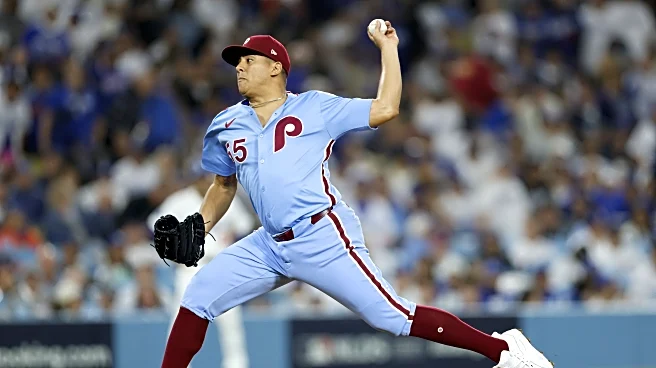
Left-hander Ranger Suárez is another option for the Cubs. The former Phillie is also 30 and has been the epitome of consistency over the past four seasons. He’s thrown between 150 and 160 innings in three of the past four years. His ERA has been between 3.20 and 3.65 in three of the past four years. He’s struck out 8.6 or 8.7 batters per nine innings in the past three seasons. He doesn’t walk many hitters either.
The knock on Suárez is that he’s a finesse lefty who is one of the softest tossers in MLB. None of his pitches grades out as above-average from a scouting perspective anymore, but he has excellent command and knows how to vary his pitch selection to keep hitters guessing. If you wanted to call him a younger and left-handed version of Kyle Hendricks I wouldn’t argue with you, except that Suárez at least throws harder than Hendricks did, but Hedricks also had an elite changeup in his prime.
Of course, the Cubs have had success with command and control pitchers and beyond Hendricks, you could say that’s what Imanaga is as well. But that brings up another issue. Do you really want to put Suárez in a rotation that already includes lefties Imanaga, Matthew Boyd and eventually Justin Steele? Plus, while his innings totals have been consistent, that’s in some part because he’s landed on the injured list in each of the past four seasons. In three of those years, the issue was back spasms or lower back tightness. None of those injuries caused him to miss significant time, but it is worrisome that the injury keeps recurring.
Finally there is former Astros pitcher Framber Valdez, and NPB star Tatsuya Imai signing with Houston seems to close off his return there. Valdez has been a very solid pitcher over the past six seasons, picking up Cy Young Award votes in four of those years. He has a career ERA of 3.36 and while he had the highest ERA of his career in 2025 since his rookie year in 2019, it was still pretty good at 3.66! His bWAR last year was 3.8 and his fWAR was 4.0 this past year.
On top of that, Valdez is seemingly built for the Cubs. His sinker is a devastating pitch and he gets a ton of ground balls out of it, which is perfect for the Cubs’ terrific infield defense. He’s also been a tremendous workhorse, throwing 192 innings last year and being over 190 in three of the past four years. In 2024, Valdez “only” threw 176 innings.
Valdez is another lefty, so if you’re worried the Cubs starting pitching rotation is too left-handed, then that’s something to be concerned about. He’s also the oldest of these free agents at 32 and there isn’t likely going to be any room for Valdez to get any better at this point. On top of that, there are some character issues that have dogged Valdez lately. He allegedly intentionally crossed up his catcher this past September after giving up a grand slam. (Valdez denies it was intentional.) The fact that the Astros seemingly haven’t made much of an effort to re-sign their ace may raise questions as well. It certainly seems like the risk with Valdez is more off the field than on it, although a long-term deal to any 32 year old is risky from a production standpoint.
There is also the option of a lesser pitcher to go with a major outlay towards a hitter. Mark Feinsand of MLB dot com wrote that if the Cubs can’t sign Gallen, they might be forced to go with a lesser name to add depth to their rotation. The three names he mentioned were Lucas Giolito, Chris Bassitt and Zack Littell.
Then there is the trade route, but I don’t see how the Cubs land a quality starting pitcher on the trade market without giving up their top pitching prospect, Jaxon Wiggins. Lesser starters can be had for less, of course, but don’t expect either Marlin, Edward Cabrera or Sandy Alcantara, to go for less than two of the Cubs top three prospects and one of them has to be Wiggins.
So if you were running the Cubs, what would you do?
Thanks for stopping by tonight. We can get your coat for you now. Please get home safely. Stay warm out there. Recycle any cans and bottles. Tip your waitstaff. And join us again tomorrow night for more BCB After Dark.