
Back on Wednesday, with evening showers threatening to spoil the Orioles’ series finale against the Yankees, the mounting clouds parted, and out from the mound shone a sliver of light: Kyle Bradish and his six scoreless innings. I jest, but Bradish had started this season with an ERA above five in his first seven starts, and this return to form was a massive bit of good news.
One good outing from Bradish doesn’t change the larger picture, though, which, for this starting rotation remains rather bleak.
Presumptive ace Trevor Rogers, who carried a 1.81 ERA in 18 starts last season, has a 5.77 ERA. Three other O’s starters carry an ERA above five: Shane Baz, Cade Povich, and Chris Bassitt. Three starters are on the IL, for that matter: Povich, Zach Eflin, and Dean Kremer.
The rotation’s failure is especially galling because the front office set expectations high this winter. O’s GM/president of baseball operations Mike Elias touted an ownership group “that’s really enabling us to invest,” and promising that “Plan A” would be finding a top-tier pitcher. Top tier meant, according to our best intel at the time, an arm ike Dylan Cease, Michael King, Ranger Suárez or Framber Valdez. The Orioles were confirmed to be in hot pursuit of multiple impact starters at the winter meetings in December.
Well, Plan A turns out to have belonged to someone else. Michael King took a hometown discount to stay with the San Diego Padres, accepting three years and $75 million. Suárez landed with the Boston Red Sox on a five-year, $130 million deal. Cease went to the Toronto Blue Jays for seven years and $210 million. Valdez signed with the Detroit Tigers on a three-year, $115 million deal. After watching all four opportunities disappear, the Orioles pivoted to veteran reliability. Chris Bassitt, 37, one of the last established veterans on the free-agent market, signed a one-year, $18.5 million deal with Baltimore in mid-February.
Not to dwell, but the gamble hasn’t gone great. The Orioles starting rotation’s numbers since Opening Day tell a tough story. They have the AL’s lowest WAR and a 5.04 ERA, worse than everyone but Houston and Colorado (Houston also due to injuries, Colorado due to being Colorado). Bradish can be an ace, but he can’t lift a bottom-quartile rotation producing bottom-quartile results into a contending outfit, right?
An analysis piece about the potential for improvement held by guys like Shane Baz and Trevor Rogers would be interesting; I wanted to write instead about the pitchers the Orioles didn’t sign. Maybe that’s just sour grapes. I thought it was a question worth asking, anyway.
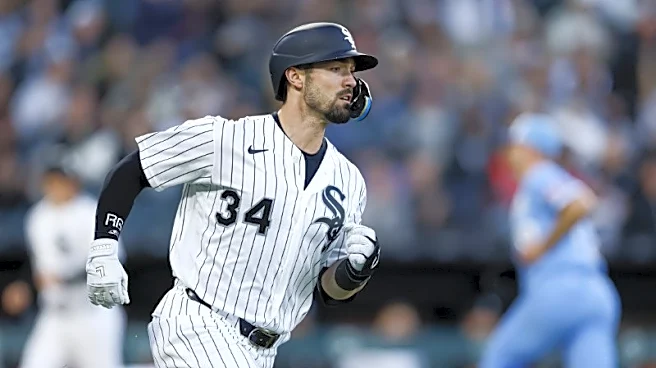
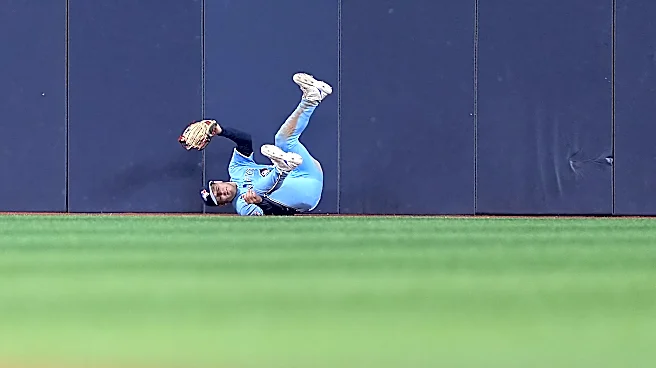
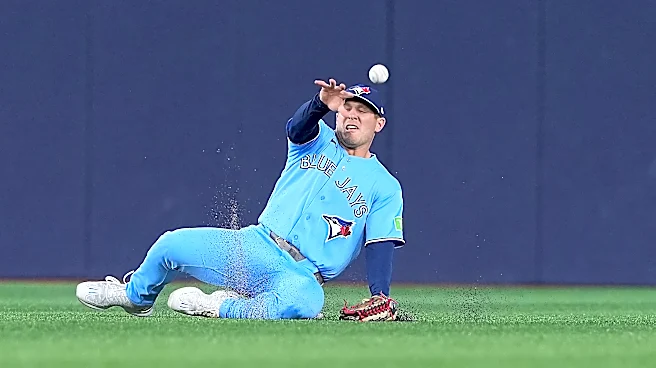
Snapshots of the road not taken leave some room for jealousy. Start with the best. Which makes him the worst. Dylan Cease has been superb for Toronto: a 2.41 ERA, career bests in ground ball rate and strikeout rate—and on top of that, 75 K’s to lead all qualified AL starters. Cease is, in a word or two or several, everything the Orioles could use right now.
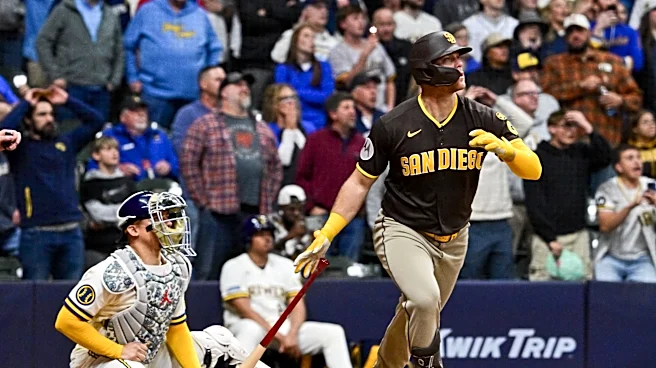
Michael King has been a very good signing for San Diego in parts of three seasons. He had an excellent first year in 2024—a 2.95 ERA, 3.33 FIP, and 173 innings. And although injuries limited him to just 15 starts in 2025, the righty is on track for what may be his best season yet. The right hander has a 2.63 ERA over 51.1 innings so far, and what BaseballSavant considers one of the best changeups in the game. To be sure, there are signs of overperformance that suggest King’s numbers will settle in around his career 3.18 ERA: a somewhat inflated FIP (3.69) and mediocre strikeout numbers (50). But with his 1.6 WAR, King would lead all current Orioles players in value.
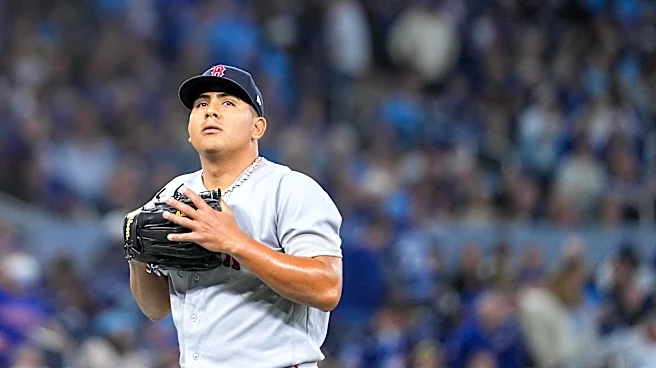
The 30-year-old Ranger Suárez started off slow for Boston, posting a 5.02 ERA through his first three starts. But now he has a 2.44 ERA and what is considered one of the best fastballs in the game. In three of eight starts so far he’s tossed a stinker, allowing four runs apiece to Houston, San Diego and New York. But two of those three are great offenses, and he’s pitched a shutout in his last three starts.
Finally, Framber Valdez. The 32-year-old righty has been less glowing for Detroit, with a 4.32 ERA and other indicators trending in the wrong direction. He posted a 3.67 ERA in six starts in April, but he got absolutely rocked in Boston a week-and-a-half ago, allowing seven runs in three innings. In particular, there’s evidence of concerning velocity dips on Valdez’s heaters. Based on ERA+, this is the first time since 2019 that Valdez is a below-average pitcher.
Would one of them have fixed Baltimore’s rotation? Yes, and it’s not even a hard question. Put it in terms of WAR. Cease, King, Suárez and Valdez each has a bWAR between 0.4 to 1.8. Right now, the only O’s starter who’s healthy and has a positive WAR is Kyle Bradish (0.1): all the rest are in the red. Thus, in WAR-terms, each of the four sought-after candidates would have made the rotation better; more, each would be the best starter on the staff.
Would the Orioles have paid this kind of money for any of them? This notoriously tight-fisted team really stretched itself over the offseason with $60-plus million extensions for Shane Baz and Samuel Basallo. Only King, whose team-friendly deal was probably only possible given his injuries the season before, would have been in the ballpark, so to speak.
Maybe that shows the limitations of this team’s approach to signing pitching. Maybe the Orioles were true players for these arms, and saw things they didn’t like. Maybe it was reasonable for them to presume, after Trevor Rogers’ ace-like season last year, that he and Bradish needed only a supporting cast to lead this outfit. But the rotation thus far has been in desperate need of someone who can give the team a reliable win every five days and keep the bullpen from working itself into the ground. As currently constructed, the rotation has room to grow, and a much higher ceiling than they’ve shown so far, but an ace might have papered over some of those cracks, and given this team room for error.