

How’s everyone feeling after Saturday?
Despite improving to 3-0, the level of confidence coming away from Mizzou’s 27-17 victory over Troy is a night-and-day difference from the feeling coming out of Lawrence a week ago.
Yes, the Tigers did what they were supposed to do. But as a 27.5-point favorite, they were outgained 323-230. The Trojans dominated the time of possession and held a 10-point lead. More importantly, Troy generated the game’s biggest offensive explosive plays.
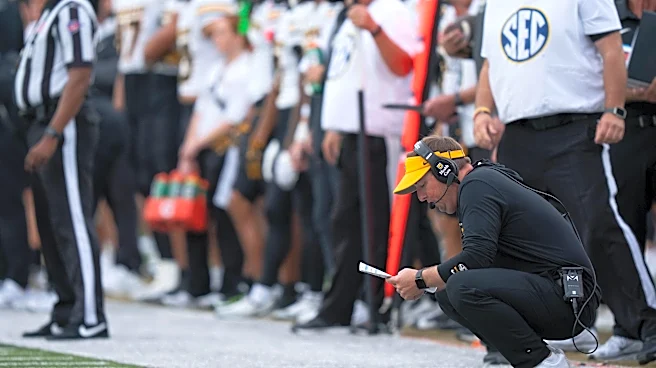
“The product on the field
wasn’t great tonight,” Eli Drinkwitz said.
Those two explosive plays are worth examining because what created them is what will test the Tigers’ defense again in six days.
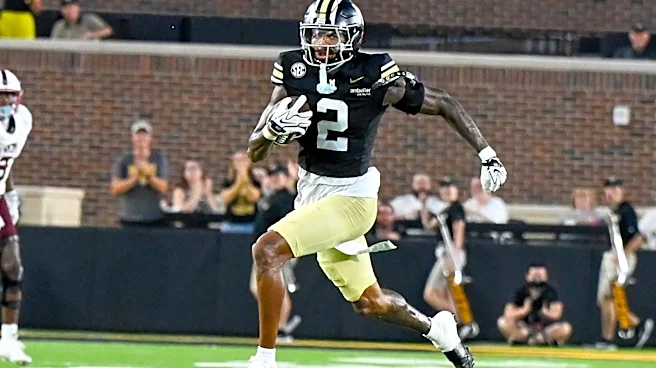
On the second offensive play from scrimmage, Goose Crowder hit TK Keyes, who outran every Mizzou defender for a 76-yard touchdown, stunning the crowd and giving the visitors an early 7-0 lead.
“On the first one, they were in a stack formation, and we had man-to-man coverage. We played outside leverage. They threw basically routes on air,” Drinkwitz said. “Our free safety had terrible angles and was supposed to be there to tackle it, or get it down.”
Drinkwitz paused for a bit.
“It’s awful,” Drinkwitz said. “Bottom line, that’s awful defense.”
In the play, you can clearly see what he’s describing. Sione Laulea mans up on the No. 2 wide receiver, while Satana Banner plays outside leverage. The free safety, Trajen Greco, takes a bad angle, and the slim margin of error gives way for a long score.
Now fast forward to just 14 seconds left on the clock to end the first half. Troy hadn’t even crossed the 50-yard line. Everyone expected this halftime score would be a 24-10 game going into the break.
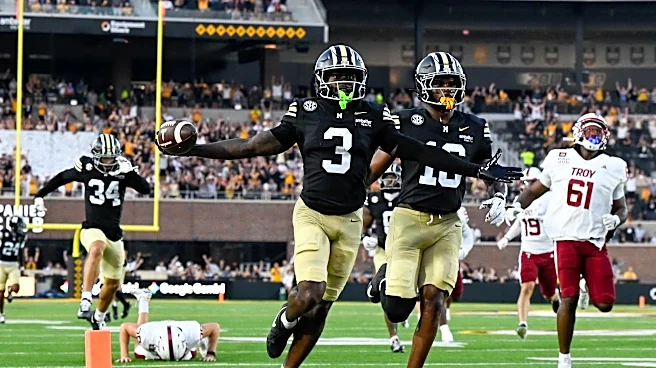
But Crowder had other plans, firing a missile into the hands of Howard Kinchen for a 55-yard score.
“And then at the end of the half, they threw vertical and again we had no free safety help,” Drinkwitz said. “We weren’t able to get our eyes around, and we didn’t play through the hands to get the ball down, so not good.”
The Tigers’ defense shifted to a single-high look. Laulea got his head around too late and wasn’t able to make any play on the ball. The slight hesitation by Laulea allowed Kinchen to spring into the north end zone.
It made it a 24-17 game going into the break.
The Tigers’ defense didn’t have a massive collapse against Troy. The talent level was uneven, and it showed once the final seconds ticked off the scoreboard. As for the secondary itself, against lesser competition, Chris Graves was solid in coverage, allowing just 16 yards, while Jahlil Florence surrendered just two receptions on six targets.
Per PFF, 155 of Troy’s 230 passing yards were credited to Banner and Laulea. Crowder was just 2-of-7 on throws of 10-plus yards, but they went for 131 yards and two scores. Again, it wasn’t a meltdown. But when Mizzou made mistakes, the consequences weren’t minimal.
Here’s why that matters
Those two offensive designs by Troy were meant to generate an explosive play, and both succeeded. Now, the Tigers will open up Southeastern Conference play, on the road, against an offense designed to generate explosive plays.
Hello (again), the veer-and-shoot offense.
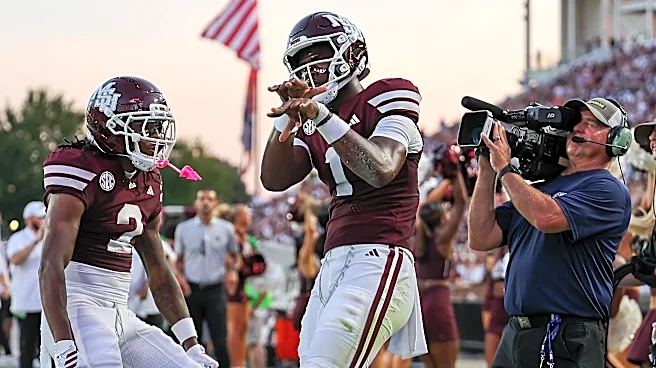
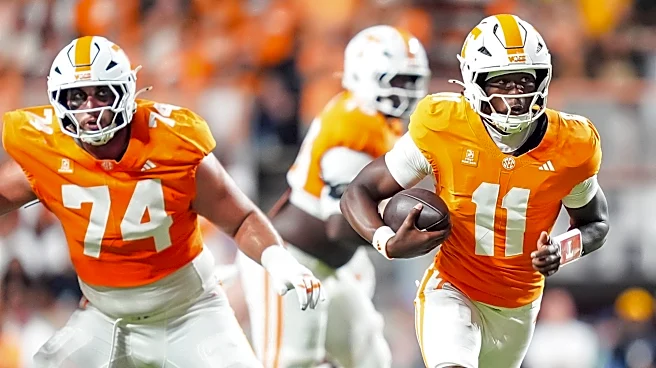
Mizzou has seen versions of it before, most notably against Josh Heupel’s Tennessee teams and Jeff Lebby’s Mississippi State offense since Eli Drinkwitz has been the head coach in Columbia. In those five games, the Tigers have surrendered an average of 36.4 points, and 524 yards, to go along with six passing touchdowns of 20-plus yards.
In short, the veer-and-shoot offense is designed to stretch defenses horizontally with wide receiver alignments. It either creates lighter boxes for the running game or isolated matchups on the perimeter. An offense can attack vertically when it gets the matchup it wants.
And heading to Mississippi State, the Tigers will be facing this exact system, with a quarterback that can operate it.
The Bulldogs have the best statistical offense in the SEC so far in 2026. They average 544.7 yards per game, 300.7 through the air, and 244 on the ground. This output hasn’t come against lesser opponents. Mississippi State went into Minnesota and scored 38, while overcoming a 16-0 deficit in the other game, Columbia, to win 41-34.
Kamario Taylor operates Lebby’s offense this season. He played sporadically last year, but has taken his game to another level. On a surface level, he has an 11-to-1 touchdown-to-interception ratio and is second in the league with 832 yards passing.
But on throws of 20-plus yards, he’s money. Per PFF, he’s 7-of-15 on 20-plus yard throws, 252 yards and five scores with an average depth of target of 33.5. Against South Carolina, in throws of 20-plus yards, he was 3-of-6 for 96 yards and three scores.
These two clips show what Taylor can do within the offense. In the first one, Zion Ragins is lined up on the left numbers, while the ball is placed on the right hash. The Bulldogs have trips to the short side of the field, creating a one-on-one situation for Ragins. The receiver beats the cornerback vertically for a 43-yard score.
Earlier in the game, with the ball on the left hash, the Bulldogs lined a pair of receivers near the opposite numbers. Sanfrisco Magee motioned into a stack formation. Both receivers released vertically, looking almost similar to the first play Troy scored on Mizzou. Taylor using his arm strength, attacked the perimeter receiver for a 30-yard score.
As related to Mizzou, remember the vertical route by Kinchen. Technique-wise, if the cornerback play is like that again, a player like Taylor with this receiving group will make them play. Safety play is also going to be key. In the intermediate to deep middle parts of the field (10-plus yards), Taylor is 12-of-17, for 258 yards and two scores on the young season.
Another aspect of the defense, Drinkwitz was critical of was tackling. PFF credited Mizzou with missing 10 tackles. The Tigers had 11 against Kansas and 14 during the Arkansas-Pine Bluff game.
“We missed a lot of tackles,” Drinkwitz said. “It felt like. It felt like we didn’t bring our extra step when we hit him. It felt like our extra yards added up on us.”
Within the veer-and-shoot, with the defense stretched to defend all parts of the field, the margin of error in the run defense is slim. Mississippi State’s rushing attack has already forced 34 missed tackles this season with 4.25 yards after contact.
This isn’t saying that the Tigers’ defense is in dire straits heading into Starkville. Mizzou still forced two turnovers, generated 10 pressures, and already performed well on the road at KU. But against Troy, two mistakes turned into 131 yards of total offense and two touchdowns. Now, Mizzou will prepare for an offense designed to isolate and create explosive plays.