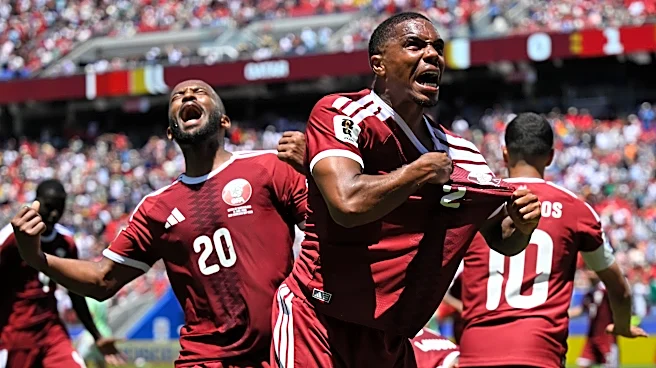






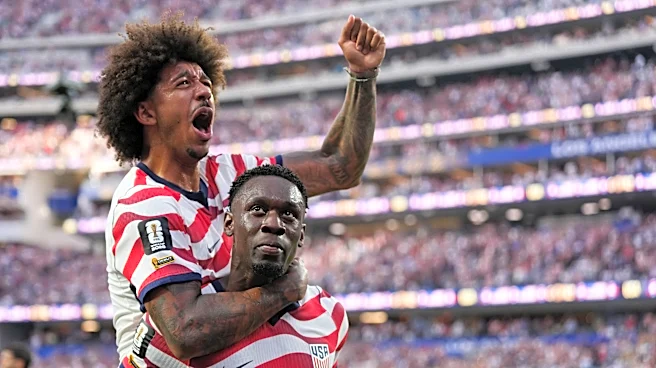
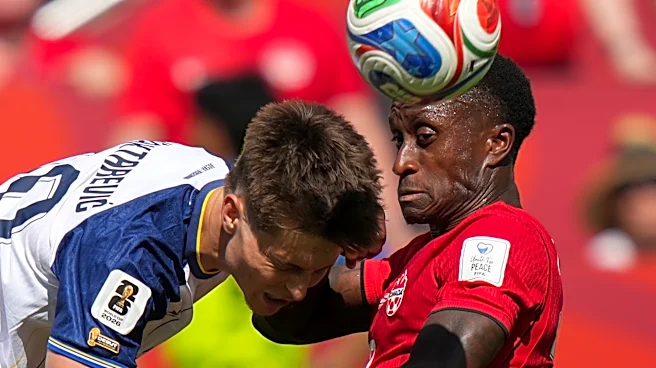
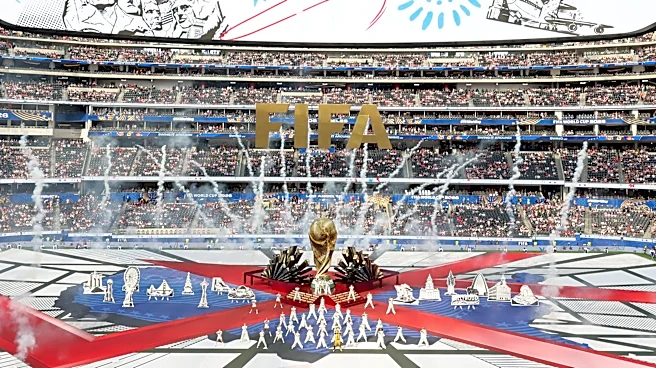


There are 12 Atlético Madrid players at the 2026 FIFA World Cup. Six countries, four groups and a group stage that runs until June 27. The 2026 World Cup is the second in a row in which Atlético Madrid have sent a club record 12 players, up from nine in 2018.
Atleti players are no strangers to the world stage. In France 1998, Christian Vieri headed to the tournament as Atlético’s star striker after winning the Pichichi with 24 league goals that season. He scored five goals in five games for Italy,
finishing as the tournament’s joint top scorer, before Lazio signed him away that summer.
In 2010, Diego Forlán — by then three seasons into his time at the Calderón — won the Golden Ball as the tournament’s best player, scoring five goals as Uruguay reached the semi-finals. That run in South Africa came months after he had scored the winning goal for Atleti in the Europa League final against Fulham.
But for all the individual brilliance, Atlético did not produce a World Cup winner until Russia 2018. Antoine Griezmann, Lucas Hernández and Thomas Lemar became the first Atlético players ever to win the World Cup when France won the final against Croatia, which had Šime Vrsaljko on the losing side.

Four years later in Qatar, Griezmann, Ángel Correa, Nahuel Molina and Rodrigo De Paul all featured in the 2022 final, making Atlético the club with the most players in that match. De Paul led the way with 669 minutes played for world champions Argentina, with Molina close behind on 633. Argentina’s win meant three more Colchoneros came back to the Metropolitano as world champions.
Griezmann has since retired from international football. De Paul left for Inter Miami last summer. Correa has not been recalled. Of the Qatar winners still at the club, only Molina and Musso travel to North America wearing the Albiceleste — and Musso, the hird-choice goalkeeper, is unlikely to play a minute.
What has changed is the scale of the Argentine contingent. Argentina’s squad features 17 of the 26 players who won in Qatar, and six of the squad are currently at Atlético. That gives Atleti more players in Argentina’s squad than any other club. In effect, Cholo Simeone has lent half a forward line and a right-back to the defending world champions.
Across five national teams, there are group-stage fixtures on nine separate days between June 15 and June 27. What follows is a country-by-country breakdown of all 12 players with fixtures, roles and what each one has riding on the next three weeks.
Group A: Mexico
Mexico opened the tournament at Estadio Azteca against South Africa on June 11, winning 2-0 without former Atleti coach Javier Aguirre calling upon the 20-year-old Obed Vargas.
Fixtures
- Jun 11 — Mexico 2-0 South Africa, Estadio Azteca, Mexico City
- Jun 19, 9pm ET — Mexico vs South Korea, Estadio Akron, Guadalajara
- Jun 25, 9pm ET — Czechia vs Mexico, Estadio Azteca, Mexico City
The player
Vargas, 20, arrived at Atlético from Seattle Sounders in February. He made 12 appearances and eight starts in La Liga before the season ended. He is the first Alaska native and the third Sounders Academy product to make a World Cup roster. His Mexico eligibility came through his Mexican heritage rather than Spanish residency, he is Mexican-American and was born in Anchorage.

Vargas logged only 16 minutes total across El Tri’s two warm-up friendlies, with Álvaro Fidalgo, Luis Chávez, Erik Lira and Roberto Alvarado preferred in the centre of the park. Mexico’s midfield is crowded, and he goes into the tournament as a squad player.
That said, his story is worth following beyond the scoreline. A 20-year-old arriving in Madrid in January and making eight La Liga starts in a Champions League season at Atlético is not nothing. A cameo or two at a home World Cup, in front of Mexican fans who know his club, could be the moment that cements his reputation domestically in Spain.
Group H: Spain
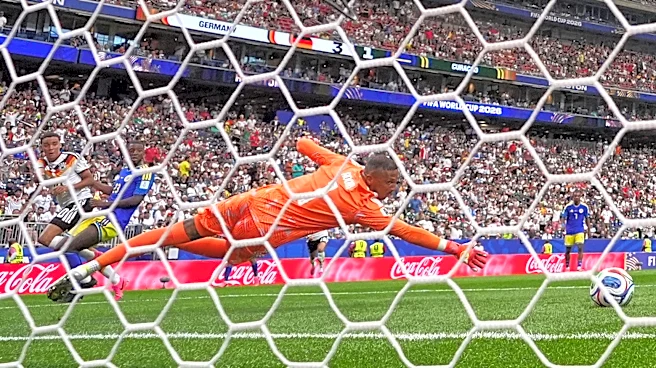
On paper, Spain’s group is arguably the gentlest draw in the tournament. In practice, La Roja learned it will be anything but following a 0-0 draw with debutants Cabo Verde in Atlanta on Monday.
Group H also includes Saudi Arabia and Uruguay, which drew 1-1 on Monday, and Luis de la Fuente’s side are expected to win it comfortably with Marcos Llorente, Álex Baena and Marc Pubill involved.
Fixtures
- Jun 15 — Spain 0-0 Cape Verde, Mercedes-Benz Stadium, Atlanta
- Jun 21, 12pm ET — Spain vs Saudi Arabia, Mercedes-Benz Stadium, Atlanta
- Jun 27, 8pm ET — Uruguay vs Spain, Estadio Akron, Guadalajara
The players
Spain’s most-likely team selection has Llorente at right-back, but the position is up for grabs with Tottenham’s Pedro Porro also having held the right-back spot for some time. Llorente’s value to De la Fuente is in his flexibility; his athleticism makes him capable of covering right-back, right wing and central midfield. He is the kind of player who accumulates minutes regardless of the XI.

Less likely to feature is Pubill, who had not previously been in De la Fuente’s senior setup, having come through under Santi Denia with the under-19s and under-21s. He is a late call-up to the full squad and is realistically third choice at right-back behind Llorente and Porro. Expect minimal minutes unless injuries change the picture.
Álex Baena is a De la Fuente favourite, having played for him at several levels, and could operate as a midfielder or as a wide forward option too. Rodri, Pedri, Gavi, Fabián Ruiz, Martín Zubimendi, Baena and Merino are all vying for places; that is seven players for what De la Fuente typically fills with three or four positions. Baena is more likely to come off the bench than start, but he brings something different to Spain’s usual profile: directness, dribbling and a willingness to run in behind. If Spain are ahead in a group game and need to finish teams off, he could be the option.
Group H: Uruguay
José María Giménez is in Uruguay’s squad alongside Ronald Araújo, Santiago Bueno and Sebastián Cáceres in a defensive group that is short on full certainty at the back.
Fixtures
- Jun 15, 6pm ET — Saudi Arabia 1-1 Uruguay, Hard Rock Stadium, Miami Gardens
- Jun 21, 6pm ET — Uruguay vs Cape Verde, Hard Rock Stadium, Miami Gardens
- Jun 26, 8pm ET — Uruguay vs Spain, Estadio Akron, Guadalajara
The player
Giménez has been Uruguay’s first-choice centre-back for nearly a decade. Injury issues have interrupted his rhythm at Atleti over the years, but he has generally been fit when it counts for La Celeste. He is a starter in a Uruguay side that will need to defend well to have any chance against Spain in matchday three. Cape Verde are the winnable game; Saudi Arabia and Spain are the tests.

Group I: Norway
Norway in Group I face France, Senegal and Iraq. It is the hardest draw of any Atleti player’s tournament, but Alexander Sørloth is part of a deadly attack looking to take it on.
Fixtures
- Jun 16, 6pm ET — Iraq vs Norway, Gillette Stadium, Foxborough (Boston)
- Jun 22, 8pm ET — Norway vs Senegal, MetLife Stadium, East Rutherford (New Jersey)
- Jun 26, 3pm ET — Norway vs France, Gillette Stadium, Foxborough (Boston)
The player
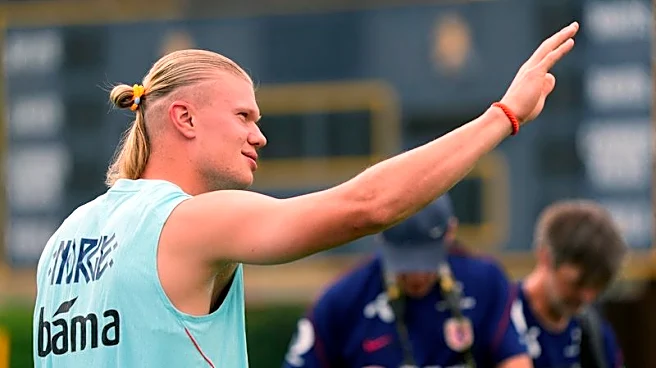
Sørloth is in Norway’s squad alongside Erling Haaland and Jørgen Strand Larsen. With Haaland leading the line, Sørloth is the backup striker, but he has also played alongside Haaland as a winger. He offers aerial threat, hold-up play and a physical dimension that Haaland alone does not provide in the same way. The question is whether Ståle Solbakken uses both in the same lineup or cycles them.

Norway vs France on June 26 is the standout game from an Atleti perspective. France will likely come into that fixture needing a result or to confirm top spot as group winners. Either way, Sørloth against a backline containing the likes of William Saliba, Dayot Upamecano or Ibrahima Konaté is a genuine contest.
Iraq are the winnable game. Iraq vs Norway is Matchday 1 for the group. If Sørloth starts and scores, he sets a platform for Norway to advance. Senegal will be stiffer. France are probably a step too far in a group stage context, but Norway have beaten them before.
Group J: Argentina
Julián Alvarez, Nahuel Molina, Nicolás González, Thiago Almada, Giuliano Simeone and Juan Musso make up six Atleti players in one squad. Argentina are in a straightforward group on paper, and the expectation is they top it without serious difficulty.
Fixtures
- Jun 16, 9pm ET — Argentina vs Algeria, Arrowhead Stadium, Kansas City
- Jun 22, 1pm ET — Argentina vs Austria, AT&T Stadium, Arlington (Dallas)
- Jun 27, 10pm ET — Jordan vs Argentina, AT&T Stadium, Arlington (Dallas)
The players
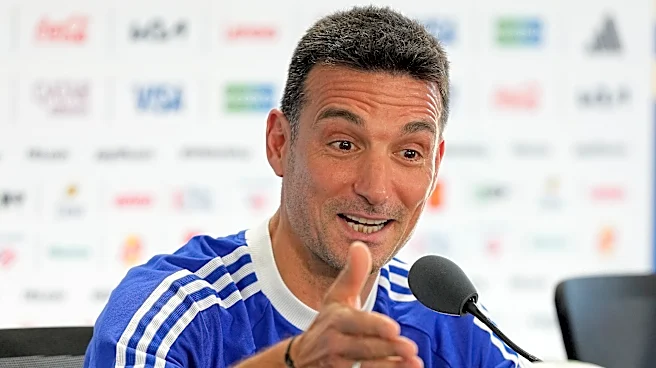
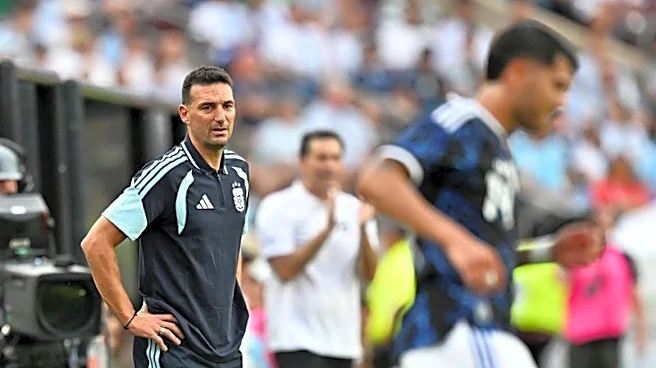
Lionel Scaloni’s default structure is a flexible 4-3-3, with Molina and Nicolás Tagliafico as first-choice full-backs. Molina is a starter. After a difficult few seasons at Atleti in which he lost ground to Llorente and others for consistent minutes, the World Cup is a chance to reassert himself at international level, where he has been reliable for years.
A midfield trio of former Colchonero de Paul, Alexis MacAllister and Enzo Fernández has been Argentina’s preferred unit for some time. That leaves Almada fighting for the third midfield slot. He is the most direct competition for Fernández in that role, and a strong tournament could change how Europe’s clubs view him; he arrived at Atleti as a relative unknown outside South America and is yet to show the quality to become a household name here.
Alvarez is the player the tournament will define most significantly. According to multiple outlets, Alvarez is Barcelona’s priority signing for 2026/27. Atlético have turned down a €100 million offer for Alvarez from Barça in addition to €150 million from Real Madrid; both clubs have been referred to Alvarez’s mammoth €490 million release clause.
Alvarez scored 20 goals in 49 appearances across all competitions during the 2025/26 season and reportedly declined a contract extension from Atlético. A prolific World Cup with Argentina, in which he starts ahead of or alongside Lautaro Martínez, would only push his valuation higher and increase the pressure on Atleti to decide whether to sell or hold. Atlético’s asking price has been consistently reported between €150 million and €200 million. Arsenal, PSG and Chelsea are other sides credited with interest in La Araña.

Nico González came to Atleti on loan from Juventus and made himself indispensable to Scaloni last season. He is genuinely competing for a wide-forward starting spot alongside or instead of Giuliano Simeone.
Giuliano, 23, made the squad after what he described as a season of growth at club level. He has made 11 international appearances and scored once, and this is his first senior World Cup. Argentina have been searching for an Ángel Di María replacement since the winger retired after Copa América 2024, and Giuliano, González and Nico Paz are the candidates Scaloni has been testing. With the tournament on home soil for Argentina’s fanbase in the Americas, his story — son of Diego Simeone, wearing the blue and white — will attract significant attention regardless of how many minutes he plays.
Musso is third-choice goalkeeper behind Emi Martínez and Gerónimo Rulli. He will not play unless two keepers fall injured. He is there as insurance and experience.