
Last season, the Knicks were a pretty shallow team.
Outside of their overly used starting five and key reserves Deuce McBride and Mitchell Robinson, they didn’t have any reliable pieces that would be ticketed
for regular roles in Tom Thibodeau’s rotation.
Sure, they had Cam Payne, Landry Shamet, Delon Wright, and Precious Achiuwa, who would see time sporadically, but none of them stuck due to inherent flaws. Payne was frozen out due to his lack of defense and erratic shotmaking, Shamet never got in the circle of trust after a serious shoulder injury, Wright was a defensive ace who was only inserted out of need in the Eastern Conference Final, and Achiuwa messed with the spacing and was an awkward fit with Robinson or Josh Hart.
As a result, the young, deep, and talented Indiana Pacers overwhelmed the Knicks en route to the NBA Finals, costing Thibodeau his job in the summer. Mike Brown was brought in to lengthen the rotation by using the regular season to experiment with lineups, and for the most part, he’s done that (aside from continuing to start Hart).
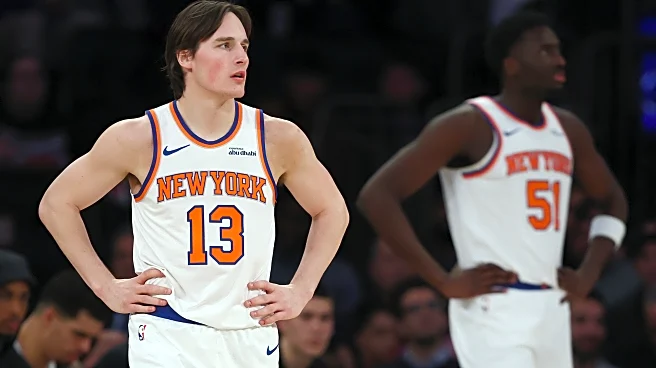
The rotation has been extremely fluid. When the team was healthy early, they leaned on Jordan Clarkson and Guerschon Yabusele off the bench, but it’s evolved to include Shamet, Tyler Kolek, Mo Diawara, and the team’s newest hometown hero, Jose Alvarado.
But, unlike before, when the team is suffering injuries, the rotation is being expanded, not contracted. Those are where guys like Kolek, Kevin McCullar Jr., and Ariel Hukporti get their most opportunities. Even Clarkson, who briefly was Evan Fournier’d, re-joined the rotation.
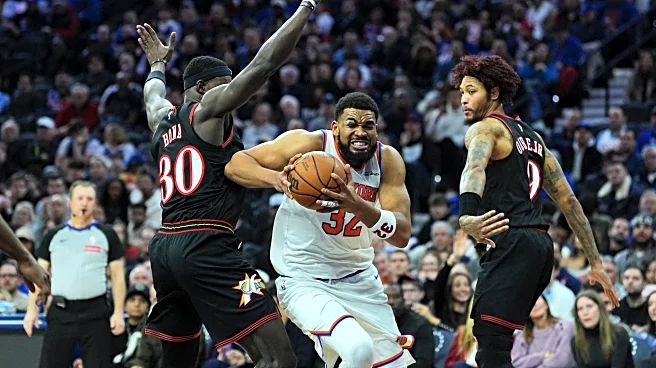
But here’s the problem. When the Knicks are whole, they’re nearly unstoppable. They’re 13-3 when Brunson-Bridges-Hart-Anunoby-Towns are the first five. But when there’s one piece missing in the team’s core nucleus, whether it’s the captain and head of the snake or a guy like Deuce or Robinson, the house of cards starts to shake, and some nights, it comes crashing down.
When the top-seven is all healthy, they’re 8-4, something that isn’t overtly impressive, but the individual splits of the six (Mikal Bridges is indestructible) tell the story:
Without McBride: 13-7
Without Robinson: 10-6
Without Anunoby: 8-6
Without Hart: 6-6
Without Brunson: 1-4
Without Towns: 2-2
The Knicks are more able to stomach the losses of McBride and Robinson, as they’ve at least had enough games without them to hash out a plan. The team, however, plays dramatically worse when the other five miss time, even if the on-off stats say the team is fine without these players off the court.
It’s obvious that the team struggles without Brunson, with how much he does for this team, but they also play choppy basketball when Towns is sidelined. After a 10-game stretch where the Knicks had the best defense in basketball, the process got tremendously worse when Anunoby went down with a toe injury, as the team yielded miserable performances against the Detroit Pistons and lowly Indiana Pacers. When Hart’s been sidelined this season, the Knicks struggle to generate the hustle he brings.
But it goes deeper than not having them on the court. When these players are available, and just on the bench, they’re being replaced by the team’s very formidable bench. But when the starter is in street clothes, and Coach Brown is forced to go deeper into the bench, the minutes drop off.
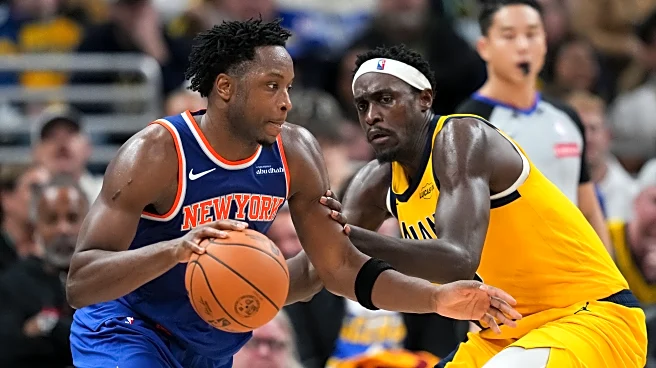
With Anunoby, Robinson, and McBride out against the lowly Pacers, the Knicks couldn’t defend. They had nobody who could even put a body on Pascal Siakam, despite the best efforts of a small Josh Hart and inexperienced Mo Diawara. The lack of McBride, who would stick with Andrew Nembhard, didn’t help either, nor did the absence of Robinson with Ariel Hukporti struggling to make an impact.
Against the Pistons last week, the Knicks were never competitive, which is inexcusable regardless of personnel. That said, with Anunoby, McBride, and Towns sidelined, the lineups that the team ran were not ones that could survive against any playoff team.
Brunson was reduced to leading lineups that had one or two other players who could score. Bridges had a strong game, but he isn’t a ballhandler. Clarkson also saw an increased role, but lineups with him and Brunson have been catastrophic defensively all season. Kolek has the same problem on the defensive end.
But if the Knicks leaned on defense around Brunson, they would be incapable of putting the ball in the basket, especially considering the captain’s struggles that night. Putting guys like Diawara, Hukporti, Hart, and McCullar around Brunson leads to lineups that see JB trying to navigate a maze to break down the defense, only to not have any reliable knockdown shooters to pass to.
When the Knicks are whole, they’re a formidable group that can hang with anyone in the association, and that’s because they mask each other’s flaws.
Brunson’s creation on offense, both for himself and others, allows the players around him to play an efficient, off-ball role. Towns’ rebounding and gravity, both inside and outside, generate extra possessions and free up space. Anunoby and Bridges’ defense help keep lineups that contain both Brunson and Towns afloat. Hart’s hustle and intensity can carry the team through low-energy slogs and rough shooting stretches.
The Knicks aren’t the only team that is one or two injuries away from everything falling apart, but it makes what they do to manage the workloads of their key players down the stretch crucial. If any player has a nagging ailment and they miss a few extra games, this will be why. They need to be whole to have a chance at ending the team’s 53-year title drought.