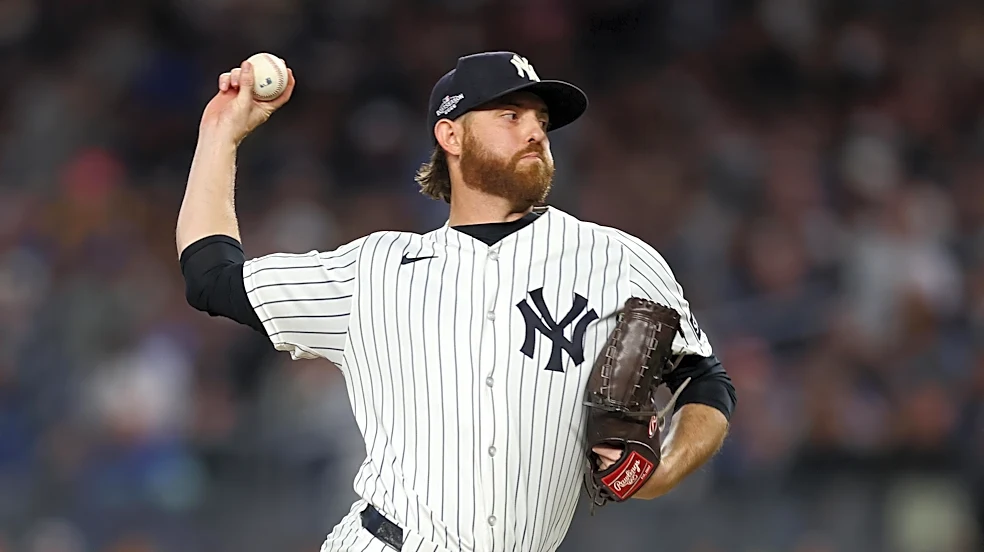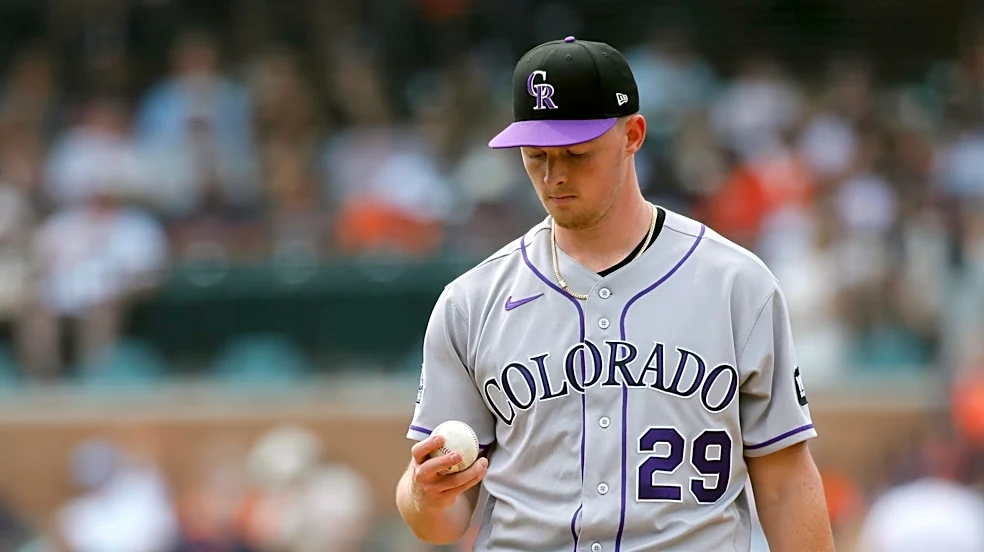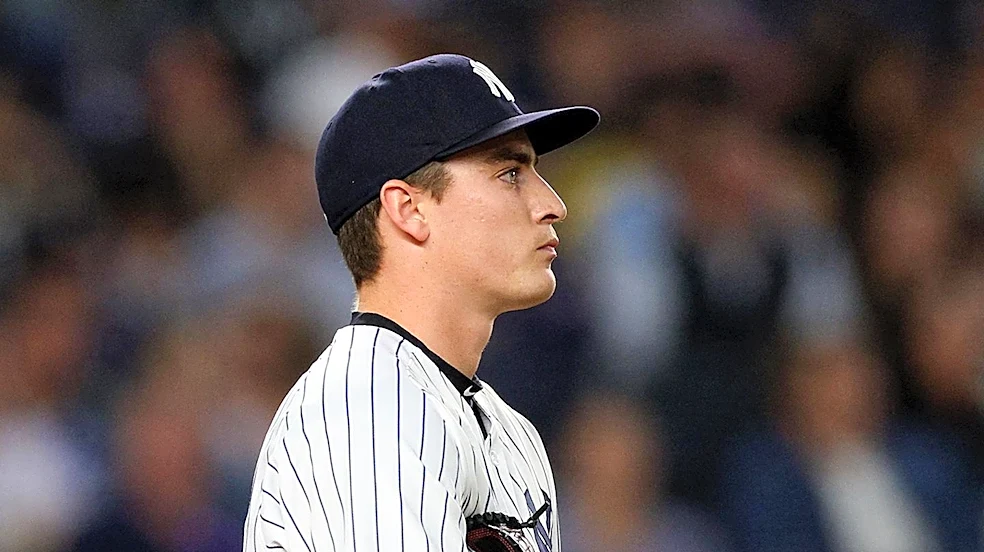


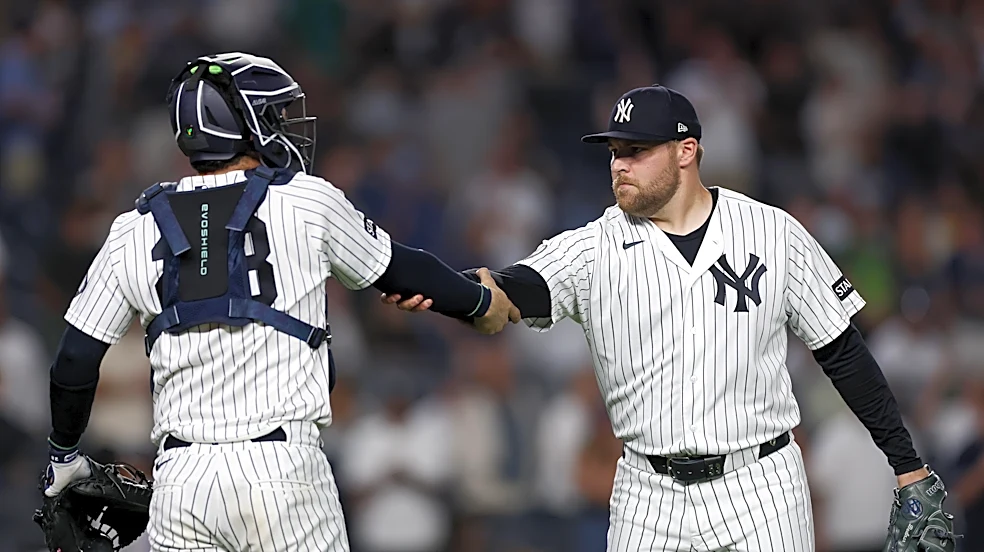

While the Yankees may be known for its prolific sluggers than for its hurlers, the organization does have a strong tradition of left-handed aces: CC Sabathia and Lefty Gomez have been enshrined in Cooperstown, and Andy Pettitte and Ron Guidry in Monument Park. In each of the past two seasons, a different southpaw took the ball on Opening Day — Max Fried this year, Carlos Rodón last year — a testament to the enduring legacy of the lefty starter in the Bronx.
Even among this great history, though, one
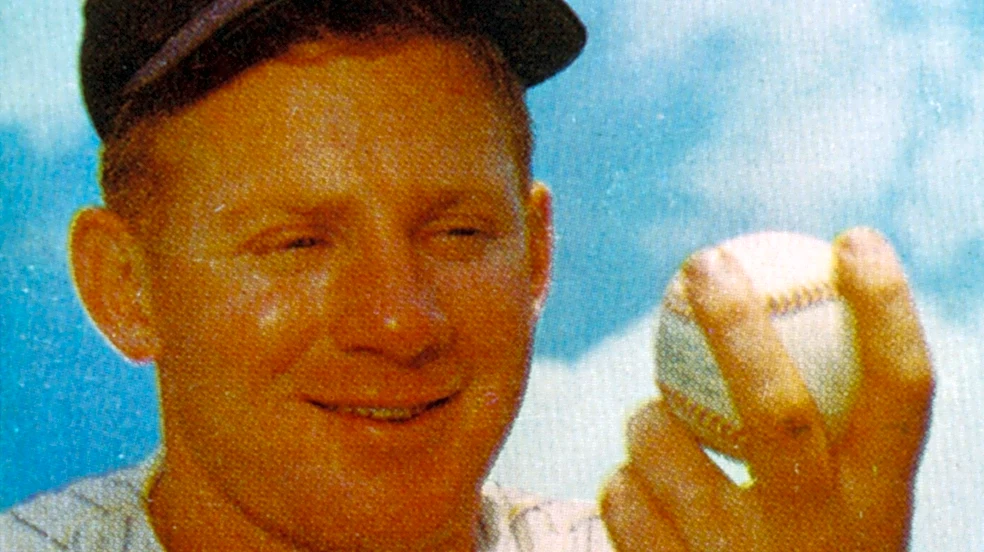
pitcher stands alone: the “Chairman of the Board” himself, Whitey Ford, who came in at No. 8 in our Top 100 Yankees list two years ago — the highest among starters, and second among pitchers only to Mariano Rivera.
Edward Charles “Whitey” Ford
Born: October 21, 1928 (Manhattan, NY)
Died: October 8, 2020 (Lake Success, NY)
Yankees Tenure: 1950, 1953-67 (player); 1964, 1968, 1974-75 (coach)
Born in Manhattan and raised in Astoria, Ford came to the attention of the Yankees at an open tryout in 1947. A first baseman for the Manhattan School of Aviation Trades high school team, the Yankees scouts instead saw potential in his left arm, taught him a curveball, and watched him dominate the Queens-Nassau semipro league. After the Red Sox offered him $1,000 to sign, his hometown team offered him an initial $5500, upped their offer to $7000, and got him to sign the dotted line just like that.
After two years in the minors, during which time the man called Eddie’s blonde hair earned him the nickname “Whitey” from manager Lefty Gomez, Ford got the call to the Bronx halfway through the 1950 season. His first appearance, working out of the bullpen, was an absolute disaster, as he surrendered 5 runs on 7 hits and 6 walks in 4.2 innings. As it turned out, though, Ford was tipping his pitches, and after some work with the pitching coach, he settled in as a starter/multi-inning reliever: across his final 19 appearances, he posted a 2.52 ERA in 107.1 innings, earning him some down-ballot MVP votes and making him the runner-up in the Rookie of the Year vote. He made his postseason debut that October, throwing 8.2 innings to help the Yankees clinch a sweep of the Philadelphia Phillies.

The outbreak of the Korean War put Ford’s career on pause, as the young man was drafted into the Army. While he did engage in some real military work — he fell off a telephone pole not once, but twice, while working for the Signal Corps — much of his time was spent playing for the Fort Monmouth Signaleers baseball club. Although I’m sure the Yankees balked at his extensive usage, as he pitched four or five times a week, the arrangement was conducive for Ford: he was close enough to home to throw out the ceremonial first pitch in his Army uniform in 1951, and to marry his high school sweetheart, Joan, while on leave in New York.
Following his return from military service, Ford slotted back into the rotation, as the team’s fourth starter behind Allie Reynolds, Vic Raschi, and Eddie Lopat — already a fairly dominant rotation. Soon, however, it became clear that the real ace of the staff was the young southpaw. Manager Casey Stengel realized it and was often selective in how he used Ford, as he would skip a start here and there so that “Slick” was almost always starting against the American League’s toughest foes. Ford himself chafed at this, as he would’ve preferred to just have a consistent spot, which he wouldn’t get until Ralph Houk took over for Stengel in 1961 — perhaps not coincidentally the same year he won his first and only* Cy Young Award with a career-high 283 innings and 39 starts.
*Ford could have won more Cys, but the honor was first awarded in 1956 and it was an overall MLB honor until 1967, when the AL and NL began issuing separate Cys.
For a span of 13 years from 1953 through 1965, Ford was one of the most consistent pitchers in baseball. The numbers are, themselves, impressive: in this span, he posted a 2.77 ERA (a 131 ERA+), averaged 17.2 wins and 11.3 complete games per season; the accolades, even more so — eight All-Star appearances, the aforementioned 1961 Cy, 10 AL pennants, and five more championship rings. He won the 1961 World Series MVP against Cincinnati as well, as this was the Fall Classic that saw him break Babe Ruth’s then-record with 33.2 consecutive scoreless innings in World Series play.
But these don’t stats don’t do Ford’s performance justice. His left arm, consistent in its performance even as it battled injuries as his career progressed, served as one of the anchors of more than a decade of Yankees dominance — an anchor often overshadowed by other events on the team (e.g., the Maris/Mantle race for 61 in ‘61) and by other pitchers throughout the league (e.g., Sandy Koufax), but an anchor without which the dynasties of the 1950s and 1960s do not occur nonetheless.
By 1965, years of injuries — he had been dealing with circulatory problems in his left arm since his Cy Young season — had finally begun to truly take their toll, and he was scuffing the ball more and more while combining for only 177 innings between 1966 and ‘67. He retired at the end of May 1967, at 38 years of age. Seven years later, he was inducted into the National Baseball Hall of Fame alongside his longtime pal Mantle.

While he stopped pitching, he never truly stepped away from the game: he had multiple coaching stints, saw his No. 16 retired on August 3, 1974, received a plaque in Monument Park in 1987, and was honored on the 50th anniversary of his original signing in August 2000. A local and familiar face at Yankees Old-Timers’ Day and spring training, Ford was also no stranger to ceremonial first pitches on Opening Day or in the postseason.
The last surviving key member of the mid-century dynasty, Ford passed away on October 8, 2020, watching Yankees southpaw Jordan Montgomery lead the Yanks past the Tampa Bay Rays in Game 4 of the ALDS — a fitting activity for one of the all-time greats. Today would be his 98th birthday, and we wish Whitey’s family well!
See more of the “Yankees Birthday of the Day” series here.