


This is not a prediction of what the Seattle Seahawks will do in the 2026 NFL Draft. Instead, this exercise is based on a general consensus board approach — identifying prospects who are realistically available in each round and fit Seattle’s current roster construction and philosophy.
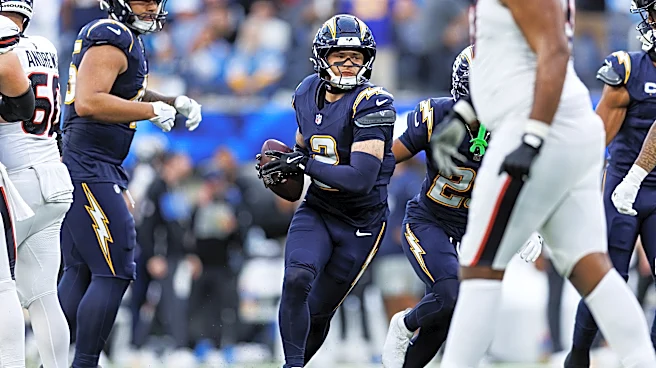
The Seahawks have quietly built a solid inside linebacker group, forming a strong duo with Ernest Jones and Drake Thomas, who recently had his contract renewed. There’s also Tyrice Knight, who lost his starting role
but still put together an encouraging rookie season.
Because of that, linebacker may not be a position Seattle targets early in the draft. Still, it’s not a group that should be completely ignored — adding talent for depth, competition, and long-term development remains a smart approach.
That makes linebacker an especially interesting position to monitor in this class.
Round 1
C.J. Allen (Georgia)
C.J. Allen emerged from Georgia’s loaded defense as one of the most intriguing linebackers in the class. He brings excellent range, clean processing, and the ability to play fast without losing discipline.
Allen’s game is built on pursuit speed and reaction time. He consistently flows sideline-to-sideline and closes space quickly in underneath zones. While he’s not yet a finished product in terms of play strength at the point of attack, his trajectory suggests clear upside.
There are no major injury concerns, but his relatively limited starting experience could be a talking point for teams. For Seattle, he would be a long-term investment with starting upside early in his career if he lasts until the 32.
Round 2
Anthony Hill Jr. (Texas)
Anthony Hill Jr. is one of the most explosive linebackers in the class. At Texas, he thrived as a downhill attacker and disruptive presence near the line of scrimmage.
Hill flashes elite traits as a blitzer and run defender, but his coverage instincts are still developing. That inconsistency in space is likely what keeps him out of Round 1.
For Seattle, he offers something different: a true impact defender who can pressure quarterbacks and create negative plays.
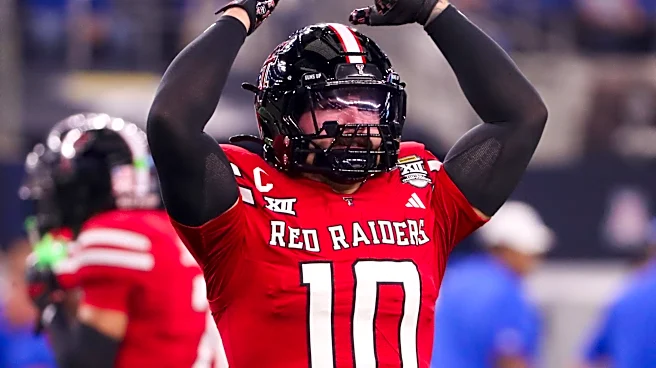
Jacob Rodriguez (Texas Tech)
Jacob Rodriguez is a high-floor, instinct-driven linebacker from Texas Tech’s stingy defense.
He may not wow with elite athleticism, but he rarely makes mental mistakes. Rodriguez diagnoses plays quickly, takes efficient angles, and is consistently around the football.
His lack of top-tier physical traits may limit his ceiling, but he projects as a reliable contributor early — something Seattle could value in a rotational role.
Josiah Trotter (Missouri)
Josiah Trotter brings pedigree, toughness, and leadership. He plays with urgency and confidence, showing strong instincts against the run. However, questions about his athletic ceiling and coverage ability may cap his draft range.
Still, his football IQ and physicality make him a safe projection to contribute in a structured defense.
Round 3
Harold Perkins (LSU)
Harold Perkins is a true wildcard out of LSU.
Few defenders in this class can match his explosiveness. Perkins has been used as a hybrid weapon — lining up off-ball, on the edge, and even in space. As a pass rusher, he’s electric, capable of winning with speed and bend.
The challenge is projection. He’s undersized for a traditional linebacker role and hasn’t had a clearly defined position, which creates risk. There are also questions about how consistently he can hold up against the run at the next level.
That said, in the right system — and Seattle has shown flashes of creativity defensively — Perkins could become a game-changing piece rather than a traditional linebacker.
Kyle Louis (Pitt)
Kyle Louis will likely require development time.
He shows good size and flashes physicality attacking downhill, particularly against the run. When he trusts his reads, he can be an effective enforcer between the tackles.
However, inconsistency is a major theme in his tape. His play recognition can be late, and he struggles at times in coverage — especially when asked to carry routes or react to play-action concepts.
There are no widely reported major injury red flags, but his developmental profile means he’s not likely to contribute immediately on defense. For Seattle, he would be a classic mid-round bet on upside, likely starting his career on special teams while refining his instincts.
Kaleb Elarms-Orr (TCU)
Kaleb Elarms-Orr brings energy and versatility from TCU.
He plays fast and aggressive, showing the ability to impact multiple phases of the game. Elarms-Orr is active in pursuit and flashes real range when flowing to the football. He’s also shown some ability to contribute as a blitzer, adding value on passing downs.
That said, his aggressiveness can work against him. He will overrun plays, lose gap discipline, and occasionally take poor angles — all fixable, but notable concerns.
From a projection standpoint, he profiles as a high-energy rotational linebacker early in his career, with upside to develop into more. His special teams value will likely be key in securing a roster spot early on.
Jake Golday (Cincinnati)
Jake Golday is a deeper sleeper draft prospect.
Golday doesn’t have elite traits, but he brings consistency, effort, and a physical mindset. He’s the type of player who does the dirty work — taking on blocks, playing through contact, and finishing tackles.
Athletically, he’s limited compared to higher-ranked prospects, which shows up when asked to play in space or match up against faster players. Coverage will likely be a challenge at the next level.
However, his path to the roster is clear: special teams. Golday has the mentality and play style to contribute immediately in that phase, which is often the deciding factor for late Day 2 or early Day 3 linebackers.
Round 6
Red Murdock (Buffalo)
Highly productive at the college level, Red Murdock built his reputation on toughness, physicality, and consistency. He’s comfortable playing in traffic and shows a willingness to take on blockers — traits that translate well to early-down defense.
The main limitation is athleticism. He lacks the range and fluidity that modern NFL defenses often demand from linebackers, particularly in coverage situations.
Because of that, his most immediate impact would come on special teams. Still, players with his mentality and production often outperform their draft position, making him an intriguing depth option for Seattle late in the draft.
Jack Kelly (BYU)
Kelly has experience in multiple roles, including flashes as a pass rusher, which adds to his appeal. He shows good effort and competitiveness, and there are moments where his athleticism pops, particularly when attacking downhill or closing on the quarterback.
However, his game is still raw. His instincts and processing can be inconsistent, and he will need time to adjust to the speed of the NFL.
There are no major widely reported off-field red flags, but like many late-round prospects, his path will depend heavily on development and special teams contributions.
For Seattle, Kelly fits the mold of a developmental linebacker with versatility; someone who could carve out a role over time if properly coached.
Final Thoughts
With only four picks in the 2026 draft, the Seahawks will need to be strategic. Linebacker may not look like an immediate need on paper, but it remains a position where adding young talent makes sense for depth, competition, and long-term planning.
Whether it’s a high-upside athlete like C.J. Allen, a tone-setter like Anthony Hill Jr., or a hybrid weapon like Harold Perkins, this class offers multiple paths for Seattle to reinforce the heart of its defense.