


There is a difference between rebuilding a football team and rebuilding belief.
The first can be measured in transfer fees, contracts, formations and pre-season results. The second is more elusive. It appears gradually — in the way a young player begins to demand the ball, in the way an experienced midfielder accepts responsibility, in the way a coach’s instructions start becoming instinctive rather than theoretical.
For Juventus, the summer of 2026 has contained signs of both.
The club has not merely
attempted to add more talent. It has been trying to construct a team with greater balance, greater depth and, perhaps above all, a clearer identity under manager Luciano Spalletti.
That distinction matters.
Because after a season in which Juventus experienced too many fluctuations between promise and frustration, the central question entering the 2026-27 season is not whether the squad contains good footballers.
It does.
The question is whether those footballers can finally become a consistently good football team.
And the evidence from the summer suggests that the answer may be more encouraging than many expected.
A transfer window with a purpose
The most revealing aspect of Juventus’ recruitment has been its variety.
The club has strengthened different layers of the squad rather than simply searching for one spectacular signing.
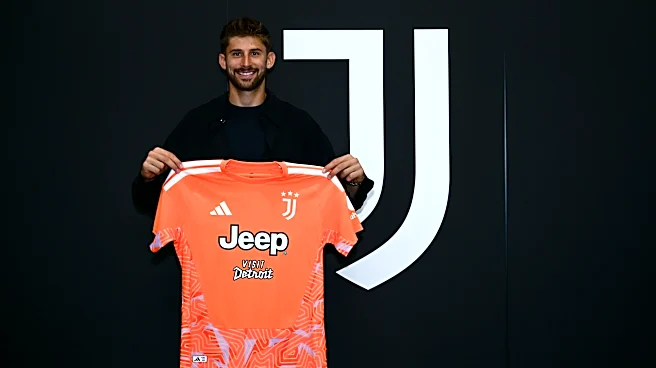
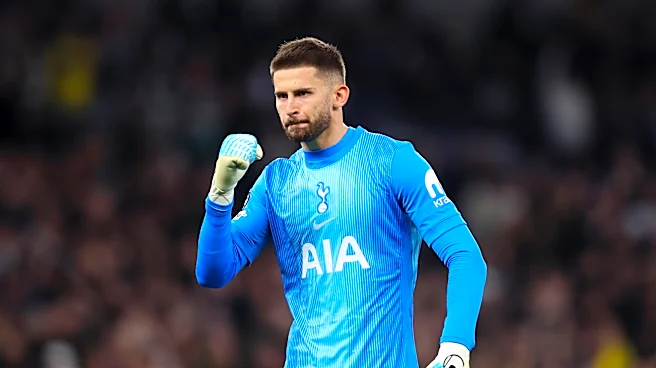
Jhon Lucumí adds another established option in central defence. Guglielmo Vicario, arriving from Tottenham on a season-long loan, brings substantial Serie A and Premier League experience to the goalkeeping department. Randal Kolo Muani has become a permanent Juventus player, while younger attacking talents such as Kerim Alajbegović and Jeff Ekhator broaden the club’s developmental horizon.
Vicario’s arrival is particularly significant. Juventus confirmed earlier this week that the goalkeeper had joined until June 2027, bringing with him 69 Serie A appearances and 117 for Tottenham.
These are not glamorous additions simply for the sake of headlines. They are functional additions. And that may be precisely what Juventus need.
A title challenge is rarely constructed from 11 stars. It is constructed from a starting XI, a credible bench, players capable of rotating without destroying the team’s structure, and young footballers who can eventually force their way into the conversation.
Juventus appear to be moving towards that model.
Spalletti’s biggest signing may have been time
There is another reason for optimism. Spalletti has had something that his predecessors did not always possess in abundance: time to prepare.
Pre-season has allowed him to experiment with attacking combinations, examine the midfield balance and assess which players can execute his demands when the opposition becomes stronger.

And the opposition has become progressively more revealing.
The early friendlies were useful laboratories.
Basel provided the first examination. Standard Liège and Nice allowed further tactical experimentation. Then came Chelsea, Inter and Palermo in Australia — the matches that carried a little more competitive flavor.
The results were instructive rather than merely flattering.
- Juventus beat Chelsea 1-0.
- They lost 2-1 to Inter.
- They responded with a 2-0 victory over Palermo.
- Then they closed pre-season with a 2-0 victory over Juventus Next Gen.
The important point is not that Juventus went through the summer collecting wins. They did not. It is that the team encountered different problems and appeared capable of learning from them.
That is precisely what a serious pre-season should accomplish.
Three lessons from Chelsea, Inter and Palermo
Chelsea tested Juventus’ capacity to suffer.
The 1-0 victory demonstrated defensive discipline and the ability to exploit moments rather than needing overwhelming possession. Spalletti afterwards emphasized the team’s unity and defensive solidarity. That was encouraging because Juventus will encounter plenty of opponents this season against whom patience and compactness will be essential.
Then came Inter.
The 2-1 defeat was arguably the most educational match of the entire tour. Juventus could possess the ball without possessing the match. That distinction is crucial. A team can have the ball and still lack penetration, tempo and threat. Against a stronger opponent, possession without incision becomes an invitation to counter-attack.
Inter exposed that.
Palermo then provided the response.
A 2-0 victory, with Kenan Yıldız and Arkadiusz Milik on the scoresheet, offered a different Juventus: more controlled, more efficient and ultimately more comfortable protecting its advantage. That sequence tells us something.
Chelsea demanded resilience. Inter exposed weaknesses. Palermo showed response.
That is a more valuable pre-season narrative than an unbeaten run.
The Yildiz question
If there is one player capable of changing the emotional temperature around Juventus, it is Yıldız.
The Turkish forward has moved beyond the stage where every good performance is described as “promising.” At some point, promise must become responsibility.
Yıldız appears ready for that transition.

His goal against Palermo was not simply another pre-season statistic. His broader development under Spalletti has been more revealing. The coach has demanded that Yıldız contribute defensively and make tactical sacrifices when necessary.
That is an important evolution.
A young attacker learns one kind of football by being told: “Go and express yourself.”
He learns another when the coach says: “Express yourself — but understand what the team needs from you first.”
Yıldız appears to be learning the latter.
And if he can translate that growth into consistent Serie A production, Juventus may possess something every ambitious team needs: a player capable of becoming the face of the next era.
The attack has options now
This is where the new Juventus becomes particularly intriguing.
Kolo Muani provides mobility and attacking depth.
Jonathan David, if he stays beyond the summer transfer window, adds intelligent movement and link-up play instincts.
Francisco Conceição offers directness.
Edon Zhegrova brings one-on-one unpredictability.
Jérémie Boga offers another dribbling profile.
Yıldız can create, drift, combine or finish.
Kerim Alajbegović gives Spalletti another young attacking option.
The significance is not that all of them will play together. They should not. The significance is that Juventus can now approach different opponents with different attacking solutions.
Against a high defensive line, Kolo Muani’s movement becomes valuable. Against a deep block, a player such as Zhegrova may be required to break the first line. Against a physically demanding opponent, Juventus may need a different combination altogether.
This is what squad construction is supposed to achieve.
Not 11 players with the same qualities — but 11 positions with multiple solutions.
And yet, the midfield remains the great test
Here the optimism needs to be disciplined.
Juventus have quality in midfield, but quality does not automatically equal equilibrium.
Manuel Locatelli remains an important reference point.
Teun Koopmeiners offers technical quality and positional versatility.
Weston McKennie provides energy, running and tactical flexibility.
Douglas Luiz has increasingly attracted Spalletti’s confidence.
The coach’s recent comments on Luiz were particularly revealing: he indicated that the Brazilian would most likely remain, praising his passing, versatility and understanding while also identifying defensive coverage as an area for improvement.

That qualification is important.
Because Juventus’ midfield will probably determine whether this promising project becomes a genuinely competitive one. The team needs to know when to accelerate and when to control. When to press and when to retreat. When to send numbers forward and when to protect the centre.
Pre-season has shown flashes of that understanding.
The season will tell us whether it has become habit.
The defensive foundation
The defensive signs are perhaps the quietest — and therefore easiest to overlook. Yet Juventus conceded only twice across the three principal Australian matches.
Chelsea scored none. Palermo scored none. Inter scored twice. That is not evidence that the defense is perfect. It is evidence that the defensive structure is becoming more reliable.
Lucumí should increase competition in central defense, while Vicario gives Juventus greater goalkeeping depth. And that matters enormously in a season containing both Serie A and Europa League football.
The club’s 2026-27 season-ticket structure itself reflects four home Europa League league phase fixtures, underlining how much additional football Juventus will have to manage.
Depth will therefore cease to be a luxury.
It will become survival.
The real promise
Perhaps the most encouraging feature of Juventus’ summer is that the club appears to be building layers.
There is experience. There is youth. There are established players. There are players still fighting to establish themselves. There are attacking options. There is defensive reinforcement. And there is a coach increasingly able to impose his ideas.
That does not guarantee success. Football has never respected guarantees. But it creates the conditions in which success becomes plausible.
And that is where Juventus find themselves as the new season approaches. Not finished. Not favorites for everything. Not yet the Juventus their supporters want them to become.
But recognisably on the way.
And now the real question
The summer has supplied the ingredients. Spalletti has supplied the blueprint. The players have supplied encouraging evidence.
But Serie A does not award points for potential.
It rewards consistency. So perhaps the two questions worth carrying into the new season are these:
1. Can Spalletti turn Juventus’ growing tactical variety into consistency against the best teams in Italy?
And, perhaps even more intriguingly:
2. Is Kenan Yıldız ready to stop being Juventus’ most exciting young player — and become one of Juventus’ most important players, full stop?
The answers may define the season.