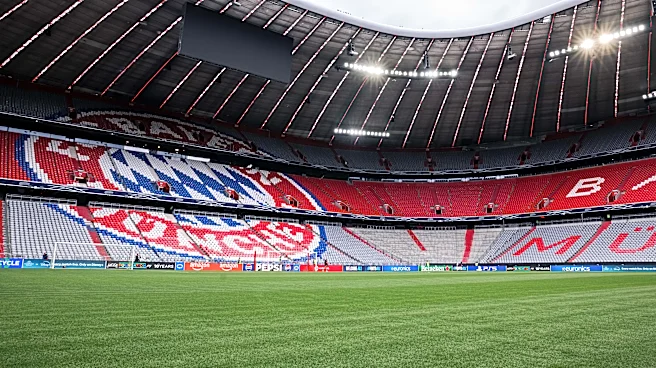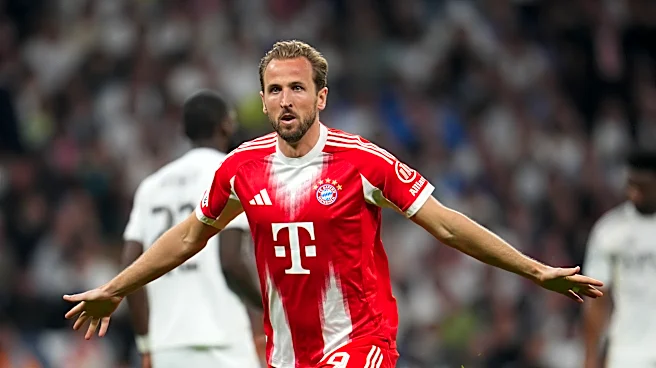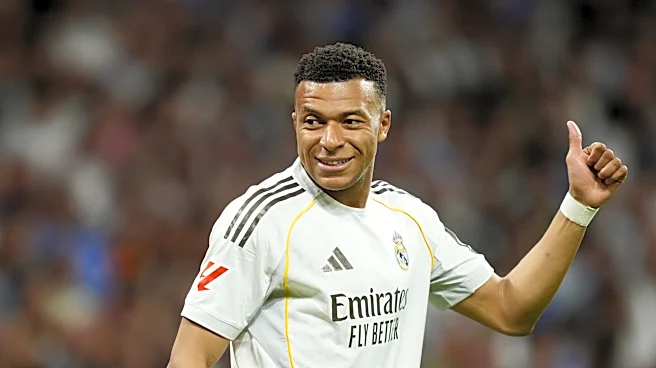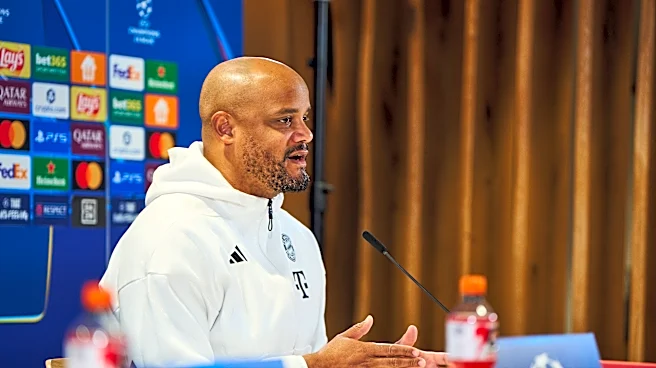

Real Madrid crashed out of the UEFA Champions League at the quarter-final stage in spectacular fashion with a thrilling 4-3 result in Munich as Bayern capitalised on playing the final minutes against 10 men to score twice and turn the tie on its head after a heroic attempt at a comeback from Real Madrid.
Three answers
1. Could Real Madrid launch an away Champions League comeback for the first time?
It seems hard to believe, but Real Madrid have never overturned a home first leg defeat to reach the next round of
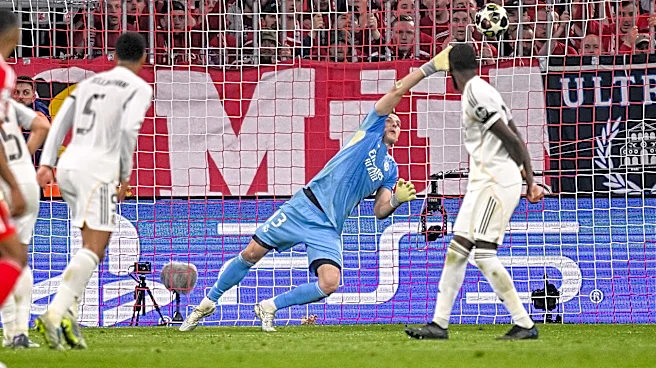
the UEFA Champions League. The last time they managed it at all in European competition was against FC Basel in the UEFA Cup, now the Europa League, in 1971. And for quite a while in Munich, it looked like that might change. Arda Güler scored after 45 seconds, capitalising on a catastrophic Neuer mispass to lob into an unguarded goal from 35 yards. When he bent a free-kick into the top-right corner on 29 minutes, Real Madrid led 2-1 on the night and the tie was level at 3-3 on aggregate. The end result means Los Blancos were also the first side to score three goals against Bayern Munich at the Allianz Arena in Champions League knockout football since Real Madrid themselves did it with a 4-0 win in the 2014 semi-final. Kylian Mbappé added a third before half-time and Madrid went into the break in a position nobody had anticipated. The history Real Madrid nearly made ended where their season did.
2. How offensive would Álvaro Arbeloa’s line-up be?
Very. With the exception of Gonzalo García, the midfield and attack consisted of his six most offensive players available to him. Aurélien Tchouameni’s suspension removed Real Madrid’s only natural defensive anchor in midfield, but Álvaro Arbeloa did not attempt to replace that profile. Instead he picked Jude Bellingham, Federico Valverde, Brahim Díaz, and Arda Güler, four players who have each operated at the tip of a diamond at various points this season. There was no holding midfielder. There was no one sitting, it was Valverde in a much more dynamic role. Ferland Mendy at left-back provided the one concession to defensive structure, his positioning and discipline offering some cover for a midfield that had no intention of defending from the front of the pitch backward. It was the only orthodox defensive appointment in the eleven. The message was clear: Madrid needed three goals in Munich and Arbeloa decided the only way to get them was to pick his most creative, most attack-minded personnel available and accept the exposure that came with it. Given the aggregate deficit and the injuries to key players, the logic was sound. A side set up to defend would have lost more comfortably. Going all-in gave them Güler’s two goals and a tie that went to the wire. The gamble nearly paid off.
3. Would this be the end of Real Madrid’s season?
Jude Bellingham called it himself. “Our season is on the line,” he said pre-match, so by his own framing, the season is over.
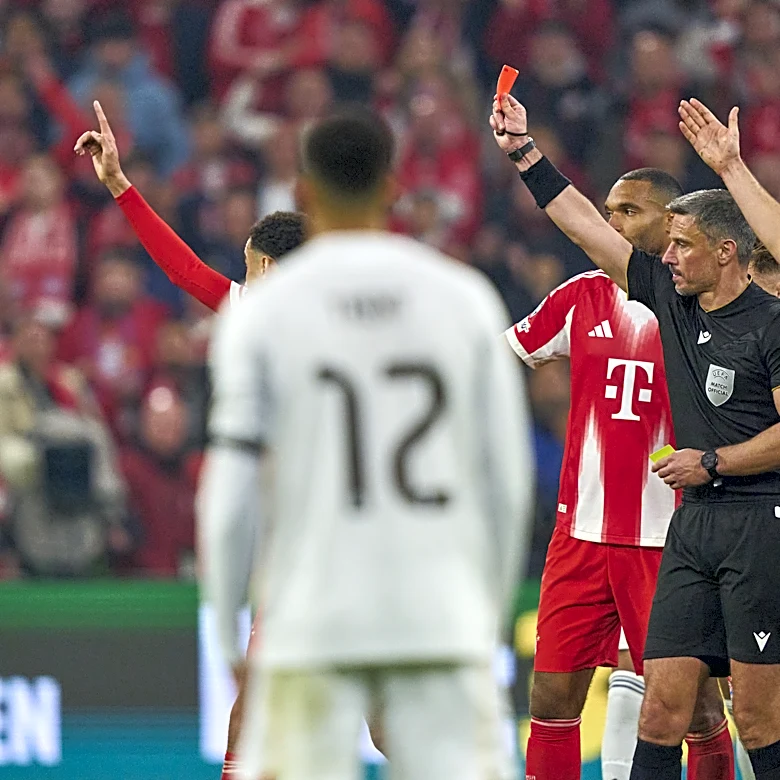
A Champions League exit to Bayern ends the one competition where Real Madrid’s squad depth or lack of it could be masked by knockout format and individual brilliance. They are out. That part of the season is finished. Which makes La Liga the only remaining measure. And the table does not offer much comfort. Barcelona have been the dominant force domestically, and Real Madrid’s campaign has left them chasing rather than leading. A second-place finish without a Champions League trophy would represent the kind of season that, at this club, prompts serious structural questions regardless of how many matches were played without Vinicius, Mbappé, or a functioning midfield. The cruelest part is how tonight unfolded. Güler gave Real Madrid a genuine belief that it could work out with two goals, a lead on the night, level on aggregate. Then it unravelled, and Camavinga’s dismissal was the moment that defined the tie. Ironically, that bears many similarities to a season which looked so promising, with a seven-point lead in the league in October, and looks set to end in failure.
Three questions
1. Is Arda Güler Real Madrid’s best midfielder this season?
The numbers from tonight make the case almost impossible to argue against. Two goals, both finished with his left foot, both from distance, the opener capitalising on a Neuer error from 35 yards with an xGOT of 0.98, the second a free-kick into the top-right corner carrying an xGOT of 0.33 that massively outperformed its 0.05 xG. Shot accuracy of 100%, 41 touches, never dispossessed. In a depleted Real Madrid midfield on a Champions League knockout night, he was the one player who looked like he belonged on that stage. The red card after the final whistle, for foul and abusive language, is a footnote. It showed passion for the club, and changes nothing about what he produced in 89 minutes. The wider season context matters here too. Güler has repeatedly delivered in big moments while Madrid’s established names have been absent or below their best. He has shown that he decides games. That is a different quality. The more interesting question is whether Real Madrid’s summer planning reflects this reality, or whether new arrivals push him back to the periphery he has spent two years escaping.
2. What does this mean for Álvaro Arbeloa’s future?
Arbeloa leaves this Champions League campaign with his reputation largely intact, but intact is not enough when the result is elimination. A 6-4 defeat across a tie that Real Madrid may have hoped to navigate demands accountability somewhere. The fairness argument runs in his favour. He was handed a depleted squad, leaned on youth, and got genuine performances from players who had no business starting a Champions League quarter-final. That counts for something inside Florentino Pérez’s operation, where loyalty and optics matter. But Real Madrid do not retain coaches on moral victories. The question remains the same, whether Arbeloa is seen as a transitional figure who exceeded expectations, or a permanent appointment who fell short of the only standard that counts. His managerial CV remains thin outside the youth setup, and tonight’s exit will sharpen scrutiny of that. If Carlo Ancelotti’s shadow still hangs over the dugout, and if Florentino moves for an established name this summer, Arbeloa may find himself eased back toward the academy structure that made his name as a coach. A dignified exit, but likely an exit nonetheless.
3. Did Eduardo Camavinga blow any chance of a future at Real Madrid?
Camavinga’s night against Bayern encapsulates exactly why his future at Real Madrid is now a live question. Brought on as a second-half substitute, he lasted just 24 minutes before collecting a yellow for a near-rugby tackle on Musiala, then a second for holding onto the ball after conceding a free kick, the kind of needless, avoidable dismissal that defines a player not thinking clearly under pressure. The stats tell a quiet story too. Eighteen touches, 78% pass accuracy, one tackle, one interception, functional but unremarkable in the minutes before chaos intervened. He won both his aerial duels but lost three of four on the ground, and committed two fouls in a game Madrid ultimately lost 4-3. One red card does not end a career at the Bernabéu. But Camavinga is 22, injury-prone, and has repeatedly struggled to nail down a starting role. Ancelotti needed him to be a calming presence in a knockout tie. He was the opposite. That, more than the card itself, is what will linger in the boardroom.