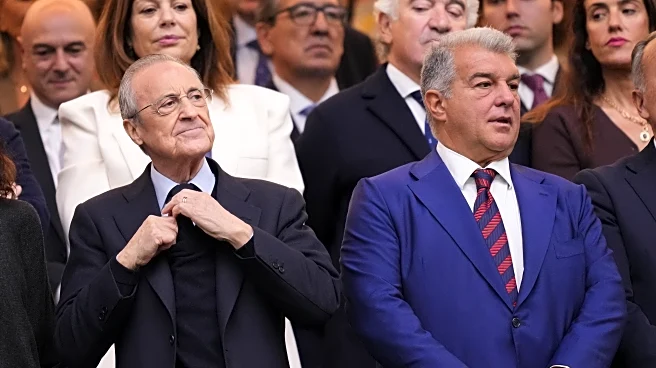

Joan Laporta has blamed FC Barcelona finally walking away from the Super League partly on souring relationships with their rival club, Real Madrid. Speaking to club media with elections looming on March
15th, the president pointed directly at the breakdown in relations with Madrid as a decisive factor.
“We left the Super League because it was a project that could not be implemented, it started to fall apart,” Laporta said. “The relationship with Real Madrid is not good, and it was a situation of permanent discomfort.”
That exit, according to Laporta, has helped normalize Barça’s institutional relationships. He described dealings with La Liga as “normal and correct” despite past disputes over financial controls. He also said ties with the Spanish federation are “fluid and permanent,” and framed the return to UEFA’s fold as final.
“We have returned to the football family,” he said. “Now we have to try to seek the sustainability of European football. I’m satisfied because I feel we have contributed to the peace of football.”
These comments come as Laporta is preparing to step aside temporarily in order to stand again for election. He pointed to debt renegotiation, new income streams. and two consecutive years of positive results as proof that the worst has passed, after he inherited what had been widely been described as a collapse under Josep Maria Bartomeu.
“The most important challenge was turning around the inheritance we received,” he said. “We renegotiated debt, obtained guarantees of viability and now we are in a moment of economic recovery.”
“The balance is good. We have worked collectively so that joy returns to the Barça fanbase,” he said. “We have a team that makes you fall in love. We have to be proud because the culé is happy and living a beautiful moment in our history, thanks to good decisions. All of this is thanks to the members, who trusted us.”
That recovery, however, has not been smooth everywhere. The redevelopment of the Spotify Camp Nou remains a source of tension. Laporta admitted his irritation over delays in licensing, especially in the Gol Nord and the supporters’ section, which he expected to be cleared weeks ago.
“I’m upset about this issue,” he said, while stressing that the city council is committed and that approvals should arrive soon. The club still expects the stadium to be ready by the end of the year, with the roof installed next year, and Laporta insisted there are no plans to return to Montjuïc during that final phase.
Laporta also highlighted the appointment of Hansi Flick, the continued bet on academy players and the work of sporting director Deco. The latter received particular praise for helping bring the wage bill back within UEFA’s limits.
“We have brought the sporting wage mass back in line with UEFA standards,” Laporta said, “and we’ve done it without losing competitiveness.”
Despite the optimistic tone, he acknowledged that not everything is resolved. Among the priorities he outlined for a potential new term are consolidating the economic recovery, finishing the Espai Barça project, ensuring long-term budget stability, and strengthening the basketball section.