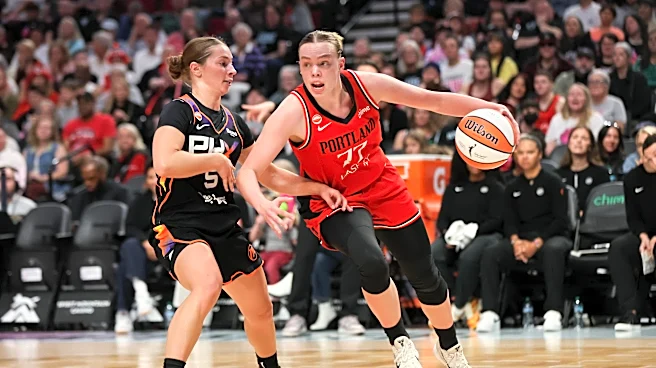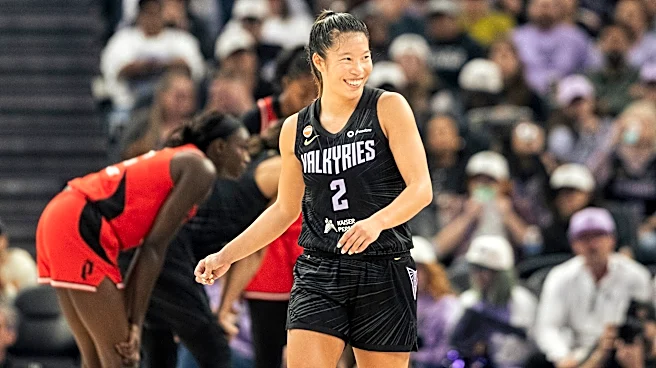





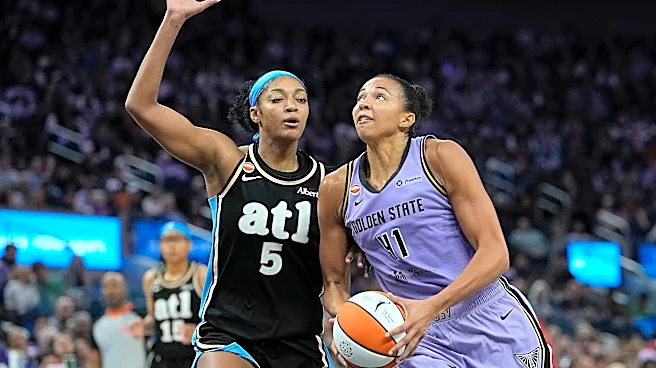
As the 2026 WNBA season winds down, neither of the expansion teams, the Portland Fire nor the Toronto Tempo, are preparing to head to the playoffs.
However, the Fire started 5-3 and were pesky all season long. They are currently in ninth place, ahead of five non-expansion teams, which is meaningful. Meanwhile, the Tempo started 7-5 and, if it weren’t for the numerous injuries they faced, likely would be a lot better than 11-30.
Both teams have found contributors outside the expansion draft, but it
was that draft that got it all started for them and gave us our first look at their team-building strategy.
Now that the season is almost over, let’s take a look at how everyone from the draft has fared in 2026. In the comments, be sure to let us know which team you think had the better draft. And also check out Cat’s take from immediately after the draft occurred.
Portland Fire
No. 1 pick — Bridget Carleton

This was a solid No. 1 pick. Carleton flashed star potential when she averaged 9.6 points per game in 2024 on 44.4 percent shooting from 3 with 91 makes with the Minnesota Lynx, finishing third in Most Improved Player voting. She was expected to ascend to star status for the Fire, and has averaged a very good 14.3 points per game. She’s done it on 36.8 percent efficiency from beyond the arc with 106 makes, good for fifth in the W. She’s also 10th in the league with 1.6 steals per game.
No. 3 pick — Carla Leite

Here, the Fire found their best player. They put their faith in a player who had played 17.2 minutes per game in her one WNBA season with the Golden State Valkyries, averaging seven points. They were rewarded with Leite’s phenomenal season in which she has produced 15.8 points per game and 6.3 assists per game. She’s shown a ton of improvement from deep, shooting 39.8 percent. If she can up her volume in that department and maintain the high percentage, watch out.
No. 5 pick — Luisa Geiselsöder
Geiselsöder averaged 6.9 points per game across 28 games (24 starts) for the Dallas Wings as a 25-year-old rookie last year. Over Portland’s first nine games this year, she averaged 22.4 minutes per contest, with six points per game on 8-for-31 (25.8 percent) from distance. She was then taken out of the starting lineup and played just 12.2 minutes per game over her next 12 outings before having her contract temporarily suspended ahead of the FIBA World Cup. It remains unclear if she will be back in Portland next year.
No. 7 pick — Emily Engstler

The No. 4 pick in the 2022 college draft, Engstler had bounced around a bit, from the Indiana Fever to the Minnesota Lynx to the Washington Mystics, never contributing in a major way. This year, she’s upped her career-best scoring average by 4.1 to 10.3 points per game. She’s shot 37.1 percent from 3 on a career-high 1.3 makes per game, and don’t forget about her stocks! She’s 14th in the W in steals per game and eighth in blocks per game with 1.5 of each.
No. 9 pick — Maya Caldwell
Caldwell never suited up for the Fire, instead traded to the Lynx for a 2028 third-round pick. She’s averaging 13.9 minutes per game and four points per game for the best team in the league.
No. 11 pick — Chloe Bibby
Bibby was also traded away before the start of the season. She’s since played in four games for the Chicago Sky and three for the Lynx, her current team.
No. 14 pick — Haley Jones
Jones was waived after five games with the Fire in which she averaged 5.2 points per game in 11.4 minutes per game. She’s now back with the Wings, though in a much smaller role than she played for them last year.
No. 16 pick — Nyadiew Puoch

Puoch has played in 41 of Portland’s 42 games, averaging 18.3 minutes per contest, good for fifth on the team if you don’t count Sug Sutton, who is no longer with the team, and Sarah Ashlee Barker, who is out for the remainder of the season and last played on July 22. Puoch is shooting just 36.5 percent from the field and 24.7 percent from downtown with four points per game, but if she can become more of an offensive threat, it will justify keeping her and her impressive wingspan on the court. A 6-foot-3 forward out of Australia, she was the No. 12 pick in the 2024 college draft, taken by the Atlanta Dream.
No. 18 pick — Sarah Ashlee Barker

Barker was the No. 9 pick in the 2025 college draft, taken by the Los Angeles Sparks. She didn’t do much as a rookie, but had a great 26-game run with the Fire this year, becoming one of their most important players. Of those with legitimate volume, she has the highest 3-point percentage on the team: 40 percent with 36 makes. With 10.7 points per game, she’s also fourth in scoring if you take out Sutton, who only played in three games for the Fire. Barker’s 57.6 percent clip on 2-pointers brings her overall field goal percentage just above 50 percent. She tore her ACL on July 22, but will hopefully be a key piece for Portland again next year.
No. 20 pick — Sug Sutton
Sutton could have been one of the Fire’s best players, seeing as she had two seasons as a key WNBA contributor under her belt: 2023 with the Phoenix Mercury and 2025 with the Washington Mystics. But the Fire didn’t envision her as part of their plans, as she was waived on May 21. She then played 22 games with the Wings before being waived by them on Wednesday.
No. 22 — no pick
No. 24 pick — Nika Mühl
Mühl has been out this season with a torn ACL. It appears the Fire are still interested in her eventually joining the action for them. She is UConn’s all-time leader in assists and assists per game. Yes, ahead of Sue Bird.
Analysis
Five of the players Portland took in the expansion draft remain key contributors, and we’re still waiting to see if Mühl becomes another. The Fire were right to think that Carleton and Leite could be players to build around, while Barker proved to be a steal at No. 18.
Toronto Tempo
No. 2 pick — Julie Allemand

I’ve talked a lot about Allemand’s 2020 Wubble season, when she shot 44-for-92 (47.8 percent) from 3. That was the real her, not the player who shot 37-for-132 (28 percent) over her next two WNBA seasons (2022 and 2025). She’s begun to prove me right by going 36-for-85 (42.4 percent) in 2026. She’s also averaging 5.6 assists per game, which is great and just 0.2 off her career-best, set in 2020. Her 6.3 points per game isn’t great on the surface for a team’s first selection in an expansion draft, but she’s taking so few shots that it’s no wonder her scoring average is low. She’s shooting 78.6 percent on 2s with just 1.4 attempts per game, placing her overall field goal percentage at 54.3 and her effective field goal percentage at 68.5.
No. 4 pick — Nyara Sabally

Sabally has a history of injury issues, and the bug bit again in 2026, with her playing in 24 of 41 games thus far. But she’s been good when she’s played, averaging 12.3 points per game (fifth on the Tempo), and shooting 39.2 percent from 3 (with 20 makes) and 57.1 percent on 2-pointers. She’s also third on the team with 5.3 boards per contest. If she can stay healthy, she can continue to prove that she was a good pick at No. 4 in the seasons to come.
No. 6 pick — Marina Mabrey

Toronto didn’t need to take Mabrey higher than No. 6 because Portland had already used up their unrestricted free agent pick on Carleton. It goes without saying that Mabrey has had a fantastic season. She’s the best player to come out of this expansion draft, making the All-Star Game and even tying the WNBA single-game scoring record with 53 points. There was concern coming into the season about her 27 percent clip from deep in 2025, but she has silenced all doubters by shooting 38.5 percent in 2026 with a whopping 105 makes (a league-leading 3.3 per game). Mabrey is now firmly established as one of the best shooters and scorers in the W; this was a home run pick.
No. 8 pick — Aaliyah Nye
Nye was a lethal shooter in college, but hasn’t proven much at the WNBA level. She was waived by the Tempo before the season and went on to spend time with the Dream before joining the Sparks.
No. 10 pick — Lexi Held
Held spent eight games with Toronto before getting waived. She ended up back in Phoenix, where she spent her 2025 rookie season. She’s been an impactful player for the Mercury both in 2025 and 2026 despite going undrafted out of DePaul.
No. 12 — no pick
No. 13 pick — María Conde

A 29-year-old rookie out of Florida State and Spain, Conde is fourth on the Tempo in minutes per game with 26.9 and fourth in games played with 33. So she’s meant more to the injury-riddled team than her 8.9 points per game indicate. And that’s actually a pretty good scoring average anyway. She’s shooting a decent 35.3 percent from 3 with 53 makes.
No. 15 pick — Maria Kliundikova
Kliundikova didn’t play in any games for the Tempo this season. Toronto traded the rights to her, along with a 2028 second-round pick, to the Connecticut Sun in exchange for Aneesah Morrow.
No. 17 pick — Adja Kane
Kane has decided to play in the NCAA for SMU in 2026-27. She’s currently 21 years old and was taken by the Liberty at No. 38 in the 2025 entry draft.
No. 19 pick — Nikolina Milić
Milić played in seven games for the Tempo, including one start. She averaged three points per game in nine minutes per game before being waived on June 4.
No. 21 pick — Kitija Laksa
Laksa was waived by Toronto before the season. She’s now with the Wings, scoring 10 points on Thursday in her first game of 2026.
No. 23 pick — Kristy Wallace
Wallace was also waived by the Tempo before the season. She was part of the rotation for the Dream in 2022 and for the Fever in 2023 and 2024.
Analysis
Only four of the Tempo’s eight players who have played 20 minutes or more per game came from the expansion draft. Toronto also built through free agency with Brittney Sykes and Isabelle Harrison, and through the college draft with Kiki Rice. They also added key rookie Laura Juškaitė. Still, four key players from the expansion draft is meaningful, and they picked up the lone All-Star for either squad.