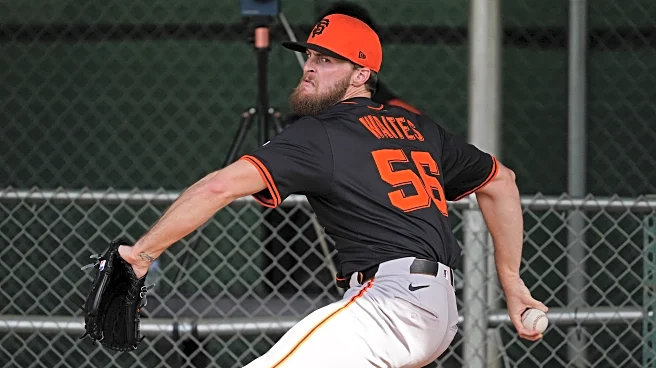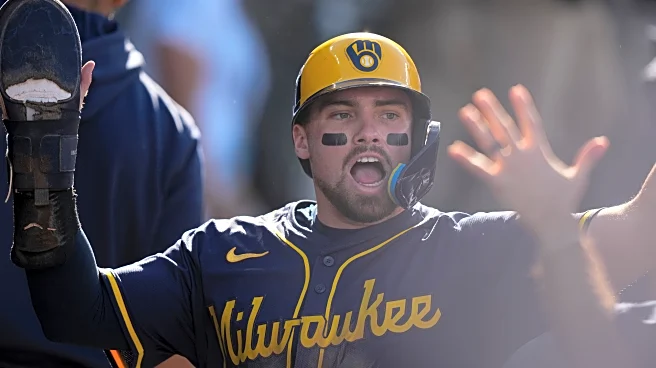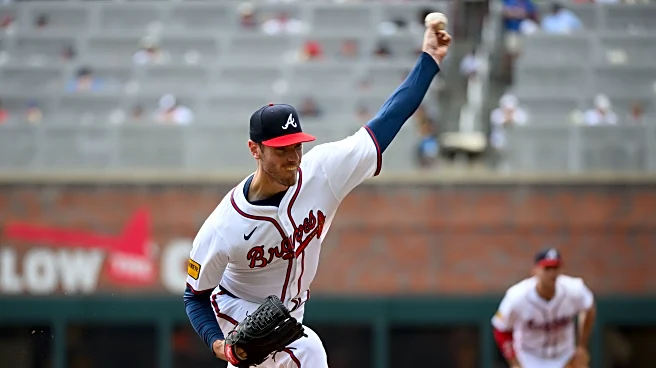


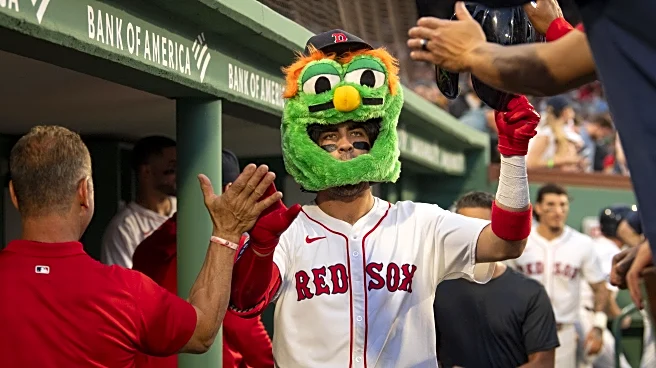
Joey Wentz might be the most interesting man on the roster going into 2026 Spring Training. Well, that’s not really true. It’s probably the new free agent acquisitions. But, with a Braves rotation returning from injury, and a potential cure for his location worries accounted for, he could put himself right in the mix as a swingman. As one of the prospects that the mid-2010s Braves fans pinned their hopes upon, it’s good to see him back and performing well for once.
How acquired
Wentz was drafted 40th
overall by the Braves in “Portion A” of the Competitive Balance part of the 2016 draft. In the Braves’ organization, he was the 2017 Pitcher of the Year of the South Atlantic League (now known as High-A East, the former Sally League). He was also a Sally League Post-Season All-Star, a Baseball America Low Class A All-Star and an Organization All-Star in 2017. He had a line of 4.20/3.97/3.64 (ERA/FIP/xFIP) over 128 2/3 innings in Double-A in 2019. The Braves eventually soured on Wentz, however, especially after his performance took a notable downturn in Double-A, and he was dealt along with TC/BP argument starter Travis Demeritte for Shane Greene at the 2019 Trade Deadline. Greene ended up not doing much for the Braves over the next two-ish seasons, but that’s spilled milk.
Wentz had a nice five starts in 2022 with the Tigers with a not-so-great xFIP, but a not so nice 2023 as a swingman. He would be DFAed not once but thrice when the Braves claimed him on waivers from the Twins — there was a stint on the Pirates in between the Tigers and Twins, too. The Braves’ claim came in on July 12, when the zombie Braves pitching staff was ravenous for innings. They acquired several pitchers to make it through this stretch of the season. Two of them really worked out well. Wentz was one of them.
What were the expectations?

Wentz started the season with the Pirates and worked as a long relief type who never got a chance to slide into the rotation. He was probably the eighth or ninth on the depth chart at starting pitcher. Above are his ZiPS projections for 2025. The league could have expected an okayish swingman that could provide some depth. But unfortunately, he was plumb out of options, so riding on the Triple-A express was not something he could provide.
Coming into 2025, Wentz had a career 133/118/114 (ERA-/FIP-/xFIP-) line in the majors, good for 0.1 fWAR in 205 2/3 innings, including 26 starts. He was essentially the spitting image of a Quad-A arm, good enough to stick on a roster but not good enough to be worth holding onto when a better option came along. He did essentially the same thing with the Pirates (97/93/112), and had a horrible time in six relief appearances with the Twins. The Braves just needed someone to eat innings, and he seemed primed to do that.
2025 Results
Once the Braves got Wentz, it was pretty much a happy reunion. All in all, he managed 1.3 fWAR in 64 innings, spanning 13 starts and a relief appearance. The 1.3 fWAR blew away any value he had accumulated to that point at any stop, or in general, as he had only tallied 0.8 fWAR in his team-stints and/or seasons where he was above replacement, in total. His aggregate line with the Braves was 116/85/97, as he jumped from replacement-level not-really-a-starter territory to league-average peripherals and, surprisingly given that he joined the 2025 Braves, a HR/FB below league average.
Combine that with his prior travails in 2025, and he finished the year overall with 1.1 fWAR in 98 innings and a 133/100/109 line.
What went right?
Broadly, the entire tenure with the Braves, where he actually displayed some of the promise that saw him be such a highly-ranked prospect a half-decade ago. It started as soon as the Braves claimed him: he entered a 3-3 game following an Aaron Bummer “start” against the Cardinals and struck out six in three innings, with just one walk. (The Braves won the game by a run late.)
At that point, with few other options, the Braves handed Wentz his first start in 22 months. He faced a pretty serious Yankees lineup. There weren’t as many strikeouts (2 over 4 innings), but zero runs. I profiled him earlier in July. Do you want to know what the big change was?

Yeah, don’t do that, kids. Try not to consistently put a 93 MPH four-seam fastball right down the pipe to Major League hitters. This is Chris McCosky in 2023 of the The Detroit News noting Wentz’s Achilles’ heel.
They also identified why his 94-mph fastball was so hittable…. The difference-maker has been his renovated four-seamer. Not so much because it’s been an overpowering pitch, but because his ability to locate it and use it at the top of the strike zone is setting up his three secondary pitches. Wentz this offseason raised the axis point on his fastball and that created four extra inches of vertical break. Which resulted not only in more ride through the strike zone, it created vertical separation between his fastball and secondary pitches. The result: He’s not throwing dead-zone fastballs like he was last season. The numbers show a very different pitcher — 30% hard-hit rate, .200/.302/.236 opponent slash line, 47% ground ball rate, 31% chase rate, 30% whiff rate.
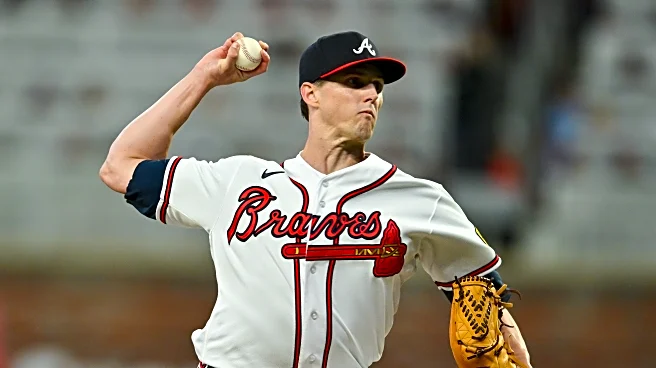
Getting that extension was key for Wentz. See that really long red bar in his Statcast profile? The 93rd percentile one is the increased extension that he managed to get this year. It’s really made all of the difference in the world. His first five appearances for Atlanta were the high water mark of the season, as he had a combined 73/63/85 line while facing the Yankees and Brewers in two of those five games. His season was a lot more of a mixed bag after that, but whatever changes he made in the early going with his new-old team paid dividends right away.
The Braves had him throw more four-seamers at the expense of his slider, and he started to mix in a changeup in September as well. A lot of the benefit of that change in pitch mix evaporated by the time August rolled around, but it got the jump on hitters early on. You can see why, too: Wentz gets great “rise” on a fastball that isn’t all that hard, and his other pitches don’t have great shape. That fastball, along with its extension, is probably enough to help him pull out pretty decent starts here and there, though he doesn’t have too much to fall back on.
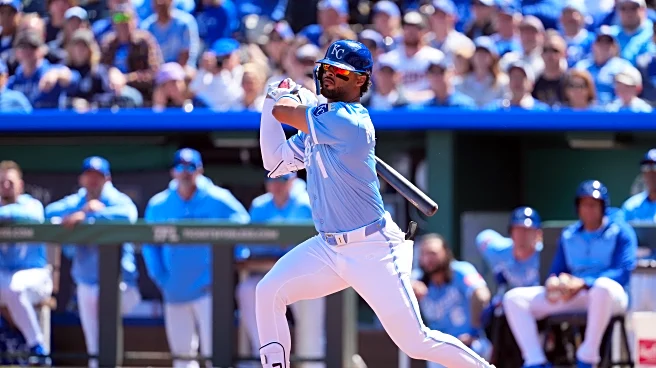
His best outing for the Braves could have been his start against the Royals on July 30. The Braves ended up losing a 1-0 game, but Wentz went 6 2/3 with a 7/3 K/BB ratio and faced just two over the minimum, with no runner getting to second base. Was there some home cooking given that Wentz is from Kansas and played high school ball in a Kansas City suburb? Who knows.
What went wrong?

Luckily for the Braves, the vast majority of the bad stuff happened before he was reacquired by the Braves in July. He largely avoided incident for the Pirates (97 ERA-/ 93 FIP-/ 112 xFIP) but was blown up a few times. The Phillies tagged him for three runs in game that had a chance to be won. Trea Turner started that bloodbath with a triple.
With the Twins, he was not able to avoid anything unfortunately. He would give up three homers over eight innings, posting an unsustainable (382 ERA-/ 239 FIP-/ 196 xFIP-). It took facing eight batters to get three outs versus the Rangers, and his Twins stint never got off the ground.
With the Braves, his final nine outings of the year were marked by ridiculously bad ball-in-play fortune more than anything else, as he posted a 141/97/103 line. He only had a few unequivocally good outings in that stretch, but he also didn’t get crushed in many others, though the defense behind him kept bleeding runs anyway. He was getting an absolute ton of chase in first five outings with the team, but it fell off to something more normal afterwards, and he settled into more of a generic, inconsistent innings-eater performance level.
His worst outing the year was the drubbing the Braves took at the hands of the Mariners on September 7. A triple by Mitch Garver (see, defense completely collapsed behind him) led to a run in the second, but then things completely fell apart in the third, with a three-run error by Nacho Alvarez Jr. with the bases loaded, and then back-to-back homers that made it a 7-0 game before he was pulled without completing the inning.
2026 outlook

These ZiPS numbers reflect his 2025 projections very closely. 0.5 WAR over 89 1/3 innings is pretty well in line for a guy who been up and down to say the least. Steamer sees him as closer to replacement level in a mostly-relief capacity, and it’s hard to argue against it given his track record and arsenal — you have to really lean on him completely moving from replacement level to average with the Braves, while not really changing much in his pitch shape and command profile, to figure he’s going to get back to being an okay innings-eater in 2026.
For myself and the Braves organization, I think he’s in the mix for the fifth starter out of Spring Training. He won’t get it if the projected starting rotation comes back healthy. But if it’s himself competing for a spot in Spring, he’s going to win it should July and August Wentz show up. Outside of that, since he’s out of options, he may get a long relief/swingman spot in the early going anyway. If he’s jettisoned, some team will be ready to gobble him up. Still, he was so different with the Braves than before that he’s worth watching closely to see if he can somehow resurrect his career in Atlanta.