


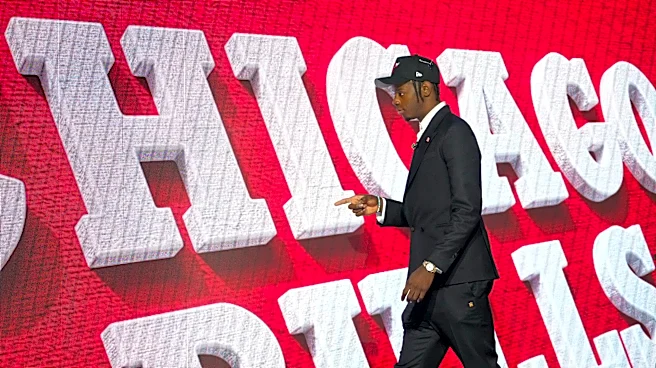


The Cleveland Cavaliers did the smart thing. Instead of taking the 29th pick, they moved back five slots to the 34th pick and grabbed a future second-rounder from the Sacramento Kings in the process.
This was a savvy trade because of the financial flexibility this deal provides.
Every first-round pick comes with a guaranteed contract and salary slot. The 29th pick is slated to earn $3 million this upcoming season, with $6.1 million guaranteed over the next two seasons. Those same guarantees don’t come with second-round
selections.
Second-round picks can sign whatever contracts the team and player agree to. They are eligible for the minimum salary ($1.35 million) and can also be signed to two-way contracts that don’t count against the cap. As a result, the Cavs could save $1.65 million if their second-round selection signs a minimum contract.
This matters because the Cavs need to cut costs at every corner. They were the only team in the league above the second apron last season and still are above it. Being above that threshold comes with numerous restrictions, including an inability to do sign-and-trades, no access to the midlevel exception, and prohibitions on aggregating contracts in trades. These penalties hinder the Cavs’ ability to upgrade their roster.
Right now, Cleveland is just barely on the wrong side of the second apron, and they will have numerous big decisions to make this summer.
Dean Wade and Keon Ellis will become unrestricted free agents. Both would be due significant pay raises if they are retained. The Cavs are also expected to re-sign James Harden once he declines his player option for next season. Re-signing these players — particularly Wade — could take them further into the second apron. And if they lose any of them in free agency, they would need to fill those spots with new incoming players.
Every dollar matters for the Cavs. Saving potentially $1.65 million may not seem like much from the outside, but it is a huge deal for the front office. This team needs to get under the second apron, and preferably far below it, this summer if they want to retool their roster. This trade helps them do so, even though additional moves are still needed.
Support us and Let ‘Em Know with Homage!

Anything bought from the links helps support Fear the Sword. You can buy the Let ‘Em Know shirt HERE. You can also shop all of Homage’s Cavs gear HERE.
More importantly, there isn’t a significant drop-off in talent this late in the draft. The Cavs may even be able to select the same player they would have if they kept the 29th pick instead.
On top of that, they still get an additional second-round pick as well. For a team that is starving for future assets, picking up another second is helpful.
At the same time, it’s fair to acknowledge that little maneuvers like this are needed because of the previous mistakes of the front office. Going into the second apron isn’t a death sentence, but only if the team you have assembled is complete. The Cavs weren’t and still aren’t.
In a perfect world, the Cavs wouldn’t have to worry about nickel-and-diming every roster decision. They would just take the best player available. And if a move was to be made, it was one done for strictly on-court reasons, not to ensure the spreadsheets were perfectly balanced.
On its own, this was a good trade, but it also serves as a reminder of previous shortcomings. That’s going to knock it down some in my book.
Grade: B