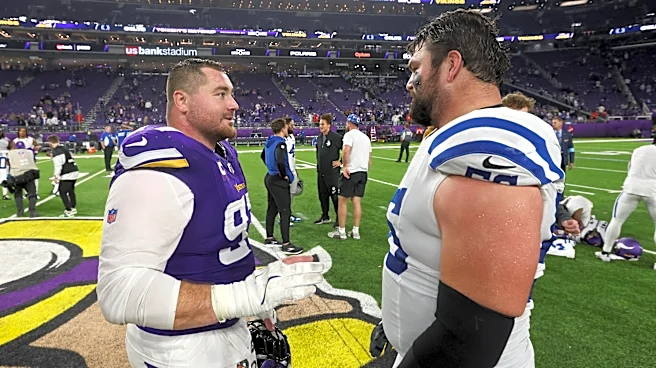



The Indianapolis Colts are approaching a crossroads, and with the NFL trade deadline quickly approaching, the organization has some difficult decisions to make. Chris Ballard’s dismissal signaled that ownership is no longer satisfied with the direction of the franchise, and Sunday’s 16-10 loss to the Minnesota Vikings only reinforced how far this team remains from competing with the NFL’s best. At 2-5, the Colts have lost three consecutive games, and their playoff hopes are looking increasingly bleak.
Over the past week, I examined the hypothetical trade value of three of Indianapolis’ biggest stars: Jonathan Taylor, DeForest Buckner and Quenton Nelson. Those articles focused on what each player could realistically command on the trade market, without necessarily arguing that the Colts should move any of them. Given the team’s deteriorating situation, however, it is worth taking that discussion one step further.
I believe Indianapolis should approach the deadline as a seller, although there is an important distinction between selling valuable assets and conducting a complete fire sale. The Colts still have talented players worth building around, and trading every established veteran for draft capital would risk creating even more problems for whoever takes over as general manager. The objective should be to identify players whose value to a contender is greater than their value to Indianapolis over the next couple of seasons, while retaining those who could play important roles in the next competitive window.
That brings us to five players worth discussing, beginning with three veterans whose contracts expire after this season.
DeForest Buckner — Trade
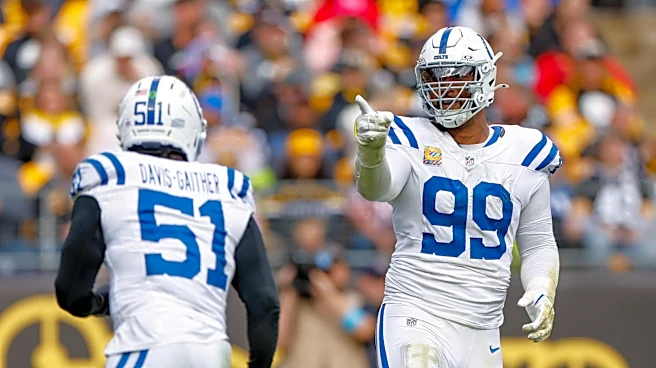
Of the five players on this list, Buckner is the one I would be most comfortable moving before the deadline.
This has very little to do with his performance. Buckner is still one of the best defensive players on the Colts, remains a productive interior pass rusher and has shown few signs of a significant decline at 32 years old. However, his contract expires after this season, and with Indianapolis potentially entering another transitional period, there is a legitimate question about whether keeping him for another few months accomplishes anything meaningful.
Buckner has also appeared increasingly frustrated with the state of the franchise in his recent interviews, and it is difficult to blame him. He has spent the past six-plus seasons in Indianapolis, endured multiple quarterback changes and coaching uncertainties, and has yet to experience the sustained success the organization envisioned when it acquired him from San Francisco. At this stage of his career, an opportunity to join a legitimate contender might be mutually beneficial.
There is also an interesting development along the Colts’ defensive line that makes moving Buckner considerably easier to justify.
Adetomiwa Adebawore is beginning to emerge as a legitimate interior pass-rushing threat. The former fourth-round pick has shown considerable improvement this season, including an impressive two-sack performance against Minnesota on Sunday. He has the athleticism and explosiveness to create problems from the interior and could potentially develop into Buckner’s long-term replacement.
That does not mean Adebawore is already as good as Buckner, but giving him a larger role over the remainder of the season would provide Indianapolis with a much clearer understanding of what it has in the young defensive lineman. If the Colts are serious about transitioning toward a younger roster, creating opportunities for players like Adebawore should be part of the process.
In my previous article, I projected Buckner’s trade value at a 2027 fourth-round pick. Given his age and expiring contract, that remains a reasonable expectation, and I believe Indianapolis should accept such an offer without much hesitation.
The Colts could potentially receive compensatory draft capital if Buckner leaves in free agency, but that is far from guaranteed. He could sign a shorter, team-friendly contract with a contender, Indianapolis could offset his departure through its own free-agent signings, or he could even decide to retire. Any compensatory selection would also arrive in 2028.
A guaranteed fourth-round pick in 2027, combined with an opportunity to evaluate Adebawore in a larger role, makes too much sense to ignore.
Grover Stewart — Keep
Stewart presents a much more complicated situation, even though his age and contract are similar to Buckner’s.
At 33 years old, Stewart is playing out the final season of his three-year, $39 million contract and is unlikely to attract significant interest beyond teams looking for an established run-stuffing defensive tackle. His value comes primarily from his ability to occupy blockers, control the line of scrimmage and create opportunities for the linebackers playing behind him.
That role is important, but it is also relatively specialized. Teams are generally less willing to surrender meaningful draft capital for a veteran defensive tackle whose primary responsibility is stopping the run rather than generating pressure on opposing quarterbacks.
I would estimate Stewart’s trade value at approximately a fifth-round pick, with a fourth-round selection representing a particularly strong return.
The problem is that losing Stewart would create a much bigger hole in the Colts’ defense than that compensation suggests.
Jerry Tillery is currently the primary alternative at nose tackle, and he represents a substantial downgrade from Stewart, particularly against the run. Indianapolis also has a linebacker group that has struggled with consistency, making Stewart’s ability to occupy interior blockers even more important. Removing him would place additional pressure on a defensive front that has already experienced plenty of difficulties this season.
There is also something to be said for retaining a veteran who continues to contribute in several areas. Stewart’s blocked field goal against Minnesota on Sunday was another reminder of the impact he can provide beyond traditional defensive statistics.
Unlike Buckner, whose departure could open the door for an emerging player at the same position, trading Stewart would leave Indianapolis without an obvious replacement. The Colts would almost certainly have to address nose tackle during the offseason, potentially using some of the draft capital acquired in the trade just to find someone capable of filling the role.
If another team offered a surprisingly strong package, I would certainly listen. However, moving Stewart for a fifth-round pick accomplishes relatively little, especially when Indianapolis could explore bringing him back on a more affordable contract next season.
For now, I would keep him.
Quenton Nelson — Keep, unless the offer is too good
Nelson might be the most difficult decision of the entire group.
At 30 years old, he remains one of the NFL’s best guards and has arguably been the Colts’ most consistently dominant player since arriving in Indianapolis in 2018. His contract expires after this season, but unlike some of the other veterans on this list, there is little indication that Nelson is particularly eager to leave the organization.
The question is whether Indianapolis should be willing to move one of its most valuable offensive players if another team offers a third-round pick.
In my previous article, I projected Nelson’s trade value at exactly that: a 2027 third-round selection. That valuation was based largely on the Joe Thuney trade, which saw Kansas City receive only a fourth-round pick for an elite veteran guard in 2025. Nelson is younger and could reasonably continue playing at a high level for another three or four seasons, but his expiring contract and positional value limit what teams are likely to offer.
A third-round pick would be tempting for a franchise that needs to replenish its draft capital, although I would have a difficult time accepting it.
Nelson is far more important to Indianapolis’ offense than any individual statistics suggest. He provides stability to an offensive line that has experienced considerable turnover, remains one of the league’s best run blockers and plays a significant role in Jonathan Taylor’s success. Losing him would not simply create another position to fill. It could weaken the entire offensive identity of the team.
This is also where the decisions involving Nelson and Taylor become connected.
If Indianapolis trades Nelson, it would be difficult to justify retaining Taylor at his current salary without seriously reconsidering the direction of the offense. Taylor is at his best when he has a strong offensive line capable of creating running lanes, and removing one of the best guards in football would make his job considerably more difficult.
Trading both players would effectively signal a much more aggressive offensive rebuild, something I am not convinced the Colts should pursue unless the compensation is substantial.
A second-round pick for Nelson would change the discussion considerably. At that point, Indianapolis would be receiving a premium selection for a 30-year-old guard approaching free agency, and I would be inclined to accept the offer. A first-round pick would make the decision even easier.
However, at the third-round valuation I previously established, I would lean toward keeping Nelson and exploring an extension. The Colts need talented veterans capable of supporting their next quarterback, whoever that may be, and Nelson is exactly the type of player who could help make that transition easier.
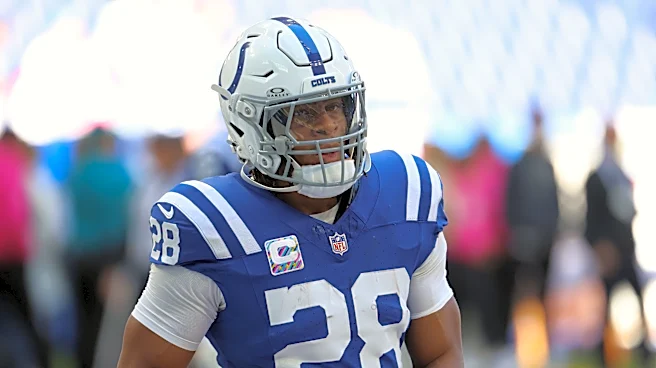
Jonathan Taylor — Strongly consider trading
Taylor is where the discussion becomes particularly interesting.
Unlike the three players above, Taylor is under contract through the 2028 season, giving an acquiring team more than two additional years of control. He also remains one of the NFL’s premier running backs, and his ability to transform an offense could attract significant interest from contenders looking for a difference-maker before the playoffs.
In my original trade-value article, I argued that Indianapolis should be able to command a 2027 second-round pick and a 2028 third-round selection for Taylor. That remains my preferred return, although the Colts’ worsening situation makes me much more open to accepting a single second-round pick than I was previously.
There are legitimate arguments for keeping him.
Daniel Jones has struggled considerably this season, and with the Colts probably looking to move in a different direction at quarterback next year, retaining an established offensive weapon would be extremely valuable. Taylor has been the centerpiece of Indianapolis’ running game for years, and removing him would place even more pressure on an offense that could already be undergoing significant changes.
A young quarterback would benefit from having someone like Taylor in the backfield, particularly when it comes to keeping defenses honest and preventing the entire offensive burden from falling on his shoulders.
However, Taylor will turn 28 next season and is approaching the stage of his career when running backs with significant workloads historically begin to decline. As discussed in a previous article of mine, he is already nearing the 3,300 combined college and NFL touches that I use as a general benchmark for the running back decline curve.
If Indianapolis does not expect to seriously contend until 2028 or later, it becomes difficult to justify retaining an expensive running back whose most productive remaining seasons could be spent on a rebuilding team.
The Colts also have an interesting young alternative in Seth McGowan.
The rookie has flashed some encouraging ability in limited opportunities, including 46 rushing yards against Minnesota. He is obviously nowhere near Taylor’s level and has not shown enough to be considered a guaranteed replacement, but there is enough potential to justify increasing his workload if the Colts decide to move their star running back.
Indianapolis would likely have to add another back during the offseason, although finding productive running backs in the middle rounds of the draft is considerably more realistic than replacing an elite offensive lineman like Nelson.
That is why I view Taylor differently from Nelson. Both are excellent players, but Taylor’s position, workload and expensive contract make him a much more logical candidate to move if the Colts are preparing for a longer rebuild.
A first-round pick would be an immediate yes, while a second-round selection would receive very serious consideration. I would still push for an additional future pick, especially considering Taylor’s contractual control, but I am no longer convinced Indianapolis should turn down a second-rounder if that is the best offer available.
I would put the chances of Taylor being traded around 50/50, depending on how aggressively the Colts approach the deadline and whether a genuine contender is willing to meet their asking price.
Charvarius Ward — Keep
Ward is another established veteran whose name could come up in trade discussions, although I have a difficult time imagining Indianapolis receiving an offer compelling enough to move him.
The 30-year-old cornerback remains a capable starter when healthy, but his injury history and expensive contract significantly complicate his trade value. Ward is under contract through 2027, with a cap hit approaching $25 million next season and approximately $18 million in scheduled cash compensation.
For a team considering acquiring him, that represents a substantial financial commitment to a veteran cornerback who has dealt with injuries over the past couple of seasons.
It is difficult to imagine a contender surrendering a second- or third-round pick under those circumstances, and even a fourth-round selection might be optimistic without a particularly strong market.
There is also the current state of Indianapolis’ secondary to consider.
Sauce Gardner missed Sunday’s game against Minnesota with a calf injury, while Justin Walley and Cam Taylor-Britt both suffered injuries during the contest. The Colts have already been forced to make considerable adjustments at cornerback, and moving Ward would only further weaken a position group that has struggled to maintain continuity.
Even if Indianapolis decides to focus on the future, there is little benefit in stripping the secondary of another experienced starter without receiving meaningful compensation. Gardner remains an important part of the organization’s long-term plans, and having a reliable veteran alongside him could help stabilize the defense as younger players continue developing.
Ward’s market may be stronger at a later date if he can remain healthy and produce another quality season, but there is little reason to force a trade right now.
Unless another organization unexpectedly offers a Day 2 draft pick, I would keep him.
The Colts need to sell, but they still need something to build around
The temptation following another disappointing start is to tear everything down and accumulate as many draft picks as possible. Given the state of the franchise and the dismissal of Ballard, it is understandable why some fans would support that approach.
However, the Colts cannot afford to create five new roster holes simply for the sake of calling themselves sellers.
Indianapolis already surrendered its 2027 first-round pick in the Sauce Gardner trade, making the acquisition of additional draft capital particularly important. However, those selections need to represent meaningful progress toward building a competitive roster, rather than simply replacing players the organization could have retained.
Buckner is the clearest trade candidate because he is approaching free agency, could benefit from joining a contender and has a potential replacement developing behind him. Taylor deserves serious consideration because of his age, workload and the possibility that his remaining prime years will not align with Indianapolis’ next competitive window.
Stewart, Nelson and Ward are different cases. Their potential trade returns are unlikely to justify the immediate holes their departures would create, particularly when the Colts still need established players to support the younger talent on the roster.
My preferred approach would be to trade Buckner for a fourth-round pick, aggressively explore the market for Taylor and retain the other three unless a team makes an unusually strong offer.
That would allow Indianapolis to begin accumulating assets without completely dismantling the roster, while giving the next general manager greater flexibility to decide which veterans fit the organization’s longer-term plans.
The Colts should absolutely be open for business ahead of the deadline. They just need to make sure they are selling for the right reasons, rather than trading away good football players simply because the season has gone wrong.