




If you told someone you were writing a script and had the White Sox at 6-10 a tenth of the way into the season, they’d reply, “Sounds about right. Extrapolates to a normal season for them.” If you then said that half the victories were against the defending AL champions, that same person would say, “That stretches the suspension of disbelief. Better rewrite that part.”
Incredulity would stretch further if you also wrote that the major failure was not from the expected terrible starting rotation, which
has instead been very good except for Shane Smith, whose fall has been as rapid as his 2025 Rule 5 rise — back when, it’s worth noting, Ethan Katz was the pitching coach — but rather from a pathetic offense, which was supposed to be much improved.
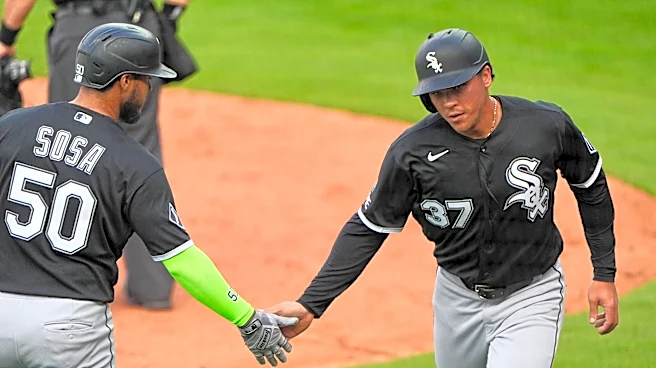
With Lenyn Sosa off to botch up the Blue Jays’ defense (has there ever been a major league player with less in the way of baseball instincts?) in exchange for an 18-year-old 17th-round draft pick and a PTBNL or Jerry Reinsdorf’s favorite — cash — even last year’s home run leader has departed, so the almighty quest for power, power, POWER!!! becomes even more difficult. Sosa, incidentally, was the last remaining member of a White Sox team that didn’t have a losing record, except for Reese McGuire, who left and came back, so that doesn’t count.
How bad is the lineup? Let us count the ways.
So far in 2026, the Sox are dead last in the majors in scoring runs, at 3.06 per game, even with all the gifts from the Blue Jays and Royals. Sure, small sample size and bats generally warm up with the weather, but that’s true for the other 29 teams as well.
How awful is 3.06 runs per game? Last year, they scored 3.99, which was 27th. Worse yet, even the record-setting 2024 horror team scored more — 3.13 runs per game.
This year’s team is also 30th in average at .193, an astounding 29 points below the 121-loss team, and last in OPS, 34 points below 2024, in both cases by a wide margin. They’ve improved from that team and matched 2025 to tie for 23rd in home runs so far, and beat both years in rank in stealing bases, where they’re 10th with 12.
And apparently Braden Montgomery won’t be riding to the rescue soon, since he’s hitting .212 in Birmingham. San Antonacci, on the other hand, is clobbering the ball in Charlotte.
And, oh, yeah — they’re back to striking out like crazy, second to last. Or second best, if you think striking out is a good thing.
WHO’S TO BLAME FOR THIS MESS?
Well, Jerry Reinsdorf, of course, and to a lesser extent, Chris Getz. But among players, there’s plenty of awfulness to share. And that’s even before we get into a defense that is dead last in both defensive runs saved and RTOT, which is Baseball-Reference’s range factor, and by a wide margin in both cases.
B-R has an algorithm that measures Wins Above Average, a more persnickety version of WAR, by team and position. As you might imagine, the numbers aren’t pretty for the White Sox, but let’s look anyway.
STARTING PITCHING
As you’d expected, a very bright spot, and one that should (we hope) shine even more brightly when Noah Schultz comes in playing the deus ex machina role. The starters come in eighth out of the 30 teams despite Smith’s struggles, a big jump up from last season’s 18th, but — amazingly — below 2024’s fifth. See, I told you that was amazing (but remember, Garrett Crochet was on that team)!
RELIEF PITCHING
The Sox fall here to a dismal 27th, far below last year’s 14th, but — and this is disheartening — in line with 2024’s 28th.
ON TO THE POSITION PLAYERS (PLEASE AVERT THE EYES OF SMALL CHILDREN)
In each case, let’s go to the placement by year, going backward — 2026, 2025, 2024.
Catcher — 28/8/30. Obviously, the absence of Kyle Teel so far has been a major negative, but the collapse of Edgar Quero to a pathetic .162/.244/.162 line (a 21 OPS+) after a solid 2025 is horrid, and McGuire and his .125 average haven’t helped.
First base — 22/29/26. This was supposed to be a really bright spot with the acquisition of Munetaka Murakami. Still, after his red-hot four-homer start that made it look like a brilliant move for the Sox, Murakami has basically hit zilch, now checking in at .157/.323/.392, making the other 29 teams look smarter. Chances are, he’s neither as good as his start, nor as bad as he is now, and he wouldn’t have set records in Japan if he weren’t capable of making adjustments. A .154 BABIP indicates some bad luck, but Murakami’s 34% K rate (even young Kyle Schwarber wasn’t that bad) and 50% grounder rate aren’t good signs.
Second base — 29/25/29. Yep, near the bottom at second, despite Chase Meidroth usually being fun to watch. The problem is, despite occasional cool plays, he scores negatively in both DRS and RTOT, and his average is now down to .196, not workable for a singles hitter, leaving him with a 72 OPS+ despite a good walk rate.
Third base — five-way tie for 5/25/29. That’s a hard jump up to explain since Miguel Vargas is only hitting .180 and is just a wash defensively. Maybe it’s a collapse by other third basemen around the majors.
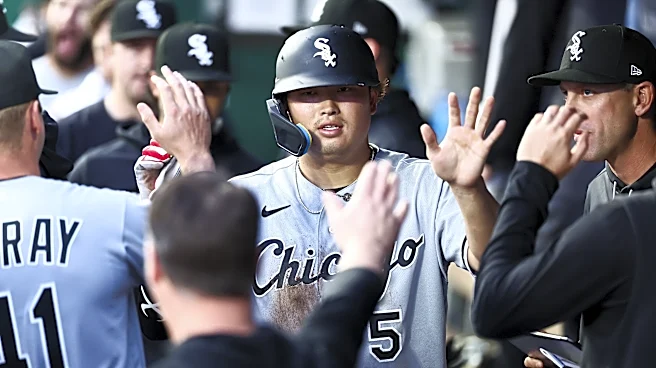
Shortstop — 16/20/29. Colson Montgomery only had part of a season last year, so he’s beating himself here, despite just hitting .200/.302/.418 for a 108 OPS+ thanks to three homers. His 30% K rate doesn’t help, though, and his hard-hit rate is well below league average.
Left field — 29/28/29. Correlation doesn’t necessarily indicate causation (except when it really does), but the White Sox have lost 100 or more games every season Andrew Benintendi has been on the team. Maybe with Sosa gone, he can go full-time DH and just be bad at offense. Tanner Murray looked good out there Sunday.
Center field — 29/21/26. Turns out, Luis Robert Jr. at his worst was better than whoever the Sox have sent out in his stead, which has mostly been Luisangel Acuña. Having escaped the Sox, Robert is hitting .319 for the Mets, while Acuña is hitting (and slugging) .196.
Right field — 22/22/30. This has been a throw-somebody-out-there-because-we-have-to situation since Austin Hays was hurt, and he only had a 69 OPS+ anyway. Must be a lot of bad right fielders around the big leagues to make it up to 22, though Dustin Harris’ homer-saving catch to save the game Sunday was quite nifty.
WHICH MEANS?
All those top-100 MLB prospect shortstops in the system need to move on up the ladder quickly and spread across the field. Otherwise, … well, let’s not think about it.