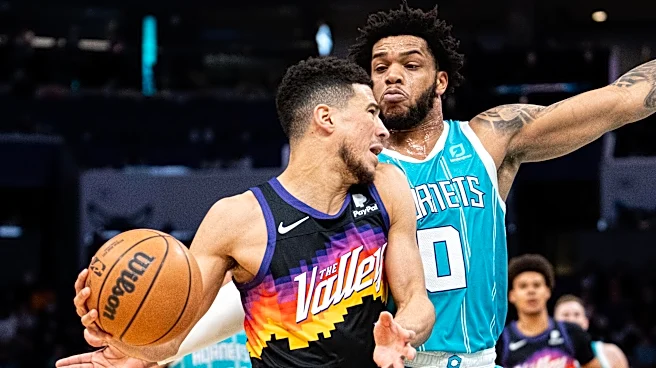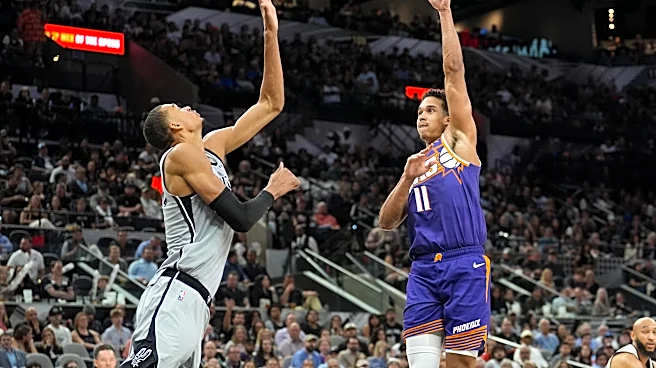




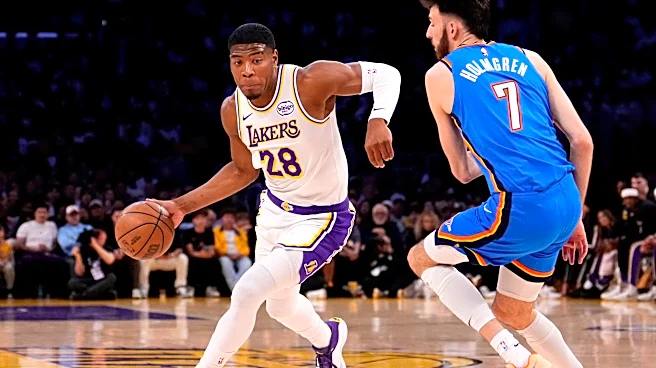


You are what you eat, or in this case, you are who you trade with and after a steady diet of trade activity with the Charlotte Hornets the Phoenix Suns, as currently constructed, are projected to run out a teal tinted lineup to start the upcoming season.

If you pull up Charlotte’s season averages from last year and sort by field goal attempts, it’d be easy to go down the list, crossing out Hornets and filling in Suns, and see exactly where everybody fits. Lamelo Booker 17.3. Miller Green 16.1. Bridges
Bridges 13.5. Kon Brooks 13.4. White Gillespie 11.0. Sexton Kenard 9.9.
These seem like reasonable shot totals if the Suns want to get all of their shot makers involved but as you scroll past KJ Simpson Goodie 6.4, Tre Mann Dunn 5.7, Grant Williams Fleming 5.1 and you finally get to a center, you have to stop and think, Diabate Mark Williams 5.0? Does that work? How much impact will Mark Williams have on the offensive end, shooting five shots a game? If he’s not engaged on offense, how engaged will he be on defense? Or on the glass?
The Suns’ offense could certainly feature Mark Williams at center more than the Hornets featured Diabate in their offense, but every shot the center takes is one less shot for the four scorers sharing the floor with him. Maybe they’ll try to make Mark into a Clint Capella, a role-change that sent Deandre Ayton spiraling down to the Wizards. Mark might be okay with a role consisting of rim running and crashing the glass, and he remains a 7-foot presence around the hoop; there’s always value in that. But you have to wonder, could there be a better way? Does Diabate Mark Williams Oso 5.0 make more sense in the Suns’ projected starting lineup?

On any other team, this thought wouldn’t have come to my mind. On last year’s Suns team, this thought wouldn’t have come to my mind. The biggest knock I had on Mark Williams’ game was that he didn’t start enough of them, but the world keeps turning, and this is a different Suns team.
This season, the Suns will have three capable but volatile scorers floating in Book’s orbit. They have the potential to be a really good offense. The Charlotte Hornets put out a really good one last year, but how can Jordan Ott take them from four talented scorers connected because they are shooting at the same basket to four talented players playing above the level that talent alone can take them, because they are connected to their teammates and empowered by the system? It’s a lineup that needs a connector; a player to keep the ball moving, to free up space and shots for his teammates, a player who can impact the offense without ever having to touch the ball. For the Charlotte Hornets of Phoenix, Oso is uniquely suited to start at center.
What Oso brings to the table that sets him apart from Mark Williams or other traditional big men is his ability to screen for assists, put the ball on the floor, and create opportunities for his teammates. As a secondary playmaker acting as the hub of the wheel, Oso can help an offense that, on paper, projects to trend ISO heavy, generate more open looks. Three-point shooting is going to be a big deal for this starting five, and the less contested step-back threes, or walk-up threes, the Suns have to take the better. Last season Oso was featured in 9/10 of the top five-man combinations for 3Ps.
There won’t be many people that need to be convinced that Oso is a better playmaker than Mark Williams, but when you look at 5-man combinations from last year’s team, 9 out of 10 of the combinations with the highest plus/minus for assists had Oso starting at center.

There’s also the playoffs, where Oso was thrust into a starting role against the best defense in the league, and he responded with 4.0 assists per game, which was second on the team behind Booker at 4.8.
Last season, Oso led the entire league in screen assists per game, finishing in front of prominent names such as Gobert, Embiid, Jokic, and Ayton. These are buckets that he’s helping to generate without taking shots.
He’s developed a strong chemistry with our leading scoring guards: Booker, Green, and Gillespie. In two-man combinations with Oso, Booker was a +5.7 with +10.4 3PAs, Green was a +3.1 with +12 3PAs, and Collin was a +6.4 with a plus +13.7 3PAs. Playing next to Oso makes scorers better. He opens up opportunities on the perimeter, and we have a fat chunk of money and minutes invested in perimeter scorers.
In a vacuum, Mark Williams is a better starting center than Oso. I’m not advocating that Mark Williams significantly reduce his 23 minutes a game unless it’s medically advantageous.
All I’m saying is that when Booker, Green, Brooks, and Bridges share the floor, Oso needs to be on the court, too. Since they are projected to be the starting four, Oso should join them. When one or two of those four players sit, bring in Mark to be that third option on offense and anchor the defense. Coming off the bench could preserve Mark’s health and give him some minutes against backup bigs, which could give his game a boost. In matchups where the size and strength of the opposing center are just too much for Oso, and the Suns need a legit seven-footer, Mark could spot-start, but if Ott and his staff want to get the game-in-game-out chemistry of this starting five bubbling, Oso is the catalyst they’ll need to spark the reaction.
The biggest resistance to the idea of starting Oso over Mark will be Oso’s lack of size.

“We’ll get killed on the boards!” is what I’ll hear as they run me out of town on a rail. To an extent, they’ll be correct.
Unsurprisingly, Mark Williams was the best rebounder on the team last year. In the regular season, Mark Williams pulled in 8.0 total rebounds per game, with 3.1 of them being offensive rebounds. Oso was the second leading rebounder on the team with 5.1 total rebounds per game, with 1.7 of them being offensive rebounds. Yet in the playoffs, as the starting center, Oso’s numbers jumped up to 7.0 total rebounds a game with 3.0 offensive rebounds, significantly closing the gap between him and Williams.
If the Suns want to get out and run in transition, locking up defensive rebounds will need to be a focus. Mark does this significantly better than Oso. Even though no one would mistake Miles Bridges for Charles Barkley (except maybe Mat Ishbia), the Suns did get bigger at forward, which could help support Oso on the boards. Still, defensive rebounding is a question mark on Oso’s ceiling in the NBA and is a deficiency that, if it doesn’t improve, could sink the entire Start Oso movement.

Another common concern about Oso starting is rim protection. While it’s true Oso averages a forgettable 0.7 blocks a game during the regular season, Mark Williams was only marginally better, collecting 0.9 blocks a game over his 60 regular-season games. Unless Khaman Malauch takes a long stride this offseason and steps in to provide a true rim protection advantage for the Suns’ defense, it may be an area in which the Suns continue to produce mediocre results, regardless of whether Mark or Oso starts at center. Despite their lackluster block numbers, both Oso and Mark were at the top of the Suns’ defensive ratings last season.
The Suns will need to take a step forward on offense if they want to get out of the first round in the West. Some fans might still be fine with making the top six, but when the Suns decided to spend their trade assets, my expectations for this team increased. Booker’s contract window is closing, and every player they commit to for the next three years is a player they are saying will be a part of the championship contender they are building around Booker.
Ott will surely be looking for ways to balance shot attempts and make adjustments to ensure the Suns are getting shots from the players they choose to take them, not from the players the defense forces to take them. Oso Ighodaro can be the glue guy, bringing the offense together to get the most out of the pieces the front office has assembled.
The Suns would be better with Oso starting at center.
Vote for Pedro Oso.