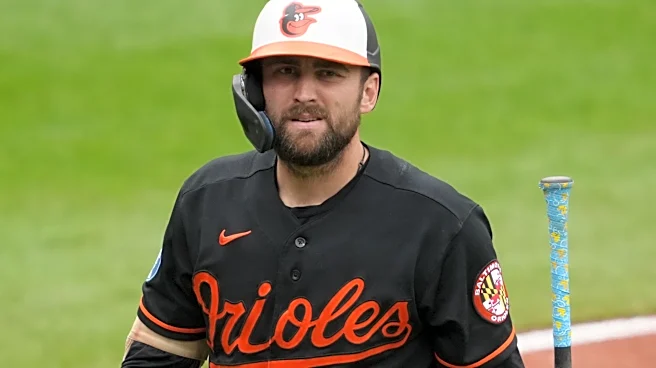

No player encapsulated the volatile nature of the 2026 Orioles better than outfielder Colton Cowser. In some ways, 2026 was a year of big growth for Cowser. He cemented himself as the everyday center fielder with a massive defensive leap that few saw coming. However, his offensive performance epitomized the biggest problems in this Orioles team, as his considerable tools again failed to coalesce into meaningful production.
Cowser came into this past season shrouded in doubt. After slashing a meager
.196/.269/.385 with a 35.6% strikeout percentage in 2025, the 26-year-old Texan needed 2026 to go differently to keep his starting spot in the Orioles’ outfield. Cowser also had the unenviable task of replacing fan favorite and defensive whiz Cedric Mullins as the Orioles’ Opening Day center fielder. Rebounding from an incredibly disappointing 2025 wasn’t going to be easy for any returning Orioles, but Cowser had a particularly tall mountain to climb.
The third-year outfielder answered the bell defensively better than anyone could’ve imagined. As a minor leaguer, Cowser was like many oufielders drafted by Mike Elias: capable of playing CF but seemingly desinted for a corner outfield spot at the major league level. A Gold Glove finalist in LF as a rookie, the Milkman was undoubtedly a good corner outfielder, but previously looked a step slow when asked to cover in center.
This past season, that hesitation seemed to evaporate the more Cowser got to play up the middle for Baltimore. He consistently got great jumps and seemed to glide into right spot without too much effort. He was 20th among all outfielders in the quality of his jumps and ranked 10th among OFs in Fielding Run Value—in both cases coming in just behind Mullins.
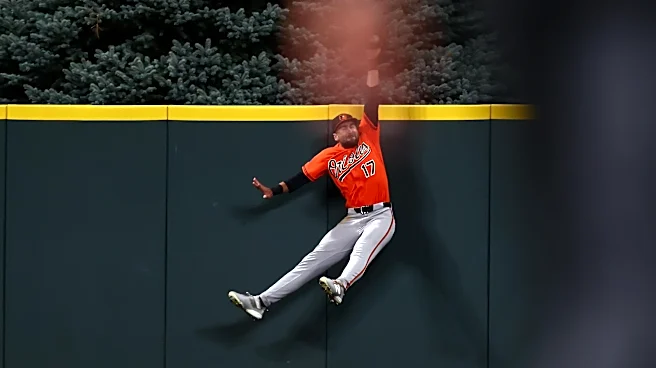
Cowser’s defensive excellence often stood out when contrasted against his defenisvley mediocre Orioles teammates. By Fielding Run Value, Cowser was the only Oriole who made a positive defensive contribution in 2026. By Baseball Reference’s Defensive Runs Saved metric, Cowser contributed 13 DRS; the rest of the Orioles combined for -7 DRS. That defensive prowess was opitimized by his walk-off home run robbery to steal an Orioles win in Colorado. In an outfield full of underwhelming performances, the Milkman’s defense was the only thing that consistently delivered.
The same could not be said about his offensive output, however. Over the first two full seasons of his career, the book on Cowser was a guy who crushed fastballs but couldn’t hit a changeup to save his life. He came into this season with a career average under .200 against changeups with whiff rate around 45%. This year he started to carve out a differnet profile. The 26-year-old began to struggle against four-seamers, but actually began to put changeups in play (.246 average, career-best 36.5% whiff rate).
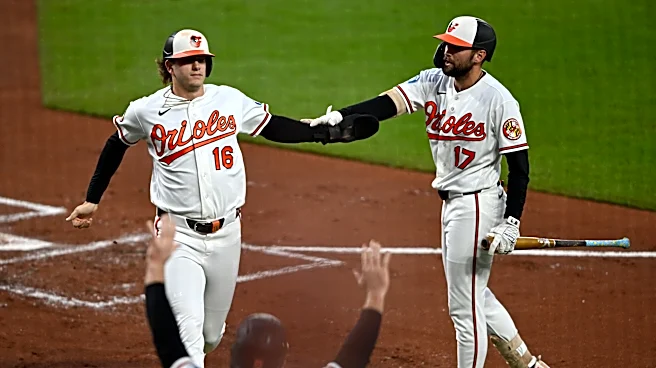
However, that refined approach against changeups didn’t pay any dividends early on. Through the first month of the season, Cowser was hitting .186 with a .489 OPS and a 35.6% strikeout rate. May saw a much better Cowser. He hit .275, slugged .529 and produced a .891 OPS. The second month of the season also saw biggest offensive highlight of the outfielder’s third full season. On May 24th, he launched a three-run walk-off homer off future Hall-of-Famer Kenley Jansen. A day later, Cowser again played the role of hero, swatting a two-run walk-off blast to complete an Orioles’ 13-inning comeback win over the Rays.
Those late May heroics couldn’t keep his bat hot into June, however. From the beginning of June until the All-Star Break, Cowser’s average dipped to .198, his OPS fell to .625 and his strikeout rate rose back up to 36.3%. Cowser’s only real improvement in the first half, compared to his 2025 version, was availability. Injuries limited Cowser to 37 games in the first half a year ago, but he was able to play in 84 of 97 first half games in 2026. However, his average and OPS were down and he didn’t seem to have any more answers at the plate.
The trade of Taylor Ward at the deadline saw Cowser play even more in the second half, and he rewarded the O’s with a post All-Star break bump in production. In August, we saw similar level of production as seen in his hot month of May. His triple slash was boosted up to .273/.300/.545 while he added five long balls. That average stayed solid in September (.250), but his power dried up, as his slugging from August to September dropped more than 200 points.
Offensively, Cowser was better in 2026 than he was in 2025, but a 30 point in crease in average and 32 point increase in OPS are baby steps for a player who is several long strides from being the offensive threat he was as a rookie. Against right-handed pitching, he hit .293 against fastballs and .199 against offspeed and breaking pitches. Against left-handed pitchers, he hit .158 against all pitches and struck out in nearly 50% of his ABs.
The Milkman will be a high scrutinized player in 2027, assuming we eventually get to play baseball next year. The recent “drama” surrounding Craig Albernaz seemingly refusing to take Jim Palmer’s advice about how to coach Cowser spoke to the dual nature of the young outfielder.
Palmer spoke about Cowser like a father just wanting the very best for his son. That desire stems from the fact that Cowser clearly has the tools to be a better player. But as the stats clearly show, and as Palmer reiterated, there are clear and very large holes in his game. Cowser’s defense will make him a no-doubt starter next year. However, his offense will need to improve if he truly wants to help the Orioles return to postseason baseball.