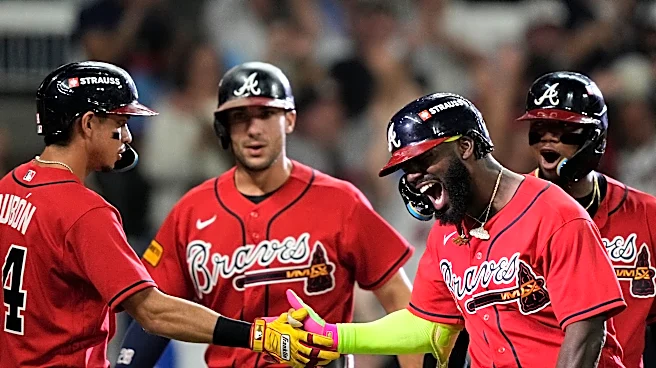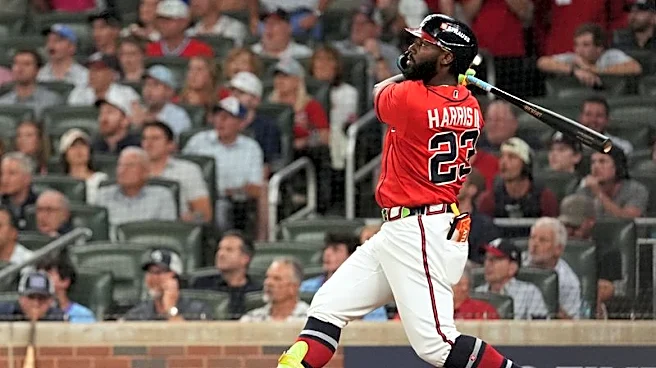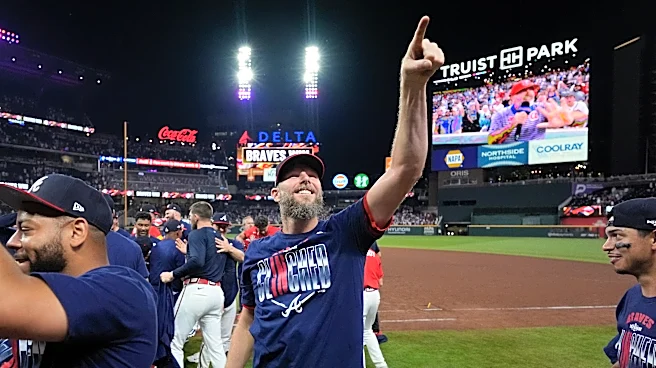


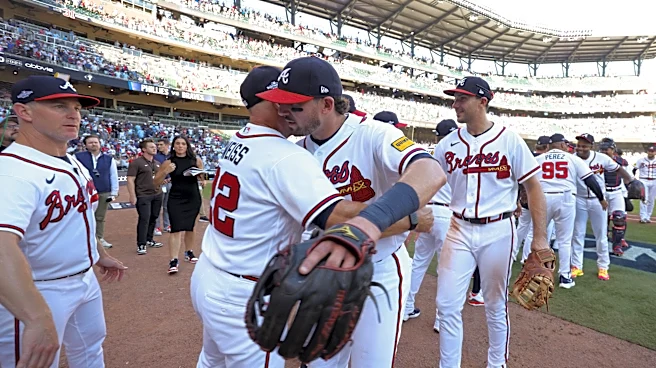
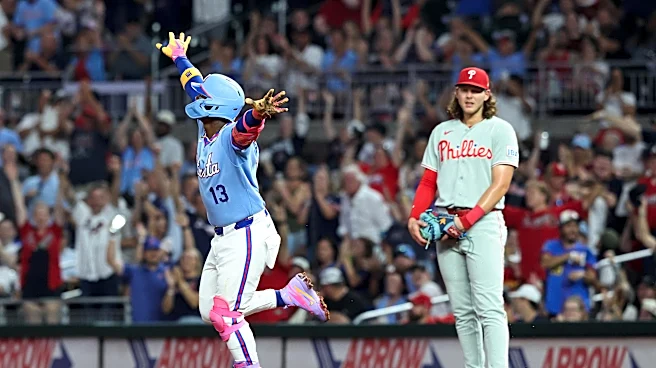
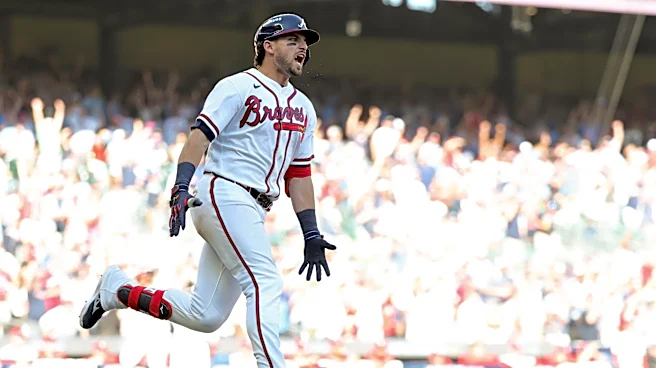
The potential downside of being rusty after a long time off pales in comparison to the very real strain an extra series can put on a team’s pitching staff. The protagonists of the only Wild Card round to go all three games, the Atlanta Braves, advanced to face the Dodgers but did so, paying a high price with a pitching staff that went all in for its survival.
In what was quite the opening test against Kyle Schwarber, Bryce Harper, and company, the Braves’ starting rotation made a statement that any perceptions
that it is too Chris Sale-reliant are an exaggeration. With Sale taking the ball in Game 1, Tyler Mahle in Game 2, and the left-hander Ray Kerr in the winner-take-all Game 3, the Braves’ rotation allowed just four earned runs in 16 2/3 innings—with the bulk of those runs coming off Sale, believe it or not.
When the Braves acquired Mahle at the deadline, they clearly saw something in him past the horrendous results he had been putting up for the Giants. Mahle has done better than anyone could have guessed, proving how much the organization matters for some players in certain moments, taking adjustments Atlanta has helped him with—including but not limited to a higher usage of splitters, his primary off-speed pitch—to dominate with a 1.99 ERA in nine regular-season starts.
Nine starts were all it took for Mahle to jump to the front of the line as the number two behind Sale—a position that had been sorely lacking for a Braves team that has seen Spencer Strider never be the same following his injuries, the latest of them taking him out for the year in June, and the same availability issues plague the promising Spencer Schwellenbach. Against the Phillies, Mahle might not have earned the win, but he did everything possible to lead his team there—Mahle held the Phillies to just one run in seven innings, the best start by a pitcher on either side of this three-game set.
Postseason baseball is filled with stories of players who take on a hot stretch and let that carry them to dominance through multiple series. But after one start, it might be too soon to be overly scared of a matchup against Mahle, regardless of how dominant he has been. He is the X-factor for the Braves, who’ll not only need him to perform well but also like an ace if their pitching is to line up with the Dodgers in any way.
From number two to number one, what Sale does goes without saying, but his aggressive usage out of the bullpen in Game 3 of the Wild Card round could potentially affect his rhythm for a Sunday Game 2 start at Dodger Stadium. And more importantly, whether it affects him, the fact that the Braves felt compelled to give him the ball while up 6-2 with only four outs to go tells you all you need to know about their pitching depth.
As far as Sale is concerned, Dodger fans don’t need reminding of his dominance—having witnessed it firsthand when the left-hander put out a vintage performance in a complete-game shutout of Los Angeles back in Atlanta during the regular season. And while Sale may not have yet pitched against the Dodgers in the playoffs as a Brave, there are wounds there from his time in Boston, on the mound for the final pitch of the 2018 World Series at Dodger Stadium.
Projecting how the Braves rotation will line up against the Dodgers, it is clear that Sale gets the ball in Game 2, while Mahle goes in Game 3. The plans for the opening game of the series, though, are unclear as of now, partially because the Braves utilized their next two best starting options in Game 3 of the Wild Card round. Left-hander Ray Kerr looked solid for three-plus innings, and Grant Holmes provided key outs in a multi-inning role out of the bullpen.
For a shorter series against the Phillies, the Braves took only 11 pitchers, meaning an A.J. Smith Shawver could earn the nod for the NLDS and make this first start, or Atlanta could simply look to a bullpen game. Even if Shawver were to get the ball, considering he has come out of the pen near the end of the regular season, it’d be with a short leash.
Based on who the Braves have lined up for Games 2 and 3 of the NLDS and how much certain relievers had to work against the Phillies—including their most utilized setup man, Didier Fuentes, who got the ball in all three games—the opener for the NLDS will be their most challenging game in the entire series. Those of us accustomed to the Dave Roberts method of managing wouldn’t be surprised to see him punt such a game early on if given this set of circumstances. We shall see how Atlanta approaches it: is it able to throw caution to the wind as the underdog or lean into the hand it was dealt?
Moving on from the rotation and on to Fuentes and the rest of this bullpen, Robert Suárez’s recent return from injury gives them a bit more depth in the backend, but the circle of trust is smaller than you’d like—and its propensity to get bitten by the long ball has already come into play in this series. Dylan Lee and Fuentes, two of Atlanta’s most trusted relievers, were responsible for the loss in game 2, with Lee giving up two solo bombs to Harper and Schwarber. While the number four in ERA in the regular season, the Braves’ bullpen was only 19th in HR/9.
Already a very good closer in his time with the Reds and Angels, Raisel Iglesias has raised his game to a new level with the Braves, including earning his second All-Star nod this season. As with the rotation, though, the comparison with the Dodgers is worse when you bring depth to the conversation.