
“Power resides where people believe it resides. A small man can cast a very large shadow.” – Lord Varys – Game of Thrones
What a glorious time to be a soccer fan. That is, unless you support Manchester City…
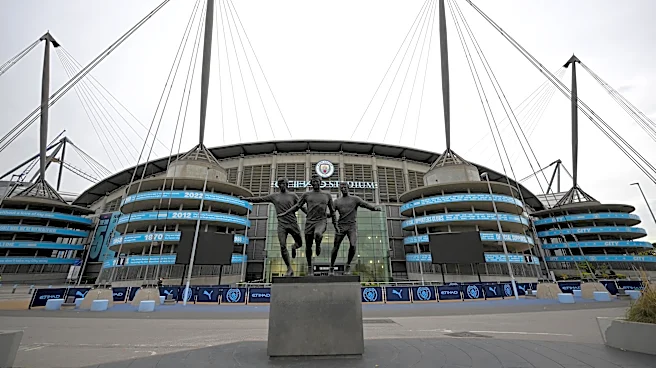
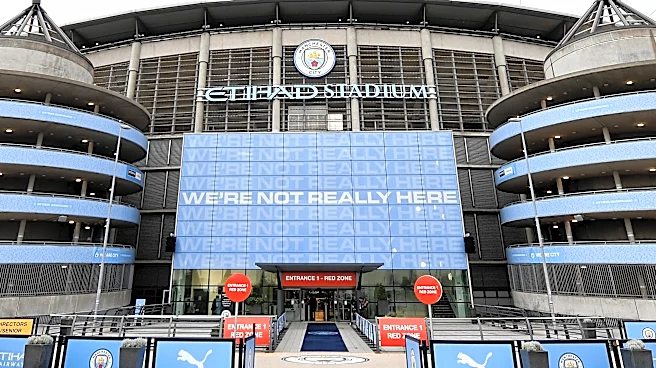
On Tuesday, the Premier League found Manchester City guilty of 114 financial charges leveled against them. The charges stem from a multi-year investigation where City were found guilty of inflating the club’s commercial revenue by £830 million ($1.08 billion) between 2009 and 2018.
An independent panel’s verdict found that City “misstated” accounts to conceal the true nature of their finances, and “significantly” breached Premier League and UEFA spending limits, and arranged “sham” contracts with commercial partners to artificially inflate their commercial earnings.
On Friday, Man City lodged their appeal against the opinion of the Premier League Commission. From here, the appeal process will look something like this:
- Under league regulations, the appeal board hearing should take place within 12 weeks (around late December 2026) and last a maximum of five days.
- The independent panel has 30 days after the hearing concludes to review the case and issue a final ruling.
- While the initial hearing process is scheduled to wrap up near the winter holidays, the actual final decision could officially land around January 2027.
Let’s analyze the main philosophical differences in how Borussia Dortmund operate as an organization and how they’re the antithesis to Manchester City’s global (crumbling) empire.
The 50+1 rule
The Bundesliga’s 50+1 rulerequires club members (fans) to hold a majority of at least 50% plus one vote of voting rights in German professional football clubs, preventing outside investors from taking operational control.
In 1998, the German Football Association (DFB) enacted the 50+1 rule. The name of the rule refers to the need for members of a club in the Bundesliga (or second division) to hold 50 percent, plus one more vote, of voting rights – i.e. a majority. In short, it means that German clubs – and, by extension, the fans – have the ultimate say in how they are run, not a massive global oil and natural gas reserve tycoon outside influencer or investor.
It’s almost like money isn’t the most important thing in sports; weird…..
A similar fan-ownership mandate exists in Sweden, but aside from Germany and Sweden, other major European soccer leagues (such as England’s Premier League, Spain’s La Liga, Italy’s Serie A, and France’s Ligue 1) do not implement a mandatory 50+1 or 51% rule, allowing external commercial investors and single owners to hold full control of clubs.
As a Dortmund supporter, the 50+1 rule matters because it:
- Protects the club identity: BVB remains a member-led club where fans are treated as core stakeholders rather than mere consumers.
- Ensures financial stability: The rule prevents reckless spending or unsustainable debt injections from single wealthy owners, protecting BVB from catastrophic financial meltdowns seen in other leagues.
- Keeps football accessible: It helps maintain lower ticket prices compared to leagues like the English Premier League, keeping the stadium full of authentic, local supporters.
- Aligns long-term values: BVB management works for sustainable sporting success rather than short-term owner profit, keeping the club grounded in its core community values.
Cultural Identity: “Echte Liebe” vs. Corporate Expansion
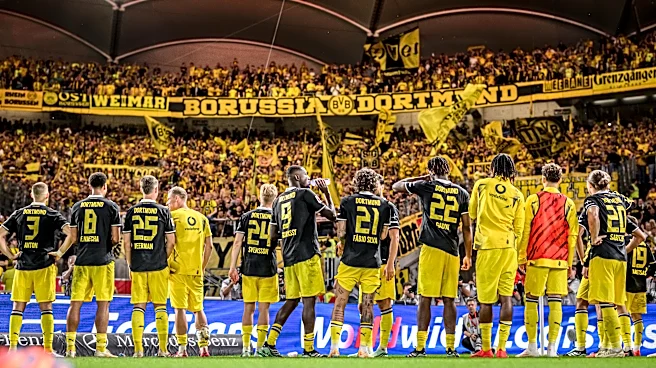
The structural divide between Borussia Dortmund and Manchester City is most visible in their cultural identity. It is a clash between grassroots romanticism and hyper corporate expansion. Dortmund’s identity is intentionally anchored in regional preservation, keeping the club deeply intertwined with its working-class fanbase. ‘Echte Liebe’ (True Love) is personified through the power of the Südtribüne or “The Yellow Wall”. Holding 24,454 standing spectators, it is Europe’s largest free-standing terrace. Because German football heavily protects standing sections, tickets here cost less than €20 ($22). This guarantees that local youth and working-class families—the historical lifeblood of the club—are never priced out by corporate interests. The stadium atmosphere is driven by loyalty and passion. The experience feels like a protected heritage site where community takes precedence over commercial monetization.
Contrast this with the City Football Group (CFG). City does not operate as a standalone club; it is the flagship engine of the City Football Group, a massive multi-club syndicate owning or holding major stakes in 13 clubs worldwide, including New York City FC, Melbourne City, and Girona. In recent years, City fans have launched protests and stadium boycotts over escalating ticket prices and the erosion of local fan perks in favor of high-spending international tourists and corporate hospitality.

BVB – a publicly traded company
Last year, Dortmund marked their 25th anniversary of being a publicly traded club. Listed as GmbH & Co. KGaA shares, which trade under the securities identification number 549309 or BVB on the Xetra exchange (Frankfurt Stock Exchange). They’re the only club in the Bundesliga that’s public traded. Capital shares are owned by corporate partners (e.g., Evonik, Puma), but ultimate control resides with its ~240,000 club members via a management proxy.
Borussia Dortmund GmbH & Co. KGaA operates through the following segments: Borussia Dortmund GmbH & Co. KGaA, BVB Merchandising GmbH, and BVB Event & Catering GmbH. The Borussia Dortmund GmbH & Co. KGaA segment manages the football club including a professional football squad and includes revenue arising from transfer deals, catering, TV marketing, advertising, and match operations. The BVB Merchandising GmbH segment comprises of merchandising business. The BVB Event & Catering GmbH segment is involved in conducting stadium tours; providing and arranging for event staffing services; and planning, organizing, catering, steering, and conducting events of all types. In short, different entities. One BVB.
Other prominent publicly listed clubs across Europe, include: Manchester United, Juventus, Ajax, Benfica, Celtic, and Galatasaray. Clubs like Real Madrid and Barcelona remain member-owned institutions (supporters pay a yearly fee for membership).
Because BVB is listed on the Frankfurt Stock Exchange, the club is bound by strict corporate law, securities regulations, and capital market rules. Unlike a privately owned club (like Man City), a financial scandal would trigger immediate criminal, civil, and financial market consequences alongside standard sporting penalties. Some of which would include:
- Federal Criminal Charges: Fabricating sponsorships or hiding wages constitutes accounting fraud and market manipulation under the German Securities Trading Act (WpHG). Executives would face mandatory federal prison sentences of 1 to 10 years, and the club would hit tens of millions of euros in statutory fines from the regulator, BaFin.
- Stock Market Collapse & Class Actions: Legally required to disclose the fraud via immediate public “ad-hoc announcements,” BVB would suffer an instantaneous share-price crash. Institutional and retail shareholders would launch massive civil class-action lawsuits to recover wiped-out investment capital.
- Immediate Board Purge by Fans: Using the club’s unique corporate structure, the fan-owned parent club (Ballspielverein Borussia 09 e.V.) would immediately invoke its majority voting power to fire the entire executive board to protect the club’s identity and assets.
- DFL License Revocation: Securing a seasonal Bundesliga license using fraudulent financial books is a zero-tolerance offense. The German Football League (DFL) would likely bypass simple point deductions and revoke BVB’s professional playing license entirely, forcing an automatic demotion to the amateur regional leagues.
- Insolvency and Bankruptcy: Lacking a billionaire owner or sovereign wealth fund to inject cash and absorb legal damages, the combinations of fines, sponsor terminations, and lawsuits would drive the corporation into structural bankruptcy and delisting from the Frankfurt Stock Exchange.
Developing stars vs buying them
Before becoming the Managing Director for Sport at BVB, Lars Ricken served as the coordinator of Borussia Dortmund’s youth academy starting in 2008, then the Director of the academy in 2021.
Thanks to Ricken, Dortmund has become famous for identifying elite teenage talent, developing them into world-class stars, and selling them for massive profits. This is etched in the clubs’ identity.
They do not buy established superstars; they make them. Examples include:
Erling Haaland (bought for ~€20m, sold to Manchester City for €60m)
Jude Bellingham (bought for ~€30m, sold to Real Madrid for €103m)
Ousmane Dembélé (bought for €15m, sold to Barcelona for €135m)
That’s not even counting the home-grown legends such as Marco Reus, who was born in Dortmund, went through their youth academy, and went on to have a standout career with the club over 12 years. While City has a strong academy, their strategy under Pep Guardiola has relied on buying the absolute finished product at peak market values—often using their financial muscle to trigger release clauses or offer wages that clubs like Dortmund cannot match (as they did when signing Haaland).

The politics of modern football
The two clubs sit on completely opposite sides of the political battle for the future of European soccer.
- Manchester City (The Disruptors): City views traditional football regulations—particularly Financial Fair Play—as anticompetitive protectionist measures designed by historic giants to keep new wealth out. They have consistently used aggressive, top-tier legal teams to challenge the Premier League and UEFA in court, viewing governing bodies as adversaries trying to restrict their global corporate growth.
- Borussia Dortmund (The Traditionalists): Dortmund’s leadership, historically led by figures like former Dortmund CEO Hans-Joachim Watzke, acts as a fierce defender of football’s traditional order. Dortmund was one of the loudest opponents of the proposed European Super League, refusing to join because it would destroy the domestic league structure and detach clubs from their local fanbases. Dortmund believes that football governance must protect the integrity of the sport over the financial desires of elite owners.
Don’t get me wrong, every fan likes a big signing for their club. It signals intent and a drive to win. But both clubs currently sit at the top of their league tables. In today’s modern game, the philosophical differences in how these organizations are run is night and day. Ultimately, Manchester City and Borussia Dortmund present a profound question to modern football fans: Is a club defined by the trophies it buys, or by the community that owns it? Manchester City has systematically cheated the system over the last two decades, While Dortmund remains a loud, defiant reminder that the true soul of the game cannot be bought, sold, or franchised.
City may have mastered the business of winning trophies, but Dortmund has mastered the art of keeping football human.