

The success of a dominant team over a lengthy period like the Dodgers’ relies on an adaptability to work your way through multiple iterations of a roster. While in the postseason you can find success in different ways, one aspect of regular-season success is how you handle injuries, particularly for a team as cautious as the Dodgers.
A common theme in recent seasons has been the Dodgers’ pitching staff overcoming all sorts of obstacles to consistently provide terrific numbers. Postseason baseball
funnels everything, and meritocracy only takes you so far when the goal is to win short series, but that doesn’t mean the impact of productive but unceremoniously overlooked starters shouldn’t get the credit it rightfully deserves.
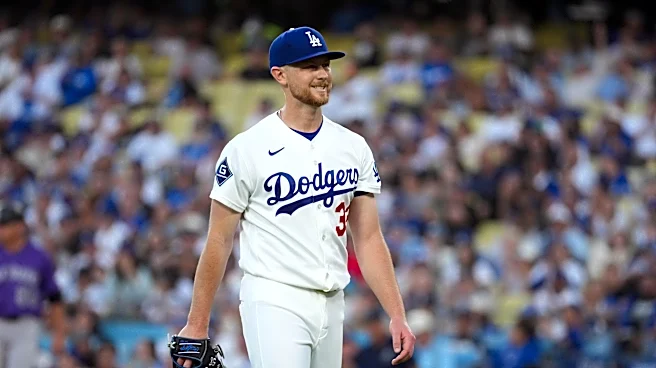
There are layers of this tier, and we’re not here to discuss the Justin Wrobleskis of the world, who’ll morph into a different but still impactful role because their talent level demands a presence on the postseason roster, one way or another. This is an article for the Eric Lauers — pitchers who served a very specific and much-needed purpose in the regular season, but whose eventual playoff showing would only come in garbage-time scenarios; in Lauer’s case, not even that, given he has ended the season on the injured list.
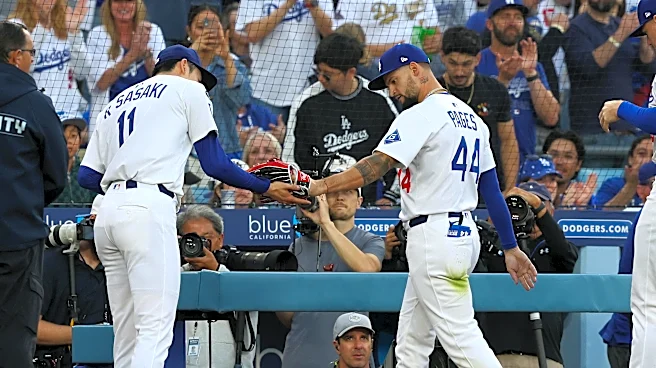
When Blake Snell and Tyler Glasnow went down this year, as they often do in the regular season, the Dodgers took to the market early in the season for a veteran steady presence. Lauer did more than just go out there with league-average production or so.
The former Brewer worked on some adjustments with the Dodgers’ pitching staff and led the team to a win in each of his first nine starts, boasting an ERA under 3.00 through that period. It’d be no stretch to argue that, at the very least, this chase for a playoff bye would look a lot different with a ton more pressure had it not been for Lauer’s timely production. His final line with the Dodgers looks far worse than he pitched due to a couple of blowups against NL Central teams (4.50 ERA in 12 games), but his impact through most of that period was undeniable.
Even in the best of moments for Lauer with the Dodgers prior to his season-ending injury, it was evident that he would not play a key role in the playoffs, but it was about doing a specific job. While he was the best example in this year’s current squad, going back through the recent track record, the names pile up, and here we’ll look at a few others that might stand out—who perhaps didn’t receive the right amount of due at the time, and certainly not when playoff ball rolled around.
Prospects with potentially limited big-league upside
This season’s starting pitching problems are a cakewalk in comparison with what this team had to deal with a year ago. On the lookout for starting pitching contributions for much of the 2025 campaign, the Dodgers saw Dustin May come full circle on a sped-up version of your traditional career, entering the innings-eater portion far earlier than anyone would’ve anticipated, one of three starters on the team to cover 100-plus innings, this despite getting dealt at the deadline.
May, more than probably any other pitcher on this list, really pushed the envelope of what we can consider helpful volume, even with the caveat of potential uncertainty on door number two. It’s easy to be dismissive of his ERA in the high 4.00s that got progressively worse until the team dealt him when it got healthier in the second half—through the majority of those innings, though, it literally had no one else. And if we want to get a little cute about it, the health he displayed in that period certainly played a role in helping the Dodgers land the offer they sought, with James Tibbs III joining the fold. It’s about finding advantages anywhere.
If May represents the low end of the expectation pool for a pitcher of his caliber receiving this type of role in a contending team, a year prior Gavin Stone showed the best-case scenario. On the way to their second World Series of this era, it was the youngster Stone who led the Dodgers in innings pitched that regular season, before injuries cut short his campaign and development, which has been affected until the present day.
Even before the injuries, it was becoming increasingly clear in the second half of that 2024 campaign that Stone’s postseason role would diminish, particularly so after the Dodgers acquired Jack Flaherty at the deadline. The changeup-heavy approach with below-average strikeout numbers caused enough concern that he likely wouldn’t have stuck in the rotation one way or another.
Both in very different places right now, one still in the organization, May and Stone were once regarded as highly touted pitching prospects. Although their development wasn’t as smooth as the Dodgers would’ve liked, they showed up to provide support at times of need, and their contributions meant a lot in championship-winning seasons.
Former stars in unique spots
Clayton Kershaw gave his best years to the Dodgers when they weren’t nearly at their best and did so with the utmost grace and power. After a second chapter of his career, still dominant but maybe not quite Kershaw-dominant, came to an end in 2023, he stuck around for a couple of more years and only then genuinely looked mortal, but still quite helpful.
Missing the bulk of the 2024 season recovering from shoulder surgery, Kershaw came back healthier for one final year in 2025, and while his All-Star nomination might’ve been a tad sentimental, the 11-2 record was eye-catching, with a productive 124 ERA+.
Sitting below 90 MPH on his heater, there were clear limitations to what Kershaw could provide, but not only did he appear on the postseason roster. But he also managed to get one immense out in the never-ending Game 3 of that year’s World Series. The plan was never to have him play a big role in October, but circumstances gave him a memorable cameo.
Going back to the regular season contributions, Kershaw, alongside May, was one of three Dodgers starters to surpass 100 innings in 2025. On the subject of his impact on that 93-69 record, there was nothing sentimental about it; he thoroughly helped a team that relied on him far more than expected.
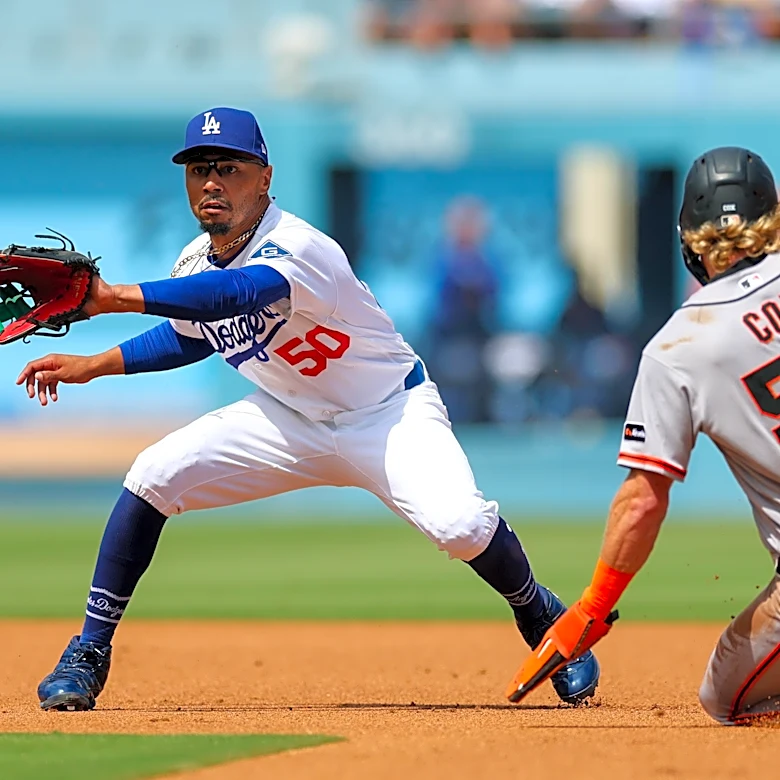
Going back a few more years, the Dodgers needed to take on the David Price contract in order for the Mookie Betts deal to go through with Boston. And although that was a bad deal, it didn’t mean Price couldn’t be of assistance.
Opting out of the 2020 campaign, Price came in 2021 ready to embrace whatever role the Dodgers had for him, and he delivered a 105 ERA+ in over 70 innings, moving back and forth between the rotation and the bullpen. While the rotation was healthier that year, it didn’t mean his presence went unnoticed, one of the more heavily used arms navigating between the rotation and the bullpen.
The OGs of this role in this run
When you first started reading this article, there is a decent chance one of the first names that came to mind was Mitch White or, particularly, Ross Stripling — the latter personally thanked by Dave Roberts in the World Series-winning speech back in 2020, a year in which he was traded from the team that August.
Between 2016 and 2019, Stripling pitched nearly 400 innings of regular-season baseball with a 115 ERA+, moving around to whatever role fit the team best. Seeing them finally break through to win it all the year in which he was dealt (2020) quickly made Dave and many others remember all he had done for this team.
It’s a shame that at his best in 2018, working primarily as a starter, Stripling saw his campaign cut short due to injury and couldn’t be available in that postseason. In 2020, the Dodgers stuck with him as much as possible, but eventually cutting ties seemed like the only answer with an ERA well above 5.00 in a shortened campaign.
White is the ideal example to note how, in most of these cases, whether the Dodgers get these players late, early, or even develop them from the minors, they seem to shine brightest here. In three seasons with the Dodgers, White had a 116 ERA+ in a little over 100 innings. Not only did he fail to reach similar heights after leaving the team, but his exposure was very limited, covering just 79.1 innings in two seasons since. Out of the bigs since 2024.
Surely there were other names in recent memory that we might’ve skipped over. Let us know who your favorite regular-season starting pitcher contributor is, or even all-time. It’s always a fun conversation to have with no right or wrong answer.