


We used to let FIFA pretend the World Cup belonged to them. I’m not sure it ever really did — but there was a time when letting them hold the keys felt like a harmless technicality, a fine-print problem you could ignore because the thing itself was still so obviously, overwhelmingly good. That time has passed, and I think it’s worth sitting with what that actually means before we talk about why we’re all still watching anyway.
This isn’t nostalgia doing the work. The critique isn’t a trick of memory
— the kind where you miss the past simply because your joints didn’t ache and life felt simpler. It’s an objective observation of a steep decline. The game is undeniably more corporate. The product is more sterile, the packaging entirely commercial, and the broadcasting format feels designed around shoehorning in more ad breaks than anything else. But the rot goes much deeper than aggressive marketing. It goes all the way down.
The corruption didn’t arrive suddenly. It accumulated — slowly at first, in ways that were easy to dismiss as the cost of doing business at a global scale. There were always rumors about vote-trading, always whispers about envelopes and favors. But the 2006 World Cup host selection was the moment the mask slipped. Germany needed votes. South Africa was the frontrunner. And then, with remarkable convenience, Germany lifted an arms embargo to Saudi Arabia — tanks, quite literally, traded for World Cup votes. It was brazen enough to notice and quiet enough to survive. FIFA treated it as an administrative footnote, and the world mostly moved on.
That became the blueprint. France and Qatar a decade later followed the same logic with even less pretense, a transaction reportedly brokered over a lunch in Paris between Nicolas Sarkozy, Qatari officials and Paris Saint-Germain’s future owners — the World Cup as a line item in a geopolitical deal. And then came the full reality of what that deal meant: an entire tournament ripped from its traditional summer rhythm and transplanted into winter so it could be played in air-conditioned stadiums that hadn’t been built yet, constructed on the backs of migrant workers whose deaths FIFA systematically undercounted, in a country where being gay was a criminal offense, broadcast to the world as a celebration. FIFA called it a triumph of innovation. The rest of us were supposed to just go along with it.
By the time 2026 arrived in North America, the cynicism had simply migrated. The stadiums were real. The weather was fine. But the rot had followed, because it always does — it lives in the institution now, not the infrastructure.
Consider Omar Abdulkadir Artan. He’s the reigning CAF Referee of the Year — not a ceremonial title, not a participation award, but the recognition of the best referee on an entire continent. He earned the historic right to become the first Somali official to referee at a men’s World Cup. Think about what that actually means — the decades of work, the accumulation of trust, the lifetime of sacrifice that goes into being handed that kind of distinction. All of it leading to a flight to Miami.
He never made it to a pitch. Instead, he spent 11 hours in a fluorescent-lit room at Miami International Airport — interrogated about militant groups he had nothing to do with, his credentials apparently irrelevant, his achievement apparently insufficient — before being put on a return flight home over vague “vetting concerns.” His life’s work, collapsed into a border agent’s suspicion. The history he was supposed to make, unmade in a holding room.
And the cruelty doesn’t stop at officials. It reaches into the stands. Imagine saving for four years, securing a ticket, obtaining a valid visa — doing everything right — and then watching a border guard look at your passport and decide your place of birth is disqualifying. It happened to Iranian fans whose ticket allocations were pulled days before the tournament. It happened to Iraqi supporters whose approved visas were ignored at the gate. These aren’t bureaucratic abstractions. They’re people who loved this sport enough to spend money they probably couldn’t spare, navigating systems designed to wear them down, and being turned away anyway.
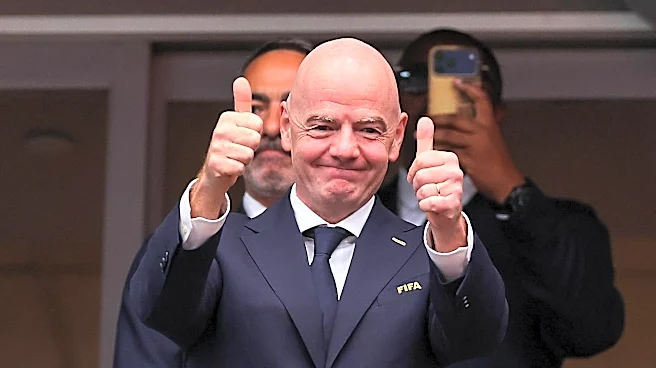
FIFA’s response — Gianni Infantino’s response — was to tell critics to “chill” and “relax.” To avoid screaming and shouting. To remember that FIFA aren’t the “kings of the world” who can override border decisions. It was the perfect distillation of everything the organization has become: deeply invested in extracting wealth from the tournament, utterly indifferent to the dignity of the people who make it worth watching. A shrug dressed up as humility.
What makes that shrug so damning isn’t just the indifference. It’s the distance traveled. When England hosted the 1966 World Cup, FIFA threatened to pull the tournament entirely — at the last minute, with everything already in motion — unless North Korea were allowed to participate. The principle was non-negotiable: the World Cup belonged to the world, and no nation could be excluded on political grounds, full stop. That was the organization’s line in the sand fifty years ago. Now the reigning CAF Referee of the Year spends 11 hours in an airport holding room and the president tells us to relax.
So I think you’re allowed to grieve that. I think you’re allowed to sit with the fact that something genuinely precious has been handled carelessly by people who never loved it the way we do. The World Cup was supposed to be the one time every four years when the world actually felt like a shared thing — when geography and politics and language collapsed into 90 minutes and it didn’t matter where you were from, only what you believed in. FIFA has spent decades monetizing that feeling while quietly making it harder to access. That’s a real loss. It deserves to be named as one.
And yet. I still set my alarm.
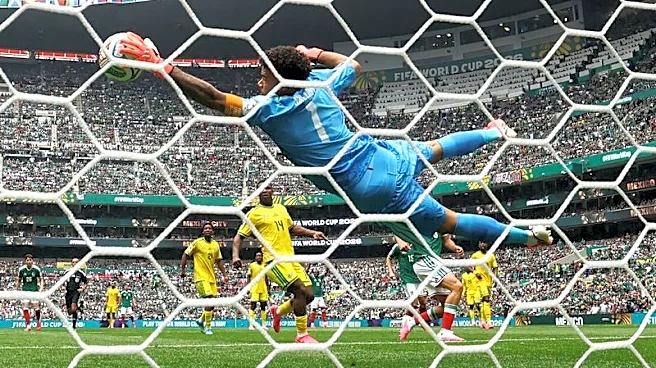
Not because I’ve made peace with any of it. Not because the corruption has stopped mattering or the injustice has been resolved. But because — and I’ve thought about this a lot — FIFA still can’t fully reach the thing that makes the tournament worth watching in the first place. The suits can sell the naming rights, the broadcast packages, the hospitality tents. They cannot monetize the raw, unscripted moment when it actually matters. They cannot control what happens when the ball rolls.
Think about the four Argentine cyclists who spent 10 months pedaling more than 10,000 miles across two continents, sleeping in ditches, surviving on bread — who left home before tickets were even on sale, before they had any guarantee they’d get within a mile of a stadium. They just went. Someone gifted them tickets when they arrived, a stranger completing a journey they’d started entirely on faith. All of it, every mile, just to sit in the upper deck in Kansas City for 90 minutes to watch their country play. FIFA didn’t give them that. No sponsorship deal produced it. It came entirely from inside them, from something the organization can brand but never manufacture.
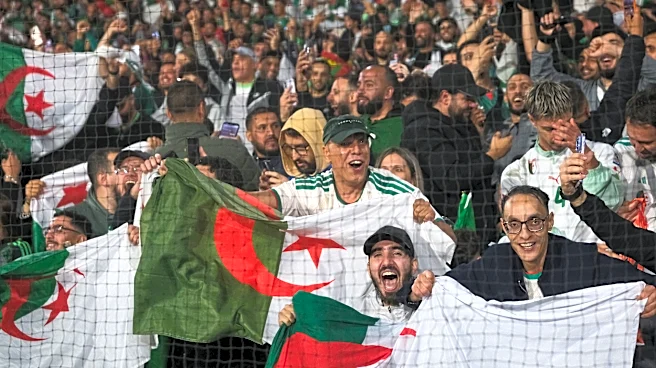
Or look at what happened in Lawrence, Kansas — a Midwestern college town that became the Algerian national team’s base camp and responded with something you couldn’t have scripted. There’s a video of a local man, clearly armed with not much more than the first paragraph of a Wikipedia article, standing there ready to support Algeria with everything he had, genuinely humbled that these players and fans had trusted his community. Standing next to him, a woman learning the rallying cry of Algerian supporters — phonetically, carefully, in a language she didn’t speak — because it felt like the right thing to do. That’s not a FIFA product. That’s a crack in the ordinary world, something real leaking through.
Those moments exist because the tournament — in spite of everything — still creates the conditions for them. It still pulls people out of their routines and into contact with lives entirely unlike their own. For a brief, disorienting, genuinely wonderful stretch, the world gets smaller. An Algerian fan sings a chant in a Kansas parking lot and a local student joins in, nodding to the rhythm, and for that moment there’s no Algerian, no American, no geopolitical tension — just people sharing something.
My own version of that moment is from the summer of 2006. We were finishing up a year of hosting an exchange student — originally from Norway, come to us by way of Barcelona — and for a sports kid growing up in America, completely saturated in baseball and football, he was my first real introduction to the game. We watched the group stages and the knockout rounds together as the calendar ran out and his return home got closer. By the morning of the final, he was already back in Europe. He wasn’t even in the room anymore. Yet, there we were — a family of four Americans who, 12 months earlier, knew nothing and cared nothing about this sport — going out to breakfast and completely anchoring our day to a game he wasn’t there to watch with us. We finished eating sometime in the first half, but we didn’t leave. We sat at that table for an extra hour after the plates were cleared, completely unable to move, watching Zinedine Zidane do something none of us could believe.
Sixteen years later, in the winter of 2022, I sat in my living room with my dad and watched Lionel Messi finally lift the trophy that had spent a career tormenting him. A different kind of impossible moment — wrong season, wrong hemisphere, wrong everything about the tournament that produced it. And none of that mattered at all. The room felt the same way the breakfast table did. That’s the thing about this competition, even now. It keeps finding you.
FIFA can corrupt the host selection. They can clutter the broadcast, compromise the calendar, shrug at a referee stranded in an airport. What they can’t do — what I don’t think they’ll ever quite manage — is take away the moment when it stops being a product and becomes something that happens to you. The World Cup may not be what it used to be. It’s fair to grieve that. But the chances for genuine human magic still exist inside it, stubbornly, in spite of everything.
That’s why I still set the alarm.